
Epithalon (10mg Vial) Dosage Protocol
Contents
Quickstart Highlights
Epitalon (Epithalon) dosage protocols center on this synthetic tetrapeptide (Ala-Glu-Asp-Gly) developed from pineal gland research for its geroprotective potential[1]. Epitalon activates telomerase to promote telomere elongation, supports healthy melatonin production for improved sleep and circadian rhythm regulation, and has demonstrated lifespan extension in animal models[2][3]. Human studies suggest potential benefits for longevity, cardiovascular health, and physiological function in older adults[4]. This educational protocol presents a once-daily subcutaneous approach using a practical dilution for clear insulin-syringe measurements.
- Reconstitute: Add 2.0 mL bacteriostatic water → 5 mg/mL concentration.
- Typical daily dose: 5,000 mcg (5 mg) once daily for 20 consecutive days.
- Easy measuring: At 5 mg/mL, 1 unit = 0.01 mL = 50 mcg on a U-100 insulin syringe.
- Storage: Lyophilized: freeze at −20 °C (−4 °F); after reconstitution, refrigerate at 2–8 °C (35.6–46.4 °F); avoid freeze–thaw cycles.
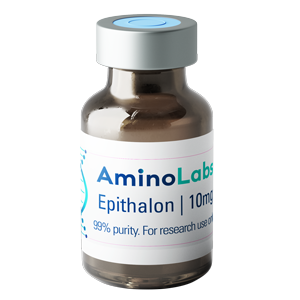
Dosing & Reconstitution Guide
Standard Protocol (2 mL = 5 mg/mL)
| Phase | Daily Dose (mcg) | Units (per injection) (mL) |
|---|---|---|
| Days 1–20 (Cycle On) | 5,000 mcg (5 mg) | 100 units (1.00 mL) |
| Weeks 4–26 (Cycle Off) | 0 mcg | — |
Frequency: Inject once daily subcutaneously, preferably in the evening or at bedtime to synergize with natural melatonin rhythms[3]. Complete 20 consecutive days, then observe a 4–6 month off-cycle before repeating (typically 2 cycles per year)[5].
Reconstitution Steps
- Draw 2.0 mL bacteriostatic water with a sterile syringe.
- Inject slowly down the vial wall; avoid foaming.
- Gently swirl/roll until dissolved (do not shake).
- Label and refrigerate at 2–8 °C (35.6–46.4 °F), protected from light.
Important: This guide is for educational purposes only and is not medical advice. For research use only. Not for human consumption.
Supplies Needed
Plan based on a 20-day daily protocol at 5 mg/day.
- Peptide Vials (Epitalon, 10 mg each):
- 20-day cycle (5 mg/day): 10 vials (each vial yields 2 doses)
- Insulin Syringes (U-100):
- Per cycle: 20 syringes (1/day)
- Bacteriostatic Water (10 mL bottles): Use 2.0 mL per vial for reconstitution.
- 20-day cycle (10 vials): 20 mL → 2 × 10 mL bottles
- Alcohol Swabs: One for the vial stopper + one for the injection site each day.
- Per cycle: 40 swabs (2/day) → recommend 1 × 100-count box
![insulin[1]](https://peptidedosing.ca/wp-content/uploads/2026/01/insulin1-178x178.webp "insulin[1]")
![Bacteriostatic-Water-Bottle[1]](https://peptidedosing.ca/wp-content/uploads/2026/01/Bacteriostatic-Water-Bottle1-178x178.webp "Bacteriostatic-Water-Bottle[1]")
![EasyTouch_Alcohol_Pads[1]](https://peptidedosing.ca/wp-content/uploads/2026/01/EasyTouch_Alcohol_Pads1-178x178.avif "EasyTouch_Alcohol_Pads[1]")
Protocol Overview
Concise summary of the once-daily regimen.
- Goal: Support telomere maintenance, melatonin regulation, and geroprotective effects over time[2].
- Schedule: Daily subcutaneous injections for 20 consecutive days, followed by 4–6 months off-cycle.
- Dose: 5,000 mcg (5 mg) daily.
- Reconstitution: 2.0 mL per 10 mg vial (5 mg/mL) for accurate unit measurements.
- Storage: Lyophilized frozen; reconstituted refrigerated; avoid repeated freeze–thaw.
Dosing Protocol
Suggested daily approach based on published research protocols.
- Standard Dose: 5,000 mcg (5 mg) once daily subcutaneously[5].
- Alternative: 10 mg/day for 10 days (same total cycle dose of 100 mg).
- Frequency: Once per day (subcutaneous), preferably at bedtime.
- Cycle Length: 20 consecutive days on, then 4–6 months off.
- Timing: Evening administration recommended; rotate injection sites daily.
Storage Instructions
Proper storage preserves peptide quality.
- Lyophilized: Store at −20 °C (−4 °F) for long-term; refrigerate at 2–8 °C (35.6–46.4 °F) for routine storage; minimize moisture exposure[6].
- Reconstituted: Refrigerate at 2–8 °C (35.6–46.4 °F); use within 2–4 weeks and avoid freeze–thaw[7].
- Allow vials to reach room temperature before opening to reduce condensation uptake.
Important Notes
- Practical considerations for consistency and safety.
- Use new sterile insulin syringes; dispose in a sharps container.
- Rotate injection sites (abdomen, thighs, upper arms) to reduce local irritation[8].
- Inject slowly; wait a few seconds before withdrawing the needle.
- Document daily dose and site rotation to maintain consistency.
- Reconstitute one vial at a time (every 2 days) to keep solutions fresh.
How This Works
Epitalon’s primary mechanism involves telomerase activation, promoting telomere elongation in cells[2]. In vitro studies demonstrated that Epitalon induced telomerase and lengthened telomeres in human cell cultures, allowing cells to continue dividing beyond the usual Hayflick limit[9]. Epitalon also influences the neuroendocrine system by stimulating nocturnal melatonin release from the pineal gland, thereby normalizing circadian hormone rhythms in aged subjects[3]. Additional reported effects include antioxidant activity, genomic regulatory effects, and immune modulation[1].
Potential Benefits & Side Effects
Observations from preclinical and clinical literature.
- Supports telomere maintenance and cellular longevity through telomerase activation[2][9].
- Restores healthy melatonin production and circadian rhythm regulation[3].
- Extended lifespan and reduced tumor incidence observed in animal models[1].
- Human trials showed improved cardiovascular outcomes and reduced mortality over 12-year follow-up[4].
- Generally well tolerated; no serious adverse events reported in long-term studies[5].
- Occasional mild injection-site reactions or transient sleep pattern changes may occur.
Lifestyle Factors
Complementary strategies for best outcomes.
- Prioritize sleep hygiene and maintain consistent sleep-wake schedules to complement melatonin effects.
- Pair with a balanced, antioxidant-rich diet to support cellular health.
- Engage in regular physical activity to reinforce metabolic and cardiovascular adaptations.
- Manage stress through mindfulness or relaxation techniques to support circadian balance.
Injection Technique
General subcutaneous guidance from clinical best-practice resources[8].
- Clean the vial stopper and skin with alcohol; allow to dry.
- Pinch a skinfold; insert the needle at 45–90° into subcutaneous tissue[10][11].
- Do not aspirate for subcutaneous injections; inject slowly and steadily[10].
- Rotate sites systematically (abdomen, thighs, upper arms) to avoid lipohypertrophy[8].
Recommended Source
Why Amino Labs?
- Third-party tested: Each batch includes Certificate of Analysis (COA) verifying purity and composition.
- Consistent quality: ISO-aligned manufacturing and handling standards ensure reliable product integrity.
- Cold-chain integrity: Temperature-controlled shipping and storage throughout fulfillment process.
- Research-grade purity: Suitable for educational and research applications requiring high-quality peptides.
Note: Product availability and specifications subject to change. Verify current product details on supplier website.
Important Note
This content is intended for therapeutic educational purposes only and does not constitute medical advice, diagnosis, or treatment.
References
— Overview of Epitalon: Highly Bioactive Pineal Tetrapeptide with Promising Properties (2025)
— Epitalon increases telomere length in human cell lines through telomerase upregulation
— Synthetic tetrapeptide Epitalon restores neuroendocrine regulation in senescent monkeys
— Geroprotective effect of epithalamine in elderly with accelerated aging (12-year RCT)
— Epithalamin/Epithalon Cognitive Vitality Report (mechanisms, dosing, safety)
— Peptide Stability: How Long Do Peptides Last? (storage best practices)
— Bacteriostatic Water and Peptide Reconstitution (28-day use guideline)
— How to Give a Subcutaneous Injection (patient education guide)
— Epitalon (overview of Hayflick limit studies and telomerase activation)
— Vaccine administration: subcutaneous route (angle/site; no aspiration)
— How to Administer Subcutaneous Injections (CDC-backed guidelines)
— Best practices for injection (asepsis, preparation, and administration)
— Pharmacologic considerations of the subcutaneous route
— BPC-157 (5 mg) product page (quality and batch documentation)