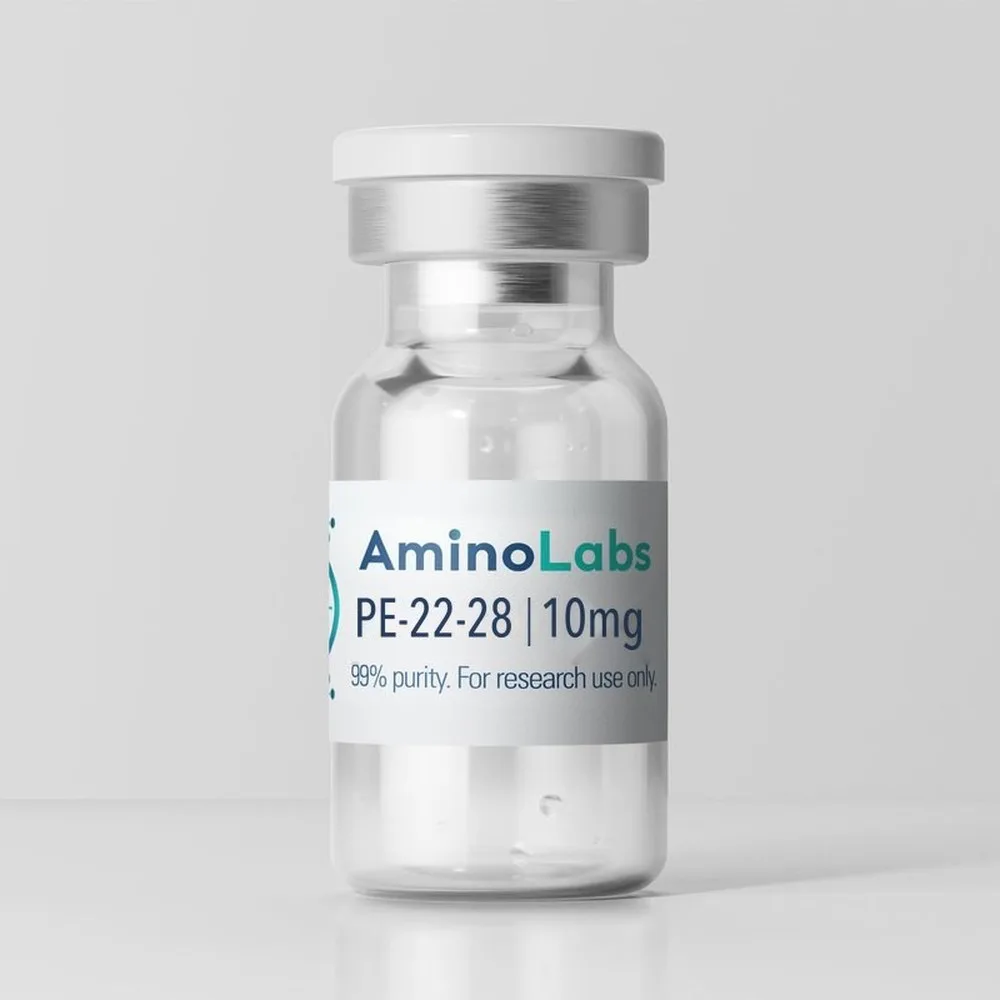
Quickstart Highlights
PE-22-28 is a synthetic heptapeptide (sequence: GVSWGLR) derived from the sortilin propeptide, engineered as a potent and selective antagonist of TREK-1 potassium channels. Preclinical studies demonstrate rapid antidepressant-like effects, enhanced neurogenesis, and neuroprotection with a favorable safety profile showing no cardiac or metabolic side effects. This educational protocol presents a once-daily subcutaneous approach with gradual titration.
- Reconstitute: Add 1.0 mL BAC water per labelled 10 mg vial; calculations assume a final volume of 1.0 mL and nominal concentration of 10 mg/mL.
- Typical daily range: 50–100 mcg once daily (conservative titration) for a 4–8 week cycle.
- Scale conversion: At 10 mg/mL, 1 U-100 unit = 0.01 mL = 100 mcg. Confirm actual device markings; this arithmetic does not establish measurement accuracy.
- Storage: Lyophilized: freeze at −20 °C (−4 °F); after reconstitution, refrigerate at 2–8 °C (35.6–46.4 °F); protect from light.
Dosing & Reconstitution Guide
Standard / Gradual Approach (1 mL = 10 mg/mL)
| Week | Daily Dose (mcg) | Calculated volume | U-100 scale value (1 mL capacity) | V1 nominal setting (units) |
|---|---|---|---|---|
| Weeks 1–2 | 50 mcg | 0.005 mL | 0.5 units (requires matching fractional-unit markings) | Not representable in whole units |
| Weeks 3–8 | 100 mcg | 0.01 mL | 1 unit | 1 unit |
Calculation basis: The table uses the labelled 10 mg amount and assumes a final solution volume of 1.0 mL (10 mg/mL). BAC volume does not change the amount of peptide. These are nominal calculations, not validation of preparation, compatibility or treatment.
Frequency: Inject once daily subcutaneously for 4–8 weeks, then take 2–4 weeks off. Measurement feasibility depends on the exact device and its markings. For ≤10-unit (≤0.10 mL) administrations, consider 30- or 50-unit insulin syringes for improved readability. Many researchers find 100 mcg sufficient given PE-22-28’s high potency.
Reconstitution Steps
- Draw 1.0 mL bacteriostatic water with a sterile syringe.
- Inject slowly down the vial wall; avoid foaming.
- Gently swirl/roll until dissolved (do not shake).
- Label and refrigerate at 2–8 °C (35.6–46.4 °F), protected from light.
Important: This guide is for educational purposes only and is not medical advice. For research use only. Not for human consumption.
Supplies Needed
Plan based on a 4–8 week daily cycle with conservative titration. Replace vials every 4 weeks to maintain potency.
- Peptide Vials (PE-22-28, 10 mg each):
- 4 weeks: 1 vial
- 8 weeks: 2 vials (replace at 4 weeks)
- Insulin Syringes (U-100):
- Per week: 7 syringes (1/day)
- 4 weeks: 28 syringes
- 8 weeks: 56 syringes
- Bacteriostatic Water (30 mL bottles): Use 1.0 mL per vial → 1 × 30 mL bottle.
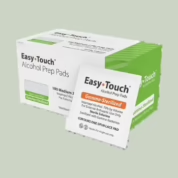
- Alcohol Swabs: One for the vial stopper + one for the injection site each injection.
- Per week: 14 swabs
- 4 weeks: 56 swabs
- 8 weeks: 112 swabs → 2 × 100-count boxes
Protocol Overview
Concise summary of the once-daily regimen.
- Goal: Support rapid neuroplasticity, mood regulation, and neuroprotection through selective TREK-1 inhibition.
- Schedule: Daily subcutaneous injections for 4–8 weeks, followed by 2–4 weeks off.
- Dose Range: 50–100 mcg daily with conservative titration; many find 100 mcg adequate.
- Reconstitution: 1.0 mL BAC per labelled 10 mg vial; nominal 10 mg/mL under the stated final-volume assumption.
- Storage: Lyophilized frozen; reconstituted refrigerated; replace vials every 4 weeks.
Dosing Protocol
Suggested conservative daily titration approach.
- Start: 50 mcg daily for Weeks 1–2 to assess tolerance.
- Increase: 100 mcg daily for Weeks 3–8 (standard maintenance dose).
- Frequency: Once per day (subcutaneous).
- Cycle Length: 4–8 weeks; then 2–4 weeks off. No extension; there is no human data to support longer continuous use.
- Timing: Consistent daily time; rotate injection sites systematically.
Storage Instructions
Proper storage preserves peptide quality and potency.
- Lyophilized: Store at −20 °C (−4 °F) in dry, dark conditions; minimize moisture exposure.
- Reconstituted: Refrigerate at 2–8 °C (35.6–46.4 °F); use within 4 weeks for optimal potency.
- Allow vials to reach room temperature before opening to reduce condensation; protect from light.
- Replace with fresh vial every 4 weeks even if peptide remains; bacteriostatic water sterility is guaranteed for 28 days after first puncture.
Important Notes
Practical considerations for consistency and safety.
- Use new sterile insulin syringes for each injection; dispose in a sharps container immediately.
- Rotate injection sites (abdomen, thighs, upper arms) systematically to reduce local irritation.
- Inject slowly; wait a few seconds before withdrawing the needle to prevent leakage.
- Document daily dose, site rotation, and any observations to maintain protocol consistency.
- Given PE-22-28’s high potency (IC50 ~0.12 nM), conservative dosing is recommended; most preclinical effects occurred at low microgram ranges.
How This Works
PE-22-28 functions as a potent and selective antagonist of TREK-1 (KCNK2) two-pore domain potassium channels. By blocking TREK-1, it depolarizes neurons and enhances excitability, leading to increased firing of serotonergic neurons and elevated monoamine neurotransmission. This mechanism produces rapid antidepressant-like effects in preclinical models—within 4 days, PE-22-28 significantly increases hippocampal neurogenesis and synaptogenesis markers, changes typically requiring weeks with conventional antidepressants. The peptide also activates CaMKII/CREB pathways that promote neuronal survival and plasticity. PE-22-28 represents a shortened, optimized analog of spadin with superior potency (IC50 ~0.12 nM versus 40–60 nM for spadin) and longer duration of action (~23 hours versus ~7 hours). Notably, research also demonstrates neuroprotective effects in stroke models through biphasic dosing that leverages both TREK-1 activation at ultra-low doses and inhibition at standard doses.
Potential Benefits & Side Effects
Observations from preclinical literature and mechanistic studies.
- Rapid Antidepressant Effects: Produces behavioral improvements within 4 days in rodent models; reduces immobility in forced swim tests and decreases latency to feed in novel environments.
- Enhanced Neuroplasticity: Increases hippocampal neurogenesis, synaptogenesis markers (PSD-95), dendritic spine density, and BDNF expression within days.
- Neuroprotection: In stroke models, preserves dopaminergic neurons, reduces motor deficits, and prevents post-stroke depressive behavior.
- Favorable Safety Profile: Shows high selectivity with no effects on hERG channels (cardiac safety), no impact on heart rate, blood pressure, glucose regulation, or pain perception in preclinical studies. No TREK-1-related side effects or withdrawal observed.
- No Human Data: All evidence is from cell culture and animal studies; human safety and pharmacokinetics remain unestablished.
- Potential Mild Reactions: Subcutaneous administration may occasionally cause minor injection-site reactions (slight redness or tenderness).
Lifestyle Factors
- Complementary strategies to support neuroplasticity and mood optimization.
- Maintain consistent sleep schedule and prioritize 7–9 hours of quality sleep to support neurogenesis.
- Engage in regular physical activity; both aerobic exercise and resistance training enhance BDNF and mood-regulating pathways.
- Follow a nutrient-dense diet rich in omega-3 fatty acids, antioxidants, and B-vitamins to support brain health.
- Practice stress-management techniques (meditation, mindfulness, therapy) to complement neuroplastic adaptations.
- Consider cognitive training or novel learning activities to synergize with enhanced synaptic plasticity.
Injection Technique
General subcutaneous guidance from clinical best-practice resources.
- Clean the vial stopper and injection site with alcohol; allow both to air-dry completely.
- Pinch a skinfold of subcutaneous tissue; insert the needle at 45° (or 90° if using very short needles with ample subcutaneous fat).
- Do not aspirate for subcutaneous injections; inject solution slowly and steadily.
- Rotate sites systematically (abdomen at least 2 inches from navel, front/outer thighs, outer upper arms) to prevent lipohypertrophy and maintain absorption consistency.
- Given the very small injection volumes (often ≤0.10 mL), technique precision is critical. Consider using 30- or 50-unit insulin syringes for doses under 10 units to improve measurement accuracy.
- Withdraw needle at the same angle inserted; apply gentle pressure if needed; dispose of syringe immediately in sharps container.
Recommended Source
Why Amino Labs?
- Third-party tested: Each batch includes Certificate of Analysis (COA) verifying purity and composition.
- Consistent quality: ISO-aligned manufacturing and handling standards ensure reliable product integrity.
- Cold-chain integrity: Temperature-controlled shipping and storage throughout fulfillment process.
- Research-grade purity: Suitable for educational and research applications requiring high-quality peptides.
Note: Product availability and specifications subject to change. Verify current product details on supplier website.
Browse Amino Labs
Important Note
This content is intended for therapeutic educational purposes only and does not constitute medical advice, diagnosis, or treatment.