Quickstart Highlights
Thymosin Alpha-1 (thymalfasin) is a 28-amino-acid acetylated peptide originally isolated from thymic tissue and marketed outside North America as Zadaxin, an immunomodulator approved in more than 35 countries for chronic hepatitis B and C and for chemotherapy-induced immune depression. It is studied for T-cell maturation, Th1 polarization and NK-cell activity. This educational protocol presents the labeled 1.6 mg subcutaneous dose twice weekly, 3–4 days apart, alongside an acute front-load and a daily low-dose community convention, using 2.0 mL bacteriostatic water per 10 mg vial (5 mg/mL) for whole-unit measurements on a U-100 syringe.
- Reconstitute: Add 2 mL bacteriostatic water → 5 mg/mL concentration.
- Dose range: 300 mcg–1.6 mg per injection; 1.6 mg twice weekly (label schedule) or 300–500 mcg once daily (community convention), subcutaneously over an 8–12 week course.
- Easy measuring: At 5 mg/mL, 1 unit = 0.01 mL = 50 mcg on a U-100 insulin syringe.
- Storage: Lyophilized: freeze at −20 °C (−4 °F); after reconstitution, refrigerate at 2–8 °C (35.6–46.4 °F) and use within 28 days.
- Label: The Zadaxin schedule is 1.6 mg twice weekly for 6–12 months (hepatitis indication); the 8–12 week immune-support course, the acute daily front-load and the daily low-dose option are research-community conventions.
Dosing & Reconstitution Guide
Standard Protocol (2 mL = 5 mg/mL)
| Schedule | Dose | Calculated volume | U-100 scale value (1 mL capacity) | V1 nominal setting (units) |
|---|---|---|---|---|
| Label schedule (twice weekly, 3–4 days apart) | 1.6 mg (1600 mcg) | 0.32 mL | 32 units | 32 units |
| Acute front-load (daily, 3–5 days) | 1.6 mg (1600 mcg) | 0.32 mL | 32 units | 32 units |
| Daily low-dose convention | 300 mcg (0.3 mg) | 0.06 mL | 6 units | 6 units |
| Daily low-dose upper | 500 mcg (0.5 mg) | 0.1 mL | 10 units | 10 units |
Calculation basis: The table uses the labelled 10 mg amount and assumes a final solution volume of 2 mL (5 mg/mL). BAC volume does not change the amount of peptide. These are nominal calculations, not validation of preparation, compatibility or treatment.
Frequency: Twice weekly, 3–4 days apart (for example Monday and Thursday), on consistent days. No timing rule applies. Acute protocols front-load 1.6 mg daily for 3–5 days, then step down to twice weekly.
Cycle: 8–12 weeks for immune support; the Zadaxin hepatitis label runs 6–12 months.
Reconstitution Steps
- Allow the vial to reach room temperature before opening to minimize condensation.
- Draw 2 mL bacteriostatic water with a sterile syringe.
- Inject slowly down the vial wall to minimize foaming; avoid shaking.
- Gently swirl or roll the vial until the powder is fully dissolved.
- Label the vial with the reconstitution date and refrigerate at 2–8 °C (35.6–46.4 °F), protected from light.
- Use reconstituted solution within 28 days for maximum potency and safety.
Important: This guide is for educational purposes only and is not medical advice. For research use only. Not for human consumption.
Supplies Needed
Plan based on the 8–12 week immune-support course at the label schedule of 1.6 mg twice weekly; 24 weeks is shown for a longer label-style course.
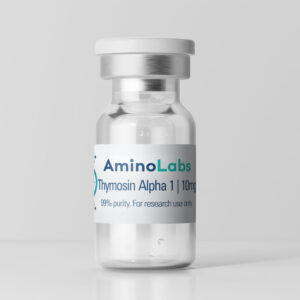
- Peptide Vials (Thymosin Alpha-1, 10 mg each):
- 8 weeks ≈ 3 vials (25.6 mg total used)
- 12 weeks ≈ 4 vials (38.4 mg total used)
- 24 weeks ≈ 8 vials (76.8 mg total used)
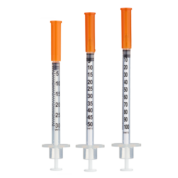
- Insulin Syringes (U-100):
- Per week: 2 syringes
- 8 weeks: 16 syringes
- 12 weeks: 24 syringes
- 24 weeks: 48 syringes
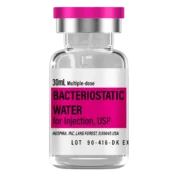
- Bacteriostatic Water (30 mL bottles): Use 2 mL per vial for reconstitution.
- 8 weeks (3 vials): 6 mL → 1 × 30 mL bottle
- 12 weeks (4 vials): 8 mL → 1 × 30 mL bottle
- 24 weeks (8 vials): 16 mL → 1 × 30 mL bottle
Note: Use bacteriostatic water within 28 days after opening; a vial reconstituted more than 28 days after the bottle was first opened needs a new bottle.
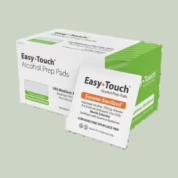
- Alcohol Swabs: One for the vial stopper + one for the injection site each injection.
- 8 weeks: 32 swabs
- 12 weeks: 48 swabs
- 24 weeks: 96 swabs → recommend 1 × 100-count box
Protocol Overview
Concise summary of the twice-weekly regimen.
- Goal: Support immune function through dendritic-cell activation, Th1 polarization and T-cell maturation, with immune effects that persist well beyond the approximately 2-hour plasma half-life.
- Schedule: Subcutaneous injections twice weekly, 3–4 days apart, for 8–12 weeks of immune support; the Zadaxin hepatitis label runs 6–12 months.
- Dose Range: 1.6 mg (1600 mcg) per injection twice weekly on the label schedule; community conventions use 300–500 mcg (0.3–0.5 mg) once daily, or 1.6 mg daily for 3–5 days as an acute front-load.
- Reconstitution: 2 mL per 10 mg vial (5 mg/mL) for accurate unit measurements on standard insulin syringes.
- Storage: Lyophilized frozen at −20 °C (−4 °F); reconstituted refrigerated at 2–8 °C (35.6–46.4 °F); use within 28 days; avoid repeated freeze–thaw cycles.
- Evidence: International prescribing label (Zadaxin) plus human RCTs support the 1.6 mg twice-weekly schedule with high confidence; the daily low-dose option and the 8–12 week immune-support course are community conventions with no human data and low confidence.
Dosing Protocol
Suggested approach based on the Zadaxin prescribing label, human trials and research-community conventions.
- Label schedule (twice weekly, 3–4 days apart): 1.6 mg (1600 mcg) per injection (32 units at 5 mg/mL), the Zadaxin dose of 900 mcg/m² with no titration; the label and trials start at the target dose.
- Acute front-load (daily, 3–5 days): 1.6 mg (1600 mcg) once daily for 3–5 days, then step down to the twice-weekly schedule (research-community convention for acute infection; the hospital sepsis regimens it imitates showed no mortality benefit).
- Daily low-dose convention: 300 mcg (0.3 mg) once daily (6 units), a community-only schedule with no trial data.
- Daily low-dose upper: 500 mcg (0.5 mg) once daily (10 units), the top of the community low-dose range.
- Frequency: Twice weekly on consistent days 3–4 days apart (for example Monday and Thursday); daily dosing applies only to the acute front-load and low-dose conventions.
- Timing: No timing-of-day rule appears in any source; consistency of days is the only convention.
- Cycle: 8–12 weeks for immune support (community convention); the Zadaxin hepatitis label runs 6–12 months, and immune responses continue to improve after a course ends.
- Maintenance: The label specifies no separate maintenance phase; 1.6 mg twice weekly is both the starting and the maintenance dose.
Storage Instructions
Proper storage preserves product quality and efficacy.
- Lyophilized (powder): Refrigerate at 2–8 °C (35.6–46.4 °F) protected from light (the label gives a 24-month shelf life); −20 °C (−4 °F) is acceptable for long-term storage.
- Reconstituted (solution): Refrigerate at 2–8 °C (35.6–46.4 °F), do not freeze, and use within 28 days. The label product is a 1.6 mg single-dose vial dissolved in sterile water and used immediately; the 28-day window is a bacteriostatic-water multi-dose convention, and some sources set it as short as 14 days.
- Allow vials to reach room temperature before opening to minimize condensation uptake.
- Swirl gently to dissolve; do not shake, as agitation can denature the peptide.
Important Notes
Practical considerations for consistency and safety.
- Use new sterile insulin syringes for each injection; dispose in a proper sharps container.
- Rotate injection sites systematically (abdomen, thighs, upper arms) to reduce local irritation and avoid lipohypertrophy.
- Inject slowly and steadily; wait a few seconds before withdrawing the needle to ensure complete delivery.
- Schedule source: The 1.6 mg twice-weekly dose for 6–12 months is the Zadaxin hepatitis label. The 8–12 week immune-support course, the acute daily front-load and the 300–500 mcg daily option are research-community conventions without trial data, and community high-dose schedules of 3–6.4 mg exceed all labeled data.
- Consistency: Keep the same two days each week (for example Monday and Thursday). Immune-marker shifts appear within 3–7 days, adaptive changes in 1–2 weeks, and maximal benefit around 12 weeks.
- Regulatory status: Not approved by Health Canada or the FDA; approved internationally as Zadaxin in more than 35 countries. The FDA removed thymosin alpha-1 from its 503A Category 2 list in September 2024, leaving US compounding status undefined.
- Evidence caveat: Human RCT support is strongest in chronic hepatitis B and COPD exacerbations; a large 2025 sepsis RCT (n=1,106) found no mortality benefit, and immune-support use in healthy adults has not been studied.
- Contraindications: Hypersensitivity to thymalfasin. The label advises against use in deliberately immunosuppressed patients such as transplant recipients unless benefit outweighs risk; sources add active autoimmune disease and pregnancy or breastfeeding.
How This Works
Thymosin alpha-1 is a 28-amino-acid acetylated peptide originally isolated from thymic tissue. It binds Toll-like receptors 2 and 9 on dendritic cells and other antigen-presenting cells, activating MyD88/NF-kB signaling. This drives Th1-type T-cell differentiation, boosts NK-cell cytotoxicity, and raises interferon and IL-2 output, while modulating immune tolerance through indoleamine 2,3-dioxygenase (IDO). Subcutaneous bioavailability is 90–95%, but the plasma half-life is only about 2 hours; the downstream immune changes persist for days, which is why the labeled twice-weekly schedule is effective and why no titration is used. In chronic hepatitis B, a 26-week course produced a 40.6% complete virologic response versus 9.4% in controls, with responses continuing to improve after treatment stopped. A meta-analysis of 39 RCTs supports adjunct use in COPD exacerbations, while a large 2025 sepsis trial (n=1,106) found no mortality benefit, which bounds the evidence to specific indications.
Potential Benefits & Side Effects
Observations from the international label, human RCTs and community reports.
Potential Benefits:
- Immune modulation: dendritic-cell activation via TLR2/TLR9, Th1 polarization, enhanced T-cell maturation and NK-cell activity, and normalization of the CD4/CD8 ratio (human and mechanistic studies).
- Chronic hepatitis B: 40.6% complete virologic response versus 9.4% in controls after a 26-week course in RCT data, with response continuing after treatment stops.
- Adjunct benefit in COPD exacerbations in a meta-analysis of 39 RCTs (n=3,329), and as an immune-support adjuvant during chemotherapy (label indication).
- Community reports of fewer and shorter colds, better energy during illness, and use in Lyme and mold-illness protocols (anecdotal only).
- Immune-marker shifts within 3–7 days, adaptive changes in 1–2 weeks, and maximal benefit around 12 weeks (clinical and community observation).
Potential Side Effects:
- Local injection-site discomfort, erythema or swelling (most common).
- Transient fatigue, mild flu-like symptoms or low-grade fever.
- Rare: rash, transient muscle atrophy, polyarthralgia with hand edema, headache.
- ALT flare during hepatitis B therapy, usually managed with treatment continued.
- Overall adverse-event rates match placebo, with under 1% serious events across 11,000+ patients.
- Avoid in transplant recipients and deliberate immunosuppression, active autoimmune disease, and pregnancy or breastfeeding.
Lifestyle Factors
Complementary strategies for immune resilience during a course.
- Prioritize 7–9 hours of consistent sleep, which supports T-cell and NK-cell function.
- Maintain adequate protein intake and a diet supplying zinc, vitamin D and other micronutrients involved in immune cell development.
- Keep regular moderate exercise; avoid prolonged exhaustive training, which transiently suppresses immune function.
- Manage chronic stress, since sustained cortisol elevation blunts Th1 immunity.
- Limit alcohol and tobacco, both of which impair immune cell function.
- Log injection days and any fatigue or injection-site reactions so that the twice-weekly schedule stays consistent across the 8–12 week course.
Injection Technique
General subcutaneous injection guidance from clinical best-practice resources.
- Clean the vial stopper and chosen skin site with separate alcohol swabs; allow both to dry completely before proceeding.
- Pinch a fold of skin between your fingers; insert the needle at a 45–90° angle into the subcutaneous tissue (fatty layer, not muscle).
- Do not aspirate (pull back the plunger) when giving a subcutaneous injection.
- Inject the solution slowly and steadily; wait at least 6 seconds after injection before withdrawing the needle to ensure complete delivery and minimize leakage.
- Withdraw the needle and apply light pressure with a clean swab; avoid rubbing vigorously.
- Rotate injection sites systematically (abdomen, thighs, upper arms) to prevent lipohypertrophy and maintain consistent absorption.
- Dispose of used syringes and needles immediately in a proper sharps container.
Recommended Source
We recommend Amino Labs for high-purity Thymosin Alpha-1 (10 mg vials).
Why Amino Labs?
- Third-party tested: Each batch includes Certificate of Analysis (COA) verifying purity and composition.
- Consistent quality: ISO-aligned manufacturing and handling standards ensure reliable product integrity.
- Cold-chain integrity: Temperature-controlled shipping and storage throughout fulfillment process.
- Research-grade purity: Suitable for educational and research applications requiring high-quality peptides.
Note: Product availability and specifications subject to change. Verify current product details on supplier website.
Important Note
This content is intended for therapeutic educational purposes only and does not constitute medical advice, diagnosis, or treatment.