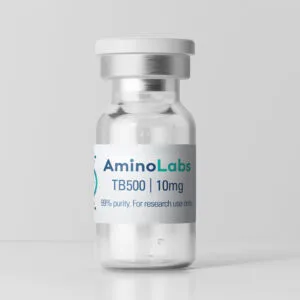
Quickstart Highlights
TB‑500 is a synthetic peptide fragment corresponding to the active region of thymosin beta‑4 (Tβ4), a naturally occurring 43‑amino‑acid protein involved in tissue repair and regeneration.
- Reconstitute: 2 mL BAC water per labelled 10 mg vial. Calculations assume a final volume of 2 mL (5 mg/mL nominal).
- Scale conversion: 1 U-100 unit = 0.01 mL; at this concentration, that corresponds to 50 mcg.
- Storage: Lyophilized: store at −20 °C (−4 °F); after reconstitution, refrigerate at 2–8 °C (35.6–46.4 °F); do not freeze reconstituted solution.
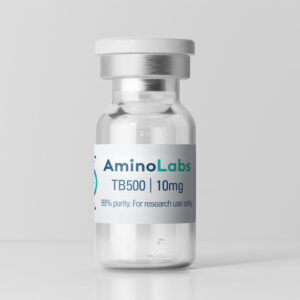
Dosing & Reconstitution Guide
Measurement examples
| Reference amount (mcg) | Calculated volume | 1 mL U-100 syringe | V1 nominal setting (units) |
|---|---|---|---|
| 500 mcg | 0.1 mL | 10 units | 10 units |
| 600 mcg | 0.12 mL | 12 units | 12 units |
| 750 mcg | 0.15 mL | 15 units | 15 units |
| 1000 mcg | 0.2 mL | 20 units | 20 units |
These are concentration-to-volume calculation examples. The amounts shown do not establish a recommended dose, frequency, escalation schedule or treatment duration. The evidence reviewed for this page does not validate the previous schedule for this product and use.
Calculation basis: Labelled 10 mg in an assumed final 2 mL. Dilution changes concentration, not total peptide content. These conversions do not validate preparation, compatibility or a treatment schedule.
These are nominal volume conversions; delivery accuracy has not been independently validated here.
Reconstitution Steps
- Draw 2 mL bacteriostatic water with a sterile syringe.
- Inject slowly down the vial wall; avoid foaming.
- Gently swirl/roll until dissolved (do not shake).
- Label with date and concentration; refrigerate at 2–8 °C (35.6–46.4 °F), protected from light.
Important: This guide is for educational purposes only and is not medical advice. For research use only. Not for human consumption.
Supplies Needed
Supply arithmetic uses the labelled 10 mg vial and 2 mL calculation volume per vial.
- Vials: Divide a separately specified total amount by 10 mg and round up for a theoretical minimum.
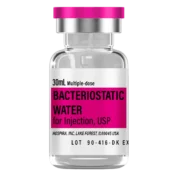
- BAC water: Multiply the vial count by 2 mL. BAC supply bottles contain 30 mL; divide the required water volume by 30 mL and round up for a volume-only bottle count.
- Handling losses, priming where applicable, and opened-container discard limits may require additional supplies. These calculations do not establish a course duration or usable shelf life.
- Device, needle and other supply counts depend on a separately established procedure.
Protocol Overview
Measurement-reference overview.
- Goal: Support tissue repair, wound healing, and angiogenesis through the active thymosin beta‑4 fragment mechanism.
- Reconstitution: 2 mL BAC per labelled 10 mg vial; nominal 5 mg/mL under the stated final-volume assumption.
- Storage: Lyophilized frozen; reconstituted refrigerated; avoid freeze–thaw cycles of reconstituted solution.
Measurement scope
These are concentration-to-volume calculation examples. The amounts shown do not establish a recommended dose, frequency, escalation schedule or treatment duration. The evidence reviewed for this page does not validate the previous schedule for this product and use.
Storage Instructions
Proper storage preserves peptide quality and activity.
- Lyophilized: Store at −20 °C (−4 °F) in dry, dark conditions; minimize moisture exposure.
- Reconstituted: Refrigerate at 2–8 °C (35.6–46.4 °F); do not freeze reconstituted solution as freezing can denature peptides.
- Allow vials to reach room temperature before opening to reduce condensation uptake.
- Use reconstituted vials within 28 days when stored with bacteriostatic water preservative.
Important Notes
Practical considerations for consistency and safety in research protocols.
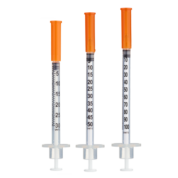
- Use new sterile insulin syringes for each injection; dispose in a sharps container.
- Rotate injection sites (abdomen, thighs, upper arms) to reduce local irritation and lipohypertrophy.
- Inject slowly; wait a few seconds before withdrawing the needle to prevent backflow.
- Document the measured amount, injection site, and any observations to maintain consistency.
- Regulatory Note: TB‑500 is banned by WADA for athletic use and is not FDA‑approved for human administration.
How This Works
TB‑500 represents the N‑terminal active fragment of thymosin beta‑4, specifically the heptapeptide sequence Ac‑LKKTETQ. This region is responsible for the actin‑binding and cell‑migration properties of the full thymosin molecule. Preclinical studies demonstrate that TB‑500 promotes angiogenesis, accelerates wound healing, and supports tissue regeneration by upregulating cell motility and blood vessel formation. Research in animal models shows enhanced collagen deposition and reduced healing time in injury sites treated with thymosin fragments. Recent metabolic studies suggest TB‑500 may act as a prodrug, cleaving to an active pentapeptide metabolite that drives biological activity.
Potential Benefits & Side Effects
Observations from preclinical and veterinary literature.
- Supports accelerated wound healing and tissue repair through enhanced angiogenesis and cell migration.
- May reduce inflammation and fibrosis indirectly via thymosin pathways observed in animal models.
- Generally well tolerated in veterinary studies; occasional mild injection‑site reactions (redness, tenderness) reported.
- Human safety data is limited; no large‑scale clinical trials have been completed for TB‑500 specifically.
Lifestyle Factors
Complementary strategies for optimal research outcomes.
- Maintain adequate protein intake to support tissue repair and regeneration processes.
- Combine with appropriate physical activity; avoid overtraining during injury recovery phases.
- Prioritize sleep (7–9 hours) to maximize natural recovery and repair mechanisms.
- Manage stress levels through evidence‑based practices to support overall healing.
Injection Technique
General subcutaneous guidance from clinical best‑practice resources.
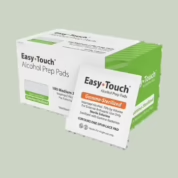
- Clean the vial stopper and skin with alcohol; allow to air dry completely.
- Pinch a skinfold at the injection site; insert the needle at 45–90° into subcutaneous tissue.
- Do not aspirate for subcutaneous injections; inject slowly and steadily.
- Rotate sites systematically within approved areas (abdomen, thighs, upper arms) to avoid lipohypertrophy.
- Wait 5–10 seconds after injection before withdrawing needle to prevent medication leakage.
Recommended Source
Why Amino Labs?
- Third-party tested: Each batch includes Certificate of Analysis (COA) verifying purity and composition.
- Consistent quality: ISO-aligned manufacturing and handling standards ensure reliable product integrity.
- Cold-chain integrity: Temperature-controlled shipping and storage throughout fulfillment process.
- Research-grade purity: Suitable for educational and research applications requiring high-quality peptides.
Note: Product availability and specifications subject to change. Verify current product details on supplier website.
Shop at Amino Labs