
Cagrilintide + Semaglutide (10mg Blend Vial) Dosage Protocol
Contents
Quickstart Highlights
Cagrilintide + Semaglutide is a dual‑agonist combination blending an amylin analog (cagrilintide) with a GLP‑1 receptor agonist (semaglutide). Clinical trials demonstrate superior weight reduction versus either agent alone, with the combination targeting complementary satiety pathways[1][2]. This educational protocol presents a once‑weekly subcutaneous approach using a practical dilution for clear insulin‑syringe measurements.
- Reconstitute: Add 3.0 mL bacteriostatic water → ~3.33 mg/mL total (1.67 mg/mL each peptide).
- Typical weekly range: 0.25–2.4 mg of each peptide once weekly (gradual titration over 16+ weeks).
- Easy measuring: At 3.33 mg/mL total, 1 unit = 0.01 mL ≈ 16.7 mcg each peptide on a U‑100 insulin syringe.
- Storage: Lyophilized: freeze at −20 °C (−4 °F); after reconstitution, refrigerate at 2–8 °C (35.6–46.4 °F); use within 30 days; avoid freeze–thaw cycles.
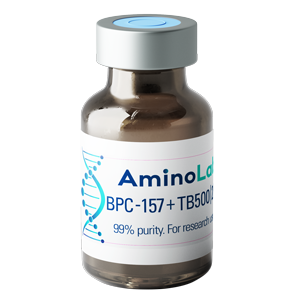
Dosing & Reconstitution Guide
Standard / Gradual Titration (3 mL = ~3.33 mg/mL total)
Route: Subcutaneous injection. Frequency: Once weekly[1][3].
| Week/Phase | Dose per Peptide (mcg / mg) | Units (mL) |
|---|---|---|
| Weeks 1–4 | 250 mcg (0.25 mg) each | 15 units (0.15 mL) |
| Weeks 5–8 | 500 mcg (0.50 mg) each | 30 units (0.30 mL) |
| Weeks 9–12 | 1000 mcg (1.0 mg) each | 60 units (0.60 mL) |
| Weeks 13–16 | 1700 mcg (1.7 mg) each | 102 units (1.02 mL) |
| Week 17+ | 2400 mcg (2.4 mg) each | 144 units (1.44 mL) |
Note: Each dose delivers equivalent amounts of both cagrilintide and semaglutide (e.g., 0.25 mg cagrilintide + 0.25 mg semaglutide at Week 1). The 2.4 mg target mirrors clinical trial protocols[1][2].
Reconstitution Math
- Vial contents: 5 mg cagrilintide + 5 mg semaglutide = 10 mg total blend
- Add: 3.0 mL bacteriostatic water
- Concentration: 10 mg ÷ 3.0 mL = 3.33 mg/mL total (1.67 mg/mL each peptide)
- Per unit (U‑100 syringe): 3333 mcg/mL × 0.01 mL = 33.3 mcg total per unit (16.7 mcg each peptide)
Reconstitution Steps
- Draw 3.0 mL bacteriostatic water with a sterile syringe.
- Inject slowly down the vial wall; avoid foaming.
- Gently swirl/roll until fully dissolved (do not shake).
- Label with date and refrigerate at 2–8 °C (35.6–46.4 °F), protected from light; use within 30 days[7].
Reconstitution Steps
-
- Draw 3.0 mL bacteriostatic water with a sterile syringe.
- Inject slowly down the vial wall; avoid foaming or vigorous shaking.
- Gently swirl/roll until fully dissolved (do not shake).
- Label with date and refrigerate at 2–8 °C (35.6–46.4 °F), protected from light.
Advanced / Aggressive Approach (Acute Injury Support)
For acute tissue injuries, some protocols suggest a higher initial loading phase[8][9]. This approach uses higher daily doses during the first 4 weeks before tapering to maintenance. Use with caution; robust human dose-finding data remain limited.
| Phase / Week | Daily Dose (Total Blend) | Each Peptide (mcg) | Units (mL) |
|---|---|---|---|
| Weeks 1–2 (Aggressive Load) | 1000 mcg | 500 mcg BPC + 500 mcg TB-500 | 30 units (0.30 mL) |
| Weeks 3–4 (High Load) | 800 mcg | 400 mcg BPC + 400 mcg TB-500 | 24 units (0.24 mL) |
| Weeks 5–8 (Maintenance) | 600 mcg | 300 mcg BPC + 300 mcg TB-500 | 18 units (0.18 mL) |
Note: A small human case series combining BPC-157 and TB-500 for joint injuries reported improved outcomes at higher combined doses (4 mg BPC + 6 mg TB-500 intra-articular) compared to lower doses[8]. However, systemic subcutaneous protocols typically use the ranges above. Treatment duration is generally limited to 8–12 weeks before cycling off to evaluate response[9].
Important: This guide is for educational purposes only and is not medical advice. For research use only. Not for human consumption.
Supplies Needed
Plan based on an 8–16 week weekly protocol with gradual titration.
- Peptide Vials (Cagrilintide + Semaglutide, 10 mg blend each):
- 8 weeks ≈ 1 vial (~6 mg total used)
- 12 weeks ≈ 2 vials (~14 mg total used)
- 16 weeks ≈ 3 vials (~27.6 mg total used)
- Insulin Syringes (U‑100):
- Per week: 1 syringe (once weekly)
- 8 weeks: 8 syringes
- 12 weeks: 12 syringes
- 16 weeks: 16 syringes
- Bacteriostatic Water (10 mL bottles): Use 3.0 mL per vial for reconstitution.
- 8 weeks (1 vial): 3 mL → 1 × 10 mL bottle
- 12 weeks (2 vials): 6 mL → 1 × 10 mL bottle
- 16 weeks (3 vials): 9 mL → 1 × 10 mL bottle
- Alcohol Swabs: One for the vial stopper + one for the injection site each week.
- Per week: 2 swabs
- 8 weeks: 16 swabs
- 12 weeks: 24 swabs
- 16 weeks: 32 swabs → recommend 1 × 100‑count box
![insulin[1]](https://peptidedosing.ca/wp-content/uploads/2026/01/insulin1-178x178.webp "insulin[1]")
![Bacteriostatic-Water-Bottle[1]](https://peptidedosing.ca/wp-content/uploads/2026/01/Bacteriostatic-Water-Bottle1-178x178.webp "Bacteriostatic-Water-Bottle[1]")
![EasyTouch_Alcohol_Pads[1]](https://peptidedosing.ca/wp-content/uploads/2026/01/EasyTouch_Alcohol_Pads1-178x178.avif "EasyTouch_Alcohol_Pads[1]")
Protocol Overview
Concise summary of the once‑weekly regimen.
- Goal: Support significant weight reduction through dual amylin + GLP‑1 receptor agonism[1][2].
- Schedule: Weekly subcutaneous injections for 16+ weeks (maintenance thereafter).
- Dose Range: 0.25–2.4 mg each peptide weekly with gradual titration.
- Reconstitution: 3.0 mL per 10 mg vial (~3.33 mg/mL total) for accurate unit measurements.
- Storage: Lyophilized frozen; reconstituted refrigerated; use within 30 days.
Dosing Protocol
Suggested weekly titration approach.
Storage Instructions
Proper storage preserves peptide quality[7].
- Lyophilized: Store at −20 °C (−4 °F) in dry, dark conditions; minimize moisture exposure.
- Reconstituted: Refrigerate at 2–8 °C (35.6–46.4 °F); use within 30 days and avoid freeze–thaw.
- Allow vials to reach room temperature before opening to reduce condensation uptake.
Important Notes
Practical considerations for consistency and safety.
- Use new sterile insulin syringes; dispose in a sharps container.
- Rotate injection sites (abdomen, thighs, upper arms) weekly to reduce local irritation[6].
- Inject slowly; wait a few seconds before withdrawing the needle.
- Document weekly dose and site rotation to maintain consistency.
- Higher doses may increase GI side effects (nausea, reduced appetite); titrate gradually[3].
How This Works
Cagrilintide is a long‑acting amylin analog that reduces appetite via central satiety pathways, while semaglutide activates GLP‑1 receptors to enhance glucose‑dependent insulin secretion and suppress glucagon[4][5]. The combination leverages complementary mechanisms: amylin primarily delays gastric emptying and signals satiety through the area postrema, while GLP‑1 enhances pancreatic β‑cell function and central appetite suppression[1]. Clinical trials of the co‑administered regimen (CagriSema) show greater body‑weight reduction than either agent alone[2].
Potential Benefits & Side Effects
Observations from clinical literature.
- Weight reduction: Phase 2 trials report mean body‑weight loss of ~15–17% at 32 weeks with the combination, exceeding semaglutide monotherapy[2].
- Glycemic control: In type 2 diabetes, HbA1c reductions were observed alongside weight loss[1].
- GI tolerability: Nausea, vomiting, and diarrhea are the most common adverse events; gradual titration minimizes severity[3].
- Injection‑site reactions: Mild and transient in clinical reports.
Lifestyle Factors
Complementary strategies for best outcomes.
- Pair with a balanced, protein‑forward diet tailored to energy needs.
- Combine resistance training and aerobic activity to reinforce metabolic adaptations.
- Prioritize sleep and stress management to support adherence and recovery.
- Stay hydrated and eat slowly to reduce GI discomfort.
Injection Technique
General subcutaneous guidance from clinical best‑practice resources[8][9].
- Clean the vial stopper and skin with alcohol; allow to dry.
- Pinch a skinfold; insert the needle at 45–90° into subcutaneous tissue[8].
- Do not aspirate for subcutaneous injections; inject slowly and steadily[9].
- Rotate sites systematically (abdomen, thighs, upper arms) to avoid lipohypertrophy[6].
- For volumes exceeding 1 mL (e.g., 1.44 mL at maintenance dose), inject slowly over several seconds.
Recommended Source
We recommend Amino Labs for high-purity BPC-157 + TB-500 (20 mg Blend).
Why Amino Labs?
- High-purity (≥99% HPLC), third-party-tested lots with batch COAs.
- Consistent, ISO-aligned handling and documentation.
- Reliable fulfillment to maintain cold-chain integrity.
Important Note
This content is intended for therapeutic educational purposes only and does not constitute medical advice, diagnosis, or treatment.
References
— Efficacy and safety of co‑administered once‑weekly cagrilintide 2.4 mg with semaglutide 2.4 mg in type 2 diabetes: phase 2 trial
— Safety, tolerability, pharmacokinetics, and pharmacodynamics of concomitant cagrilintide with semaglutide 2.4 mg: phase 1b trial
— Once‑weekly cagrilintide for weight management: dose‑finding phase 2 trial in overweight/obesity
— Semaglutide: pharmacology, indications, and clinical use overview
— Semaglutide: risks and benefits review (PMC)
— Best practices for injection and related procedures (WHO toolkit)
— Peptide Handling Guide: storage, reconstitution, and stability
— Intradermal and subcutaneous injections: clinical procedures
— Vaccine administration: subcutaneous injection technique
— Cagrilintide‑semaglutide in adults with overweight/obesity and type 2 diabetes
— Efficacy and safety of CagriSema 2.4 mg + 2.4 mg in type 2 diabetes
— Subcutaneous drug injection: pharmacologic review