
Cagrilintide (10mg Vial) Dosage Protocol
Contents
Quickstart Highlights
Cagrilintide is a long‑acting acylated analogue of the pancreatic hormone amylin, designed for once‑weekly subcutaneous administration[1]. It activates central amylin receptors to promote satiety, slow gastric emptying, and reduce food intake[2][3]. In phase 2 and phase 3 trials, cagrilintide produced dose‑dependent weight loss with a predominantly gastrointestinal side‑effect profile[4][5].
- Reconstitute: Add 3.0 mL bacteriostatic water → ~3.33 mg/mL concentration.
- Typical weekly range: 0.6–4.5 mg once weekly (gradual titration over 4–6 weeks).
- Easy measuring: At 3.33 mg/mL, 1 unit = 0.01 mL ≈ 0.0333 mg (33.3 mcg) on a U‑100 insulin syringe.
- Storage: Lyophilized: store frozen at −20 °C (−4 °F); after reconstitution, refrigerate at 2–8 °C (35.6–46.4 °F) and use within 30 days.
Dosing & Reconstitution Guide
Standard / Gradual Approach (3 mL = ~3.33 mg/mL)
Route: Subcutaneous injection. Frequency: Once weekly on a consistent day.
| Week/Phase | Weekly Dose (mg) | Units (per injection) | Volume (mL) |
|---|---|---|---|
| Weeks 1–2 | 0.6 mg | 18 units | 0.18 mL |
| Weeks 3–4 | 1.2 mg | 36 units | 0.36 mL |
| Weeks 5–6 | 2.4 mg | 72 units | 0.72 mL |
| Weeks 7–16 (Maintenance) | 4.5 mg | 135 units | 1.35 mL |
Note: The maintenance dose of 4.5 mg requires 135 units (1.35 mL), which exceeds a standard U‑100 insulin syringe capacity. Use a 3 mL syringe with an appropriate subcutaneous needle (e.g., 25–27G, ½–⅝ inch) for doses above 1.0 mL. For titration doses (≤72 units), a U‑100 insulin syringe provides excellent accuracy.
Reconstitution Steps
- Draw 3.0 mL bacteriostatic water with a sterile syringe.
- Inject slowly down the vial wall; avoid foaming or vigorous agitation.
- Gently swirl or roll until fully dissolved (do not shake).
- Label with date and concentration; refrigerate at 2–8 °C (35.6–46.4 °F), protected from light.
- Use within 30 days of reconstitution; discard if cloudy or particulate matter appears.
Important: This guide is for educational purposes only and is not medical advice. For research use only. Not for human consumption.
Supplies Needed
Plan based on an 8–16 week weekly protocol with gradual titration.
- Peptide Vials (Cagrilintide, 10 mg each):
- 8 weeks ≈ 2 vials (17.4 mg total needed)
- 12 weeks ≈ 4 vials (35.4 mg total needed)
- 16 weeks ≈ 6 vials (53.4 mg total needed)
- Syringes:
- Weeks 1–6 (doses ≤72 units): U‑100 insulin syringes work well
- Weeks 7+ (doses >100 units): 3 mL syringes with 25–27G subcutaneous needles
- Per week: 1 syringe
- 8 weeks: 8 syringes
- 12 weeks: 12 syringes
- 16 weeks: 16 syringes
- Bacteriostatic Water (10 mL bottles): Use 3.0 mL per vial for reconstitution.
- 8 weeks (2 vials): 6 mL → 1 × 10 mL bottle
- 12 weeks (4 vials): 12 mL → 2 × 10 mL bottles
- 16 weeks (6 vials): 18 mL → 2 × 10 mL bottles
- Alcohol Swabs: One for the vial stopper + one for the injection site each week.
- Per week: 2 swabs
- 8 weeks: 16 swabs
- 12 weeks: 24 swabs
- 16 weeks: 32 swabs → recommend 1 × 100‑count box
![insulin[1]](https://peptidedosing.ca/wp-content/uploads/2026/01/insulin1-178x178.webp "insulin[1]")
![Bacteriostatic-Water-Bottle[1]](https://peptidedosing.ca/wp-content/uploads/2026/01/Bacteriostatic-Water-Bottle1-178x178.webp "Bacteriostatic-Water-Bottle[1]")
![EasyTouch_Alcohol_Pads[1]](https://peptidedosing.ca/wp-content/uploads/2026/01/EasyTouch_Alcohol_Pads1-178x178.avif "EasyTouch_Alcohol_Pads[1]")
Protocol Overview
Concise summary of the once‑weekly regimen.
- Goal: Support satiety, reduce food intake, and promote weight management over time[2][4].
- Schedule: Weekly subcutaneous injections for 12–16 weeks (or longer as appropriate).
- Dose Range: 0.6–4.5 mg weekly with gradual titration every 2 weeks.
- Reconstitution: 3.0 mL per 10 mg vial (~3.33 mg/mL) for practical volume measurements.
- Storage: Lyophilized frozen; reconstituted refrigerated; avoid repeated freeze–thaw cycles.
Dosing Protocol
Suggested weekly titration approach based on clinical trial designs[1][6].
- Start: 0.6 mg weekly for the first 2 weeks to assess tolerability.
- Escalate: Double the dose every 2 weeks (0.6 → 1.2 → 2.4 → 4.5 mg) as tolerated.
- Target: 4.5 mg weekly by Weeks 7–8; maintain at this dose.
- Frequency: Once per week (subcutaneous) on the same day each week.
- Timing: Any consistent time; rotate injection sites.
Storage Instructions
Proper storage preserves peptide integrity and potency.
- Lyophilized: Store at −20 °C (−4 °F) in dry, dark conditions; minimize moisture exposure.
- Reconstituted: Refrigerate at 2–8 °C (35.6–46.4 °F); use within 30 days and avoid freeze–thaw cycles.
- Allow vials to reach room temperature before opening to reduce condensation uptake.
Important Notes
Practical considerations for consistency and tolerability.
- Use new sterile syringes for each injection; dispose in a sharps container.
- Rotate injection sites (abdomen, thighs, upper arms) weekly to reduce local irritation.
- Gradual dose escalation minimizes gastrointestinal side effects such as nausea[4][6].
- Document weekly dose, injection site, and any adverse effects to maintain consistency.
- For maintenance doses requiring >1.0 mL, ensure you have appropriately sized syringes (3 mL).
How This Works
Cagrilintide is an acylated, long‑acting analogue of amylin—a hormone co‑secreted with insulin from pancreatic beta cells[2][7]. Native amylin promotes satiation, slows gastric emptying, and inhibits postprandial glucagon secretion[8][9]. By acting on central amylin receptors (particularly in the area postrema and hindbrain), cagrilintide reduces appetite and energy intake[3][10]. Lipid modifications extend its half‑life to approximately 160–195 hours, enabling once‑weekly dosing[6][11].
Potential Benefits & Side Effects
Observations from phase 2 and phase 3 clinical trials.
- Weight reduction: In the phase 2 trial, cagrilintide 4.5 mg weekly produced approximately 10.8% body weight loss over 26 weeks versus 3.0% with placebo[4].
- Combination therapy: When combined with semaglutide 2.4 mg (CagriSema), phase 3 REDEFINE trials showed approximately 20% weight loss at 68 weeks, exceeding results with either agent alone[5][12].
- Dose‑dependent efficacy: Higher doses (2.4–4.5 mg) demonstrate greater weight loss than lower doses (0.3–1.2 mg)[4].
- Side effects: Primarily gastrointestinal—nausea, vomiting, diarrhea, and constipation—which are generally mild‑to‑moderate and transient[4][5]. Gradual titration helps minimize these effects.
- Injection‑site reactions: Occasional mild redness or irritation at subcutaneous injection sites.
Lifestyle Factors
Complementary strategies for optimal outcomes.
- Pair with a balanced, protein‑forward diet tailored to individual energy needs.
- Combine resistance training and aerobic activity to support metabolic health and preserve lean mass.
- Prioritize adequate sleep (7–9 hours) and stress management for adherence and recovery.
- Monitor hydration and electrolytes, especially if experiencing gastrointestinal side effects.
Injection Technique
General subcutaneous guidance from clinical best‑practice resources[13][14].
- Clean the vial stopper and skin with alcohol; allow to air dry completely.
- Pinch a skinfold; insert the needle at 45–90° into subcutaneous tissue[13].
- Do not aspirate for subcutaneous injections; inject slowly and steadily.
- Hold for 5–10 seconds before withdrawing the needle to ensure complete delivery.
- Rotate sites systematically (abdomen, thighs, upper arms) each week to avoid lipohypertrophy[14].
Recommended Source
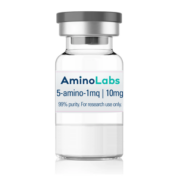
Why Amino Labs?
- Third-party tested: Each batch includes Certificate of Analysis (COA) verifying purity and composition.
- Consistent quality: ISO-aligned manufacturing and handling standards ensure reliable product integrity.
- Cold-chain integrity: Temperature-controlled shipping and storage throughout fulfillment process.
- Research-grade purity: Suitable for educational and research applications requiring high-quality peptides.
Note: Product availability and specifications subject to change. Verify current product details on supplier website.
Important Note
This content is intended for therapeutic educational purposes only and does not constitute medical advice, diagnosis, or treatment.
References
— Once‑weekly cagrilintide for weight management: phase 2 dose‑finding trial (Lau et al.)
— Amylin, another important neuroendocrine hormone for treatment of diabesity
— Mediators of amylin action in metabolic control
— Cagrilintide phase 2 trial: 10.8% weight loss at 4.5 mg dose over 26 weeks
— REDEFINE 1: Coadministered cagrilintide and semaglutide in adults with overweight or obesity
— Cagrilintide + semaglutide phase 1b trial: safety, tolerability, pharmacokinetics (Enebo et al.)
— Development of cagrilintide: a long‑acting amylin analogue
— Pancreatic amylin as a centrally acting satiating hormone
— Pancreatic signals controlling food intake: insulin, glucagon, and amylin
— Amylin‑mediated control of glycemia, energy balance, and cognition
— Clinical pharmacokinetics of semaglutide: systematic review (includes cagrilintide PK data)
— REDEFINE 2: Cagrilintide–semaglutide in adults with overweight/obesity and type 2 diabetes
— Vaccine administration: subcutaneous injection technique and site guidance
— You Call the Shots: subcutaneous injection diagram and best practices
— BPC-157 (5 mg) product page (quality and batch documentation)