
Semax (5mg Vial) Dosage Protocol
Contents
Quickstart Highlights
Semax 5mg dosage protocol is commonly used to support cognitive function, neuroprotection, and potential stroke recovery through subcutaneous injections.
- Typical starting dose between 0.5 mg – 1 mg per day
- Flexible injection frequency; daily or every-other-day subcutaneous use is common
- Higher “advanced” doses up to 6 mg daily observed in post-stroke protocols
- Reconstitute to a practical concentration for accurate dosing
- Store lyophilized in the freezer; reconstituted in the refrigerator
Dosing & Reconstitution Guide
Standard / Gradual Approach (3 mL = ~1.67 mg/mL)
| Weeks | Daily Dosage (mg) | Units (per injection) |
|---|---|---|
| Weeks 1–4 | 0.5 mg once daily | ~30 units |
| Weeks 5–8 | 1 mg once daily | ~60 units |
This approach is popular for general cognitive support or mild neuroprotection. Reconstitute with 3 mL of bacteriostatic water to create a solution of about 1.67 mg/mL (≈16.7 mcg per unit).
- Draw 3.0 mL of bacteriostatic water into a sterile syringe.
- Inject the water slowly along the vial wall to reduce foaming.
- Gently swirl—avoid vigorous shaking.
- Store the reconstituted solution at 2–8 °C (refrigerator), protected from light.
Advanced / Aggressive Approach (1 mL = 5 mg/mL)
| Days | Daily Dosage (mg) | Units (per injection) |
|---|---|---|
| Days 1–10 | 6 mg once daily | ~120 units |
This higher-dose protocol is sometimes referenced in post-stroke settings. Reconstitute with 1 mL to create a 5 mg/mL solution (≈50 mcg per unit).
Note: 6 mg requires more than one 5mg vial or multiple injections. 120 units also exceeds most 100-unit syringes; plan accordingly.
- Draw 1.0 mL of bacteriostatic water into a sterile syringe.
- Inject slowly to minimize foam or bubbles.
- Gently swirl the vial—no vigorous shaking.
- Store the reconstituted solution at 2–8 °C (refrigerator), protected from light.
Important: This guide is for educational purposes only and is not medical advice. For research use only. Not for human consumption.
Supplies Needed
Ensure you have these on hand for your chosen cycle length.
- Peptide Vials:
• 4 wks (standard @ 0.5 mg/day) ≈ 3 vials
• 8 wks (progressing to 1 mg/day) ≈ 9 vials
• Advanced (10-day course @ 6 mg/day) ≈ 12 vials
(Adjust based on total mg needed) - Insulin Syringes:
• 4 wks ≈ 28 syringes (if daily)
• 8 wks ≈ 56 syringes
• 10-day advanced course ≈ 10+ syringes (plus extras) - Bacteriostatic Water: 1× 30 mL
- Alcohol Swabs: 1 box
![insulin[1]](https://peptidedosing.ca/wp-content/uploads/2026/01/insulin1-178x178.webp "insulin[1]")
![Bacteriostatic-Water-Bottle[1]](https://peptidedosing.ca/wp-content/uploads/2026/01/Bacteriostatic-Water-Bottle1-178x178.webp "Bacteriostatic-Water-Bottle[1]")
![EasyTouch_Alcohol_Pads[1]](https://peptidedosing.ca/wp-content/uploads/2026/01/EasyTouch_Alcohol_Pads1-178x178.avif "EasyTouch_Alcohol_Pads[1]")
Protocol Overview
A concise summary of daily or short-course options for Semax.
- Goal: Enhance cognitive function, neuroprotection, or aid stroke recovery
- Schedule: Daily or every-other-day subcutaneous injections; short “intensive” courses also used
- Dose Range: 0.5 mg to 6 mg daily, depending on protocol
- Reconstitution: Use 3 mL for standard or 1 mL for advanced dosing accuracy
- Storage: Keep lyophilized vials frozen; refrigerate after reconstitution
Dosing Protocol
Suggested subcutaneous injection approaches for neurocognitive or rehabilitative benefits.
- Daily Dose (Standard): 0.5–1 mg once daily
- Frequency: Daily or every-other-day, subcutaneous
- Short-Course (Stroke/Advanced): Up to 6 mg daily for 10 days
- Cycle Length: 4–8 weeks for general use; shorter, more intense cycles for stroke
- Timing: Morning injections are common; spacing out advanced doses if needed
Storage Instructions
Proper storage ensures peptide integrity.
- Lyophilized: Freeze until mixing (−20°C)
- Reconstituted: Refrigerate at 2–8°C
- Avoid repeated freeze-thaw cycles
Important Notes
Practical tips to enhance safety and efficacy.
- Always use new, sterile insulin syringes & rotate injection sites.
- Maintain consistency with daily or short-course injections, based on your protocol.
- Observe for adverse reactions; consult a professional if concerns arise.
- Track progress throughout the protocol, adjusting dosage as recommended.
How This Works
Semax is a synthetic heptapeptide derived from adrenocorticotropic hormone (ACTH), known for its neurotropic and neuroprotective properties.
- Neurological Support: May elevate brain-derived neurotrophic factor (BDNF) levels
- Cognitive Enhancement: Frequently used to improve focus and mental clarity
- Promotes neuronal plasticity and may aid in recovery from certain neurological injuries
Potential Benefits & Side Effects
Most users report improved cognition, though individual responses vary.
- May support enhanced memory retention and learning
- Neuroprotective effects could aid in stroke recovery protocols
- Possible mild side effects include headache, restlessness, or slight blood pressure fluctuations
- Rarely, injection-site irritation or allergic reactions could occur
Lifestyle Factors
Complementary strategies for maximum neurocognitive benefit.
- Adopt a balanced diet rich in antioxidants and essential nutrients
- Engage in regular mental stimulation and exercise
- Manage stress and prioritize sufficient, high-quality sleep
Injection Technique
Simple guidelines for safe daily injections.
- Clean vial rubber stopper & injection site with alcohol swabs
- Insert needle at a 45–90° angle into subcutaneous tissue
- Inject slowly & rotate sites (abdomen, thigh, etc.)
Recommended Source
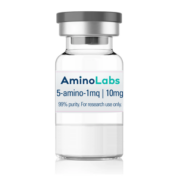
We recommend Amino Labs for high-purity Retatrutide (5 mg vials).
Why Amino Labs?
- Third-party tested: Each batch includes Certificate of Analysis (COA) verifying purity and composition.
- Consistent quality: ISO-aligned manufacturing and handling standards ensure reliable product integrity.
- Cold-chain integrity: Temperature-controlled shipping and storage throughout fulfillment process.
- Research-grade purity: Suitable for educational and research applications requiring high-quality peptides.
Note: Product availability and specifications subject to change. Verify current product details on supplier website.
Important Note
This content is intended for therapeutic educational purposes only and does not constitute medical advice, diagnosis, or treatment.
References
– Study on Semax in stroke treatment
– Improving biological age with Semax
– Semax neuroprotective research article
– Semax related data (PMC3987924)
– Stroke rehabilitation study (29798983)
– Reconstitution calculator resource
– Cognitive Vitality guide for Semax
– Semax article in ACS Chemical Neuroscience