
SS-31 (10mg Vial) Dosage Protocol
Contents
Quickstart Highlights
SS-31 10mg dosage protocol focuses on daily subcutaneous or intramuscular injections that target mitochondrial health and cellular energy.
- Typical starting dose 5 mg per day (25 units)
- Daily injection schedule for continuous mitochondrial support
- Reconstitute each vial with 0.5 mL to yield 20 mg/mL (1 mg ≈ 5 units)
- Rotate injection sites to minimize irritation; split doses > 60 units
- Store lyophilized vials frozen; refrigerate after reconstitution (use within 6 weeks)
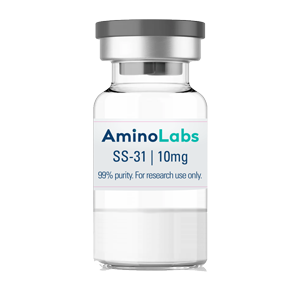
Dosing & Reconstitution Guide
Standard / Gradual Approach (0.5 mL = 20 mg/mL)
| Phase | Daily Dose (mg) | Approx. Units (mL) |
|---|---|---|
| Weeks 1–2 | 5 mg | 25 u (0.25 mL) |
| Weeks 3–4 | 7.5 mg | 38 u (0.38 mL) |
| Weeks 5–8 | 10 mg | 50 u (0.50 mL) |
Reconstitute each vial with 0.5 mL bacteriostatic water. One vial supports two × 5 mg injections or one × 10 mg injection.
- Draw 0.5 mL bacteriostatic water into a sterile syringe.
- Inject water slowly along the vial wall; swirl gently until clear.
- Label vial with concentration (20 mg/mL) and date.
- Refrigerate (2–8 °C).
Advanced / Aggressive Approach (0.5 mL = 20 mg/mL)
| Phase | Daily Dose (mg) | Approx. Units (mL) |
|---|---|---|
| Weeks 1–2 | 10 mg | 50 u (0.50 mL) |
| Weeks 3–4 | 15 mg | 75 u (0.75 mL)* |
| Weeks 5–8 | 20 mg | 100 u (1.00 mL)* |
Higher doses improve mitochondrial support for severe dysfunction. *Doses > 60 units should be split into two equal injections at separate sites to improve comfort and absorption.
- Follow the same 0.5 mL reconstitution method noted above.
- Rotate sites; consider intramuscular delivery for volumes > 0.6 mL.
Important: This guide is for educational purposes only and is not medical advice. For research use only. Not for human consumption.
Supplies Needed
Concise summary of daily mitochondrial-support regimen.
- Goal: Enhance mitochondrial function & cellular energy
- Schedule: Daily SC/IM injections for 4–8 weeks (extend to 24 wks in clinical research)
- Dose Range: 5 mg to 20 mg daily
- Reconstitution: 0.5 mL for 20 mg/mL concentration
- Storage: Freeze lyophilized; refrigerate reconstituted vials
![insulin[1]](https://peptidedosing.ca/wp-content/uploads/2026/01/insulin1-178x178.webp "insulin[1]")
![Bacteriostatic-Water-Bottle[1]](https://peptidedosing.ca/wp-content/uploads/2026/01/Bacteriostatic-Water-Bottle1-178x178.webp "Bacteriostatic-Water-Bottle[1]")
![EasyTouch_Alcohol_Pads[1]](https://peptidedosing.ca/wp-content/uploads/2026/01/EasyTouch_Alcohol_Pads1-178x178.avif "EasyTouch_Alcohol_Pads[1]")
Protocol Overview
Suggested daily injection approaches for gradual or aggressive escalation.
- Daily Dose: Start 5 mg; escalate to 10 mg (standard) or up to 20 mg (advanced)
- Frequency: Inject once daily at approximately the same time
- Cycle Length: 4–8 weeks per cycle; reassess mitochondrial metrics before extending
- Split Doses: Divide injections if volume > 0.6 mL (60 units)
Dosing Protocol
Proper storage maintains peptide integrity.
- Lyophilized: Store at −20 °C (freezer) until reconstitution
- Reconstituted: Refrigerate (2–8 °C) and protect from light
- Avoid repeated freeze-thaw cycles
Storage Instructions
Estimated supplies for continuous daily dosing (10 mg/day example).
- Peptide Vials:
• 4 wks ≈ 28 vials
• 8 wks ≈ 56 vials
• 12 wks ≈ 84 vials
(Adjust based on actual daily dose) - Insulin Syringes: One per injection (same counts as vials)
- Bacteriostatic Water: 30 mL bottle per 30–40 vials
- Alcohol Swabs & Sharps Container
Important Notes
Practical tips to enhance safety and precision.
- Use sterile syringes; rotate sites to reduce irritation.
- Split doses exceeding 60 units into two injections.
- Monitor for injection-site redness or systemic discomfort.
- This compound is for research purposes only—not for diagnostic or therapeutic use.
How This Works
SS-31 is a mitochondria-targeted tetrapeptide that binds cardiolipin within the inner mitochondrial membrane.
- Mitochondrial Stabilization: Preserves membrane curvature & electron-transport-chain function
- Oxidative Stress Reduction: Lowers ROS production and prevents lipid peroxidation
- Enhanced ATP Synthesis: Improves cellular energy output and endurance
Potential Benefits & Side Effects
Observed outcomes in preclinical and clinical studies.
- Improved muscle endurance and reduced fatigue
- Cardioprotective effects in heart-failure and ischemia models
- Neuroprotective potential in optic neuropathies and neurodegeneration research
- Common Side Effects: Mild injection-site redness or itching
- Less common: headache, dizziness, transient GI discomfort
Lifestyle Factors
Support mitochondrial function with these practices.
- Maintain a diet rich in antioxidants (e.g., colorful fruits & vegetables)
- Aim for regular aerobic and resistance exercise
- Prioritize high-quality sleep and stress-management techniques
Injection Technique
Simple guidelines for safe daily injections.
- Clean vial rubber stopper & injection site with alcohol swabs
- Insert needle at a 45–90° angle into subcutaneous tissue
- Inject slowly & rotate sites (abdomen, thigh, etc.)
Recommended Source
Why Amino Labs?
- Third-party tested: Each batch includes Certificate of Analysis (COA) verifying purity and composition.
- Consistent quality: ISO-aligned manufacturing and handling standards ensure reliable product integrity.
- Cold-chain integrity: Temperature-controlled shipping and storage throughout fulfillment process.
- Research-grade purity: Suitable for educational and research applications requiring high-quality peptides.
Note: Product availability and specifications subject to change. Verify current product details on supplier website.
Important Note
References
– Elamipretide in Barth syndrome trial
– SS-31 restores redox homeostasis in aged mice
– SS-31 effects on BAX-mediated apoptosis