
GHRP-2 (10mg Vial) Dosage Protocol
Contents
Quickstart Highlights
GHRP-2 dosage protocols leverage this potent synthetic hexapeptide (pralmorelin) that stimulates growth hormone (GH) release by acting as a ghrelin receptor agonist in the pituitary and hypothalamus[1][2]. Researchers and clinicians have explored GHRP-2 as a diagnostic GH stimulant and investigated its potential for supporting healthy GH secretion patterns, lean body composition, recovery, and sleep quality[3][4]. This educational protocol presents a once‑daily subcutaneous approach using a practical dilution for clear insulin‑syringe measurements.
- Reconstitute: Add 3.0 mL bacteriostatic water → ~3.33 mg/mL concentration.
- Typical daily range: 100–300 mcg once daily (gradual titration).
- Easy measuring: At 3.33 mg/mL, 1 unit = 0.01 mL ≈ 33.3 mcg on a U‑100 insulin syringe.
- Timing: Bedtime administration aligns with natural nocturnal GH secretion[5]; empty stomach preferred.
- Storage: Lyophilized: freeze at −20 °C (−4 °F); after reconstitution, refrigerate at 2–8 °C (35.6–46.4 °F) and use within 28 days[6][7].
Dosing & Reconstitution Guide
Standard / Gradual Approach (3 mL = ~3.33 mg/mL)
| Week | Daily Dose (mcg) | Units (per injection) (mL) |
|---|---|---|
| Weeks 1–2 | 100 mcg | 3 units (0.03 mL) |
| Weeks 3–4 | 150 mcg | 4.5 units (0.045 mL) |
| Weeks 5–8 | 200 mcg | 6 units (0.06 mL) |
| Weeks 9–12 | 250–300 mcg | 7.5–9 units (0.075–0.09 mL) |
Frequency: Inject once daily subcutaneously at bedtime on an empty stomach (at least 2–3 hours after the last meal) to maximize the GH pulse[5]. For ≤10‑unit (≤0.10 mL) administrations, consider 30‑ or 50‑unit insulin syringes for improved readability.
Reconstitution Steps
- Draw 3.0 mL bacteriostatic water with a sterile syringe.
- Inject slowly down the vial wall; avoid foaming.
- Gently swirl/roll until dissolved (do not shake).
- Label with reconstitution date and refrigerate at 2–8 °C (35.6–46.4 °F), protected from light; use within 28 days[8].
Advanced / Multiple Daily Dosing (Experienced Research Use Only)
In research settings exploring enhanced GH release, protocols have used 2–3 injections per day[4]. Be aware that chronic high-frequency stimulation can lead to receptor desensitization (tachyphylaxis)[9][10].
| Phase | Dose per Injection (mcg) | Frequency | Units (per injection) (mL) |
|---|---|---|---|
| Phase 1 (Weeks 1–2) | 100 mcg | Twice daily | 3 units (0.03 mL) |
| Phase 2 (Weeks 3–4) | 150 mcg | Twice daily | 4.5 units (0.045 mL) |
| Phase 3 (Weeks 5–8) | 200 mcg | 2–3× daily | 6 units (0.06 mL) |
A “5 days on / 2 days off” cycle is often suggested to help restore receptor sensitivity[9]. Even with breaks, be mindful that chronic stimulation can attenuate the GH response over time.
Important: This guide is for educational purposes only and is not medical advice. For research use only. Not for human consumption.
Supplies Needed
Plan based on an 8–12 week daily protocol with gradual titration (once‑daily regimen).
- Peptide Vials (GHRP-2, 10 mg each):
- 8 weeks ≈ 1 vial (~9.1 mg total usage)
- 12 weeks ≈ 2 vials (~15–16 mg total)
- 16 weeks ≈ 3 vials (~22–23 mg total)
- Insulin Syringes (U‑100, 0.3 mL or 0.5 mL recommended):
- Per week: 7 syringes (1/day)
- 8 weeks: 56 syringes
- 12 weeks: 84 syringes
- 16 weeks: 112 syringes
- Bacteriostatic Water (10 mL bottles): Use 3.0 mL per vial for reconstitution.
- 8 weeks (1 vial): 3 mL → 1 × 10 mL bottle
- 12 weeks (2 vials): 6 mL → 1 × 10 mL bottle
- 16 weeks (3 vials): 9 mL → 1 × 10 mL bottle
- Alcohol Swabs: One for the vial stopper + one for the injection site each day.
- Per week: 14 swabs (2/day)
- 8 weeks: 112 swabs → recommend 2 × 100‑count boxes
- 12 weeks: 168 swabs → recommend 2 × 100‑count boxes
- 16 weeks: 224 swabs → recommend 3 × 100‑count boxes
![insulin[1]](https://peptidedosing.ca/wp-content/uploads/2026/01/insulin1-178x178.webp "insulin[1]")
![Bacteriostatic-Water-Bottle[1]](https://peptidedosing.ca/wp-content/uploads/2026/01/Bacteriostatic-Water-Bottle1-178x178.webp "Bacteriostatic-Water-Bottle[1]")
![EasyTouch_Alcohol_Pads[1]](https://peptidedosing.ca/wp-content/uploads/2026/01/EasyTouch_Alcohol_Pads1-178x178.avif "EasyTouch_Alcohol_Pads[1]")
Protocol Overview
Concise summary of the once‑daily regimen.
- Goal: Support pulsatile GH release for research into body composition, recovery, and sleep quality[4].
- Schedule: Daily subcutaneous injections for 8–12 weeks (extend to 16 weeks if desired).
- Dose Range: 100–300 mcg daily with gradual titration.
- Reconstitution: 3.0 mL per 10 mg vial (~3.33 mg/mL) for accurate unit measurements.
- Storage: Lyophilized frozen; reconstituted refrigerated; avoid repeated freeze–thaw.
Dosing Protocol
Suggested daily titration approach.
- Start: 100 mcg daily; increase by ~50 mcg every 1–2 weeks as tolerated.
- Target: 200–300 mcg daily by Weeks 5–12.
- Frequency: Once per day (subcutaneous) at bedtime.
- Cycle Length: 8–12 weeks; optional extension to 16 weeks.
- Timing: Bedtime on an empty stomach; rotate injection sites.
Storage Instructions
Proper storage preserves peptide quality.
Important Notes
- Practical considerations for consistency and safety.
- Use new sterile insulin syringes; dispose in a sharps container.
- Rotate injection sites (abdomen, thighs, upper arms) to reduce local irritation.
- Inject slowly; wait a few seconds before withdrawing the needle.
- Document daily dose and site rotation to maintain consistency.
- Reconstituted vials and opened bacteriostatic water should be discarded after 28 days[8].
How This Works
GHRP-2 (pralmorelin) is a Growth Hormone Releasing Peptide that binds to the ghrelin/GHS (Growth Hormone Secretagogue) receptor (GHS-R1a) on pituitary somatotroph cells and in the hypothalamus[1]. By activating these receptors, GHRP-2 triggers a potent pulse of GH release, independent of the usual GH-releasing hormone (GHRH) pathway. Research demonstrates GHRP-2 can stimulate GH even when GHRH action is impaired[11]. Unlike exogenous GH, GHRP-2 preserves natural pulsatile secretion patterns and works synergistically with endogenous GHRH[4].
Potential Benefits & Side Effects
Observations from preclinical and clinical literature.
- Supports pulsatile GH release and may increase IGF-1 levels over time with consistent use[4].
- May support improvements in body composition, recovery, and sleep quality when combined with appropriate lifestyle factors.
- Transient increases in appetite (ghrelin receptor activation), cortisol, and prolactin have been observed in studies[2].
- Receptor desensitization (tachyphylaxis) may occur with continuous daily use; cycling protocols may help maintain responsiveness[9][10].
- Generally well tolerated; occasional mild injection‑site reactions (redness/itch) may occur with subcutaneous administration.
Lifestyle Factors
Complementary strategies for best outcomes.
- Pair with a balanced, protein‑forward diet tailored to energy needs.
- Combine resistance training and aerobic activity to reinforce metabolic adaptations.
- Prioritize sleep and stress management to support adherence and recovery.
- Inject on an empty stomach (2–3 hours post-meal) to maximize the GH response.
Injection Technique
General subcutaneous guidance from clinical best‑practice resources[12].
- Clean the vial stopper and skin with alcohol; allow to dry.
- Pinch a skinfold; insert the needle at 45–90° into subcutaneous tissue[12][13].
- Do not aspirate for subcutaneous injections; inject slowly and steadily[12].
- Rotate sites systematically (abdomen, thighs, upper arms) to avoid lipohypertrophy.
- Use fine-gauge needles (30 G or smaller) and small injection volumes to minimize discomfort[14].
Recommended Source
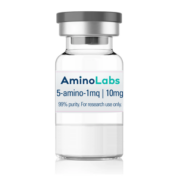
Why Amino Labs?
- Third-party tested: Each batch includes Certificate of Analysis (COA) verifying purity and composition.
- Consistent quality: ISO-aligned manufacturing and handling standards ensure reliable product integrity.
- Cold-chain integrity: Temperature-controlled shipping and storage throughout fulfillment process.
- Research-grade purity: Suitable for educational and research applications requiring high-quality peptides.
Note: Product availability and specifications subject to change. Verify current product details on supplier website.
Important Note
This content is intended for therapeutic educational purposes only and does not constitute medical advice, diagnosis, or treatment.
References
— Effects of GHRP-2 on GH release and growth performance in swine (mechanism and receptor activation)
— Effects of eight months treatment with graded doses of GHRP-2 in GH-deficient children
— Five-day treatment with daily subcutaneous GHRP-2: response attenuation and IGF-I effects in healthy young men
— GH/IGF-1 response to acute and chronic GHRP-2, GHRH 1-44, and their combination in older adults
— Growth hormone secretagogue treatment in hypogonadal men raises serum IGF-1 levels
— The safety and efficacy of growth hormone secretagogues: comprehensive review
— Product Information: Growth Hormone-Releasing Peptide-2 (GHRP-2), technical specifications
— Storage and stability guidelines for research peptides (lyophilized storage recommendations)
— Reconstituted peptide storage: refrigeration and stability considerations
— Subcutaneous administration technique: comprehensive nursing guide
— Intradermal and subcutaneous injections: clinical procedures for safer patient care
— Administering medication via subcutaneous injection: patient teaching guide
— Site rotation and lipodystrophy prevention in subcutaneous injections