
CJC-1295 DAC (2mg Vial) Dosage Protocol
Contents
Quickstart Highlights
CJC-1295 DAC dosage protocols leverage this long-acting growth hormone-releasing hormone (GHRH) analog’s unique albumin-binding technology, which extends its half-life to approximately 6–8 days[1][2]. By stimulating pulsatile growth hormone (GH) release while preserving natural GH rhythms, CJC-1295 DAC can elevate GH levels 2–10 fold and IGF-1 levels 1.5–3 fold in human studies[3]. Benefits may include enhanced muscle growth and recovery, improved fat metabolism, better sleep quality, and anti-aging effects through sustained GH/IGF-1 axis activation[4][5]. This educational protocol presents a once-weekly subcutaneous approach using a practical dilution for clear insulin-syringe measurements.
- Reconstitute: Add 1.0 mL bacteriostatic water → 2.0 mg/mL (2,000 mcg/mL) concentration.
- Typical weekly dose: 2,000 mcg (2 mg) once weekly — the full vial per injection.
- Easy measuring: At 2.0 mg/mL, 1 unit = 0.01 mL = 20 mcg on a U-100 insulin syringe; full dose = 100 units (1.00 mL).
- Storage: Lyophilized: freeze at −20 °C (−4 °F); after reconstitution, refrigerate at 2–8 °C (35.6–46.4 °F); avoid freeze–thaw cycles.
Dosing & Reconstitution Guide
Standard Weekly Approach (1 mL = 2.0 mg/mL)
| Week | Weekly Dose (mcg) | Units (per injection) (mL) |
|---|---|---|
| Weeks 1–12 | 2,000 mcg (2 mg) | 100 units (1.00 mL) |
Frequency: Inject once weekly subcutaneously, preferably in the evening before bed to align with natural nocturnal GH surges[6]. The peptide’s extended half-life (~6–8 days) supports weekly administration without significant loss of activity between doses[1].
Reconstitution Steps
- Draw 1.0 mL bacteriostatic water with a sterile syringe.
- Inject slowly down the vial wall; avoid foaming or direct stream onto the powder.
- Gently swirl/roll until dissolved (do not shake vigorously).
- Label with reconstitution date and refrigerate at 2–8 °C (35.6–46.4 °F), protected from light.
Important: This guide is for educational purposes only and is not medical advice. For research use only. Not for human consumption.
Supplies Needed
Concise summary of the once-weekly regimen.
- Goal: Elevate endogenous GH and IGF-1 levels to support muscle growth, fat metabolism, recovery, and anti-aging research[4][5].
- Schedule: Weekly subcutaneous injections for 8–12 weeks.
- Dose: 2,000 mcg (2 mg) once weekly — one full vial per injection.
- Reconstitution: 1.0 mL per 2 mg vial (2.0 mg/mL) for accurate unit measurements.
- Storage: Lyophilized frozen; reconstituted refrigerated; avoid repeated freeze–thaw.
![insulin[1]](https://peptidedosing.ca/wp-content/uploads/2026/01/insulin1-178x178.webp "insulin[1]")
![Bacteriostatic-Water-Bottle[1]](https://peptidedosing.ca/wp-content/uploads/2026/01/Bacteriostatic-Water-Bottle1-178x178.webp "Bacteriostatic-Water-Bottle[1]")
![EasyTouch_Alcohol_Pads[1]](https://peptidedosing.ca/wp-content/uploads/2026/01/EasyTouch_Alcohol_Pads1-178x178.avif "EasyTouch_Alcohol_Pads[1]")
Protocol Overview
Concise summary of the once-weekly regimen.
- Goal: Elevate endogenous GH and IGF-1 levels to support muscle growth, fat metabolism, recovery, and anti-aging research[4][5].
- Schedule: Weekly subcutaneous injections for 8–12 weeks.
- Dose: 2,000 mcg (2 mg) once weekly — one full vial per injection.
- Reconstitution: 1.0 mL per 2 mg vial (2.0 mg/mL) for accurate unit measurements.
- Storage: Lyophilized frozen; reconstituted refrigerated; avoid repeated freeze–thaw.
Dosing Protocol
Suggested weekly administration approach.
- Standard Dose: 2,000 mcg (2 mg) once weekly[7].
- Conservative Option: 1,000 mcg (1 mg) weekly if exploring lower doses.
- Frequency: Once per week (subcutaneous).
- Cycle Length: 8–12 weeks; optional 4-week break between cycles.
- Timing: Evening administration (pre-bed) may synergize with natural nocturnal GH release; rotate injection sites weekly[6].
Storage Instructions
Proper storage preserves peptide quality and efficacy.
- Lyophilized: Store at −20 °C (−4 °F) in dry, dark conditions; minimize moisture exposure.
- Reconstituted: Refrigerate at 2–8 °C (35.6–46.4 °F); use within 4 weeks and avoid freeze–thaw[8].
- Allow vials to reach room temperature before opening to reduce condensation uptake.
Important Notes
Practical considerations for consistency and safety.
- Use new sterile insulin syringes for each injection; dispose in a sharps container[9].
- Rotate injection sites weekly (abdomen, thighs, upper arms) to reduce local irritation[10].
- Inject on an empty stomach (at least 2 hours after a meal) as elevated blood sugar may blunt GH release.
- Document weekly dose, date, and site rotation to maintain consistency.
How This Works
CJC-1295 DAC is a modified 30-amino-acid GHRH analog conjugated to a Drug Affinity Complex (DAC) that covalently binds to serum albumin after injection[1]. This albumin binding dramatically extends the peptide’s half-life from minutes to approximately 6–8 days, enabling once-weekly dosing[2]. CJC-1295 binds to GHRH receptors on pituitary somatotrope cells, amplifying GH synthesis and pulsatile release. Importantly, it elevates basal GH levels while preserving the natural rhythm of GH pulses — the frequency and amplitude remain intact[11]. Clinical trials demonstrate sustained 2–10 fold increases in GH and 1.5–3 fold increases in IGF-1, with elevated IGF-1 persisting for up to 28 days after multiple doses[3].
Potential Benefits & Side Effects
Observations from preclinical and clinical literature.
- Sustained elevation of GH and IGF-1 levels supporting muscle growth, recovery, and lean body composition[4][5].
- Enhanced fat metabolism and potential reduction in visceral adiposity[12].
- Improved sleep quality — GHRH analogs may have somnogenic effects, increasing deep slow-wave sleep[6].
- Preserves natural GH pulsatility unlike exogenous GH administration[11].
- Common side effects may include transient flushing, injection-site reactions, water retention, or headache; serious adverse effects are uncommon at standard doses[7].
Lifestyle Factors
Complementary strategies for best outcomes.
- Pair with a balanced, protein-forward diet tailored to energy and recovery needs.
- Combine resistance training and aerobic activity to reinforce anabolic and metabolic adaptations.
- Prioritize sleep quality — GH is primarily secreted during slow-wave sleep[6].
- Avoid eating 2+ hours before injection to optimize GH release response.
Injection Technique
General subcutaneous guidance from clinical best-practice resources[9][10].
- Clean the vial stopper and skin with alcohol; allow to dry completely.
- Pinch about an inch of skin at the injection site (lower abdomen, outer thigh, or upper arm)[10].
- Insert the needle at a 90° angle into the pinched fold (use 45° if minimal subcutaneous fat)[10].
- Depress the plunger fully, then withdraw the needle and dispose in a sharps container.
- Rotate sites weekly to prevent lipohypertrophy — for example, alternate between left and right abdomen[10].
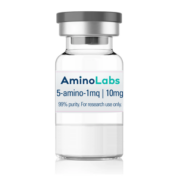
Recommended Source
Why Amino Labs?
- Third-party tested: Each batch includes Certificate of Analysis (COA) verifying purity and composition.
- Consistent quality: ISO-aligned manufacturing and handling standards ensure reliable product integrity.
- Cold-chain integrity: Temperature-controlled shipping and storage throughout fulfillment process.
- Research-grade purity: Suitable for educational and research applications requiring high-quality peptides.
Note: Product availability and specifications subject to change. Verify current product details on supplier website.
Important Note
This content is intended for therapeutic educational purposes only and does not constitute medical advice, diagnosis, or treatment.
References
— Prolonged stimulation of GH and IGF-1 secretion by CJC-1295 in healthy adults
— DAC technology: albumin-binding for extended peptide half-life
— Single and multiple dose pharmacokinetics of CJC-1295 in healthy subjects
— Activation of the GH/IGF-1 axis by CJC-1295 and serum protein profile changes
— Body composition and quality of life in adults with GH deficiency; effects of GH replacement
— Physiology of growth hormone secretion during sleep
— Safety and tolerability of CJC-1295 at various dose levels in healthy subjects
— Handling and storage guidelines for peptides
— Preventing unsafe injection practices and clinical safety guidelines
— Subcutaneous (SQ) injections: technique, site selection, and rotation
— GHRH analogs and preservation of pulsatile GH secretion patterns
— Effect of tesamorelin on visceral fat in HIV-infected patients: randomized clinical trial
— Peptide storage recommendations and stability guidelines
— BPC-157 (5 mg) product page (quality and batch documentation)