
KLOW (80 mg Vial) Dosage Protocol
Contents
Quickstart Highlights
KLOW is a multi-peptide blend combining TB-500 (10 mg), BPC-157 (10 mg), KPV (10 mg), and GHK-Cu (50 mg) for a total of 80 mg per vial. TB-500 (synthetic thymosin beta-4) promotes wound healing, angiogenesis, and tissue repair[1][2]. BPC-157 exhibits regenerative properties with preclinical evidence supporting tendon, ligament, and muscle healing[3][4]. KPV is an anti-inflammatory tripeptide that modulates NF-κB signaling[5][6]. GHK-Cu supports collagen synthesis, wound healing, and tissue regeneration[7][8]. This educational protocol presents a once-daily subcutaneous approach using a practical dilution for clear insulin-syringe measurements.
- Reconstitute: Add 3.0 mL bacteriostatic water → ~26.7 mg/mL total concentration.
- Component concentrations: TB-500, BPC-157, KPV each at ~3.33 mg/mL; GHK-Cu at ~16.7 mg/mL.
- Easy measuring: At 26.7 mg/mL total, 1 unit = 0.01 mL ≈ 267 mcg total peptide on a U-100 insulin syringe.
- Storage: Lyophilized: freeze at −20 °C (−4 °F); after reconstitution, refrigerate at 2–8 °C (35.6–46.4 °F); avoid freeze–thaw cycles.
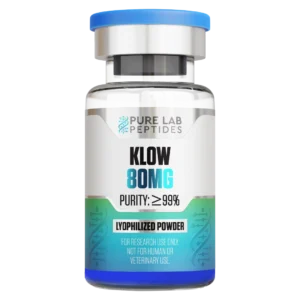
Dosing & Reconstitution Guide
Standard / Gradual Approach (3 mL = ~26.7 mg/mL Total)
This multi-peptide blend provides synergistic regenerative, anti-inflammatory, and tissue-repair support. The following titration schedule allows gradual introduction of each component.
| Week | Daily Dose (per component) | Units (per injection) (mL) |
|---|---|---|
| Weeks 1–2 | TB-500: 250 mcg | BPC-157: 250 mcg | KPV: 250 mcg | GHK-Cu: 1.25 mg | 7.5 units (0.075 mL) |
| Weeks 3–4 | TB-500: 500 mcg | BPC-157: 500 mcg | KPV: 500 mcg | GHK-Cu: 2.5 mg | 15 units (0.15 mL) |
| Weeks 5–8 | TB-500: 750 mcg | BPC-157: 750 mcg | KPV: 750 mcg | GHK-Cu: 3.75 mg | 22.5 units (0.225 mL) |
| Weeks 9–12 (Maintenance) | TB-500: 500 mcg | BPC-157: 500 mcg | KPV: 500 mcg | GHK-Cu: 2.5 mg | 15 units (0.15 mL) |
Frequency: Inject once daily subcutaneously. This schedule uses a 3.0 mL dilution to maintain measurable volumes. For ≤10-unit (≤0.10 mL) administrations during initial weeks, consider 30- or 50-unit insulin syringes for improved readability.
Reconstitution Steps
- Draw 3.0 mL bacteriostatic water with a sterile syringe.
- Inject slowly down the vial wall; avoid foaming.
- Gently swirl/roll until dissolved (do not shake).
- Label and refrigerate at 2–8 °C (35.6–46.4 °F), protected from light.
Syringe Math Reference
With 3.0 mL reconstitution volume and 80 mg total peptide:
- Total concentration: 26.67 mg/mL (26,667 mcg/mL)
- TB-500: 3.33 mg/mL → 33.3 mcg per unit
- BPC-157: 3.33 mg/mL → 33.3 mcg per unit
- KPV: 3.33 mg/mL → 33.3 mcg per unit
- GHK-Cu: 16.67 mg/mL → 166.7 mcg per unit
- 1 unit (0.01 mL) = 33.3 mcg each of TB-500, BPC-157, KPV + 166.7 mcg GHK-Cu
Important: This guide is for educational purposes only and is not medical advice. For research use only. Not for human consumption.
Supplies Needed
Plan based on an 8–16 week daily protocol with gradual titration.
- Peptide Vials (KLOW, 80 mg each):
- 8 weeks ≈ 3 vials
- 12 weeks ≈ 4 vials
- 16 weeks ≈ 5 vials
- Insulin Syringes (U-100):
- Per week: 7 syringes (1/day)
- 8 weeks: 56 syringes
- 12 weeks: 84 syringes
- 16 weeks: 112 syringes
- Bacteriostatic Water (10 mL bottles): Use ~3.0 mL per vial for reconstitution.
- 8 weeks (3 vials): 9 mL → 1 × 10 mL bottle
- 12 weeks (4 vials): 12 mL → 2 × 10 mL bottles
- 16 weeks (5 vials): 15 mL → 2 × 10 mL bottles
- Alcohol Swabs: One for the vial stopper + one for the injection site each day.
- Per week: 14 swabs (2/day)
- 8 weeks: 112 swabs → recommend 2 × 100-count boxes
- 12 weeks: 168 swabs → recommend 2 × 100-count boxes
- 16 weeks: 224 swabs → recommend 3 × 100-count boxes
![insulin[1]](https://peptidedosing.ca/wp-content/uploads/2026/01/insulin1-178x178.webp "insulin[1]")
![Bacteriostatic-Water-Bottle[1]](https://peptidedosing.ca/wp-content/uploads/2026/01/Bacteriostatic-Water-Bottle1-178x178.webp "Bacteriostatic-Water-Bottle[1]")
![EasyTouch_Alcohol_Pads[1]](https://peptidedosing.ca/wp-content/uploads/2026/01/EasyTouch_Alcohol_Pads1-178x178.avif "EasyTouch_Alcohol_Pads[1]")
Protocol Overview
Concise summary of the once-daily regimen.
- Goal: Support tissue repair, reduce inflammation, and promote regeneration through synergistic peptide action[1][3][5][7].
- Schedule: Daily subcutaneous injections for 8–12 weeks (extend to 16 weeks if desired).
- Dose Range: Gradual titration from low to moderate doses based on individual response.
- Reconstitution: 3.0 mL per 80 mg vial (~26.7 mg/mL total) for accurate unit measurements.
- Storage: Lyophilized frozen; reconstituted refrigerated; avoid repeated freeze–thaw.
Dosing Protocol
Suggested daily titration approach.
- Start: 7.5 units daily (0.075 mL) for initial assessment period.
- Increase: Progress to 15 units by Week 3, then 22.5 units by Week 5 as tolerated.
- Maintenance: 15 units daily for extended protocols.
- Frequency: Once per day (subcutaneous).
- Cycle Length: 8–12 weeks; optional extension to 16 weeks.
- Timing: Any consistent time; rotate injection sites.
Storage Instructions
Proper storage preserves peptide quality.
- Lyophilized: Store at −20 °C (−4 °F) in dry, dark conditions; minimize moisture exposure[9].
- Reconstituted: Refrigerate at 2–8 °C (35.6–46.4 °F); use within 14–28 days and avoid freeze–thaw.
- Allow vials to reach room temperature before opening to reduce condensation uptake.
Important Notes
Practical considerations for consistency and safety.
- Use new sterile insulin syringes for each injection; dispose in a sharps container.
- Rotate injection sites (abdomen, thighs, upper arms) to reduce local irritation[10].
- Inject slowly; wait a few seconds before withdrawing the needle.
- Document daily dose and site rotation to maintain consistency.
- This multi-peptide blend may provide broader regenerative support than single-peptide protocols.
How This Works
KLOW combines four peptides with complementary mechanisms of action:
- TB-500 (Thymosin Beta-4): Promotes angiogenesis, cell migration, and tissue repair by regulating actin, a key protein in cell structure[1]. Preclinical studies demonstrate accelerated wound healing, reduced inflammation, and tissue regeneration[2].
- BPC-157: A gastric pentadecapeptide that supports tendon, ligament, and muscle healing through enhanced angiogenesis and growth factor modulation[3]. Animal studies show favorable tissue repair outcomes[4].
- KPV: A C-terminal tripeptide fragment of α-MSH with potent anti-inflammatory properties. It inhibits NF-κB signaling and reduces pro-inflammatory cytokines without melanotropic effects[5][6].
- GHK-Cu: A naturally occurring copper peptide that stimulates collagen and elastin synthesis, promotes wound healing, and modulates gene expression related to tissue remodeling[7][8].
Potential Benefits & Side Effects
Observations from preclinical and early-stage research.
Potential Benefits
- Accelerated tissue repair and wound healing through multiple complementary pathways[1][3].
- Reduced inflammation via NF-κB inhibition and cytokine modulation[5][7].
- Enhanced collagen synthesis and connective tissue support[8].
- Promotion of angiogenesis and improved blood flow to healing tissues[2].
- Potential support for musculoskeletal recovery and joint health[3].
Possible Side Effects
- Mild injection-site reactions (redness, irritation) may occur with subcutaneous administration.
- Occasional lightheadedness reported with some peptides due to vasodilatory effects.
- Limited human clinical data; most safety observations derive from preclinical studies[4].
Lifestyle Factors
Complementary strategies for best outcomes.
- Pair with a balanced, protein-forward diet tailored to support tissue repair and recovery.
- Combine resistance training and mobility work to reinforce musculoskeletal adaptations.
- Prioritize sleep and stress management to optimize the body’s natural regenerative processes.
- Stay well-hydrated to support peptide absorption and overall metabolic function.
Injection Technique
General subcutaneous guidance from clinical best-practice resources[10][11].
- Clean the vial stopper and skin with alcohol; allow to dry completely.
- Pinch a skinfold; insert the needle at 45–90° into subcutaneous tissue[10].
- Do not aspirate for subcutaneous injections; inject slowly and steadily[11].
- Rotate sites systematically (abdomen, thighs, upper arms) to avoid lipohypertrophy[12].
- Apply gentle pressure after withdrawal; do not massage the injection site.
Recommended Source
We recommend Pure Lab Peptides for high-purity Retatrutide (5 mg vials).
Why Pure Lab Peptides?
- Third-party tested: Each batch includes Certificate of Analysis (COA) verifying purity and composition.
- Consistent quality: ISO-aligned manufacturing and handling standards ensure reliable product integrity.
- Cold-chain integrity: Temperature-controlled shipping and storage throughout fulfillment process.
- Research-grade purity: Suitable for educational and research applications requiring high-quality peptides.
Note: Product availability and specifications subject to change. Verify current product details on supplier website.
Important Note
This content is intended for therapeutic educational purposes only and does not constitute medical advice, diagnosis, or treatment.
References
— Thymosin beta 4 accelerates wound healing (Philp et al., 1999)
— Thymosin β4 promotes dermal healing in preclinical models and clinical trials
— Emerging use of BPC-157 in orthopaedic sports medicine: systematic review
— Pharmacokinetics, distribution, metabolism, and excretion of BPC-157 in rats and dogs
— PepT1-mediated tripeptide KPV uptake reduces intestinal inflammation
— Orally targeted delivery of tripeptide KPV via HA-functionalized nanoparticles alleviates ulcerative colitis
— Regenerative and protective actions of the GHK-Cu peptide in light of new gene data
— GHK peptide as a natural modulator of multiple cellular pathways in skin regeneration
— Handling and storage guidelines for peptides and proteins
— Vaccine administration: subcutaneous injection technique guidelines
— Vaccine administration best practices (aspiration not recommended for SC injections)
— Chapter 18: Administration of parenteral medications (injection technique)
— Thymosin β4: a multi-functional regenerative peptide (basic properties and clinical applications)
— The potential of GHK as an anti-aging peptide
— KLOW (80 mg) product page (quality and batch documentation)