
GHK-Cu (100 mg Vial) Dosage Protocol
Contents
Quickstart Highlights
GHK-Cu dosage protocols utilize this naturally occurring copper-binding tripeptide (glycyl-L-histidyl-L-lysine) to support skin rejuvenation, wound healing, and tissue repair[1][2]. GHK-Cu stimulates collagen and elastin production, promotes angiogenesis, and delivers powerful antioxidant and anti-inflammatory benefits[3][4]. Human studies demonstrate improved skin thickness, reduced wrinkles, and enhanced dermal density with GHK-Cu application[2]. This educational protocol presents a once-daily subcutaneous approach using a practical dilution for clear insulin-syringe measurements.
- Reconstitute: Add 3.0 mL bacteriostatic water → ~33.3 mg/mL concentration.
- Typical daily range: 1–2 mg once daily (gradual titration over 12 weeks).
- Easy measuring: At 33.3 mg/mL, 1 unit = 0.01 mL ≈ 333 mcg on a U-100 insulin syringe.
- Storage: Lyophilized: freeze at −20 °C (−4 °F); after reconstitution, refrigerate at 2–8 °C (35.6–46.4 °F); use within 30 days.
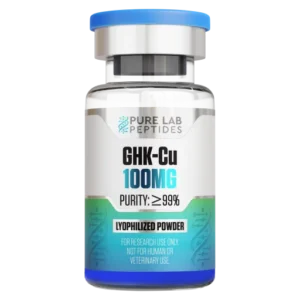
Dosing & Reconstitution Guide
Standard / Gradual Approach (3 mL = ~33.3 mg/mL)
| Week | Daily Dose (mg) | Units (per injection) (mL) |
|---|---|---|
| Weeks 1–4 | 1.0 mg | 3 units (0.03 mL) |
| Weeks 5–8 | 1.5 mg | 4.5 units (0.045 mL) |
| Weeks 9–12 | 2.0 mg | 6 units (0.06 mL) |
Frequency: Inject once daily subcutaneously, 5 days per week (Mon–Fri) with weekends off[5]. For ≤10-unit (≤0.10 mL) administrations, consider 30- or 50-unit insulin syringes for improved readability.
Important: This guide is for educational purposes only and is not medical advice. For research use only. Not for human consumption.
Supplies Needed
Supplies Needed
Plan based on an 8–12 week daily protocol (5 days/week) with gradual titration.
- Peptide Vials (GHK-Cu, 100 mg each):
- 8 weeks (~40 injections, ~50 mg total) ≈ 1 vial
- 12 weeks (~60 injections, ~90 mg total) ≈ 1 vial
- Insulin Syringes (U-100, 30- or 50-unit preferred):
- Per week: 5 syringes (1/day, 5 days)
- 8 weeks: 40 syringes
- 12 weeks: 60 syringes
- Bacteriostatic Water (10 mL bottles): Use 3.0 mL per vial for reconstitution.
- 8–12 weeks (1 vial): 3 mL → 1 × 10 mL bottle
- Alcohol Swabs: One for the vial stopper + one for the injection site each day.
- Per week: 10 swabs (2/day, 5 days)
- 8 weeks: 80 swabs → recommend 1 × 100-count box
- 12 weeks: 120 swabs → recommend 2 × 100-count boxes
![insulin[1]](https://peptidedosing.ca/wp-content/uploads/2026/01/insulin1-178x178.webp "insulin[1]")
![Bacteriostatic-Water-Bottle[1]](https://peptidedosing.ca/wp-content/uploads/2026/01/Bacteriostatic-Water-Bottle1-178x178.webp "Bacteriostatic-Water-Bottle[1]")
![EasyTouch_Alcohol_Pads[1]](https://peptidedosing.ca/wp-content/uploads/2026/01/EasyTouch_Alcohol_Pads1-178x178.avif "EasyTouch_Alcohol_Pads[1]")
Protocol Overview
Concise summary of the once-daily regimen.
- Goal: Support skin rejuvenation, collagen synthesis, wound healing, and anti-aging tissue repair[2][3].
- Schedule: Daily subcutaneous injections, 5 days on / 2 days off, for 8–12 weeks.
- Dose Range: 1–2 mg daily with gradual titration.
- Reconstitution: 3.0 mL per 100 mg vial (~33.3 mg/mL) for accurate unit measurements.
- Storage: Lyophilized frozen at −20 °C; reconstituted refrigerated; use within 30 days.
Dosing Protocol
Suggested daily titration approach.
- Start: 1.0 mg daily for Weeks 1–4; increase to 1.5 mg for Weeks 5–8.
- Target: 2.0 mg daily by Weeks 9–12.
- Frequency: Once per day (subcutaneous), 5 days per week.
- Cycle Length: 8–12 weeks; take 2–4 weeks off before repeating[5].
- Timing: Any consistent time; rotate injection sites.
Storage Instructions
Proper storage preserves peptide quality.
Important Notes
Practical considerations for consistency and safety.
- Use new sterile insulin syringes (30- or 50-unit recommended for small volumes); dispose in a sharps container.
- Rotate injection sites (abdomen, thighs, upper arms) to reduce local irritation[8].
- Inject slowly; wait a few seconds before withdrawing the needle.
- Document daily dose and site rotation to maintain consistency.
- Reconstituted solution should appear clear with a blue tint (from copper); discard if cloudy or discolored.
How This Works
GHK-Cu functions as a “signal peptide” that triggers tissue repair processes by chelating copper(II) ions and delivering this essential trace metal to cells in a bioavailable form[1][9]. Copper is a critical cofactor for enzymes involved in collagen synthesis (lysyl oxidase) and antioxidant defense (superoxide dismutase). Genomic studies show GHK-Cu modulates over 30% of human genes toward a regenerative, anti-aging phenotype[2][10]. The peptide stimulates production of VEGF and bFGF in fibroblasts, promoting angiogenesis and blood flow to injured tissue[3]. GHK-Cu also recruits immune cells to injury sites, increases collagen/elastin/glycosaminoglycan synthesis, and regulates matrix metalloproteinases for balanced tissue remodeling[2][4].
Potential Benefits & Side Effects
Observations from preclinical and clinical literature.
- Skin Rejuvenation: Clinical studies show increased skin thickness, improved dermal collagen density, and reduced wrinkle depth with GHK-Cu application[2].
- Wound Healing: Promotes angiogenesis, granulation tissue formation, and accelerated wound closure in preclinical models[3][4].
- Anti-Inflammatory: Suppresses pro-inflammatory cytokines (TNF-α, IL-6) and provides antioxidant protection[1][11].
- Hair Growth: Observed to enlarge hair follicle size and increase growth rate in studies[2].
- Safety Profile: Excellent tolerability with no serious adverse effects noted; extremely wide safety margin in toxicology studies[9][10].
- Occasional mild injection-site reactions (transient redness or stinging) may occur with subcutaneous administration.
Lifestyle Factors
Complementary strategies for best outcomes.
- Ensure adequate protein and vitamin C intake to support collagen synthesis.
- Maintain proper hydration—tissue repair processes require sufficient water.
- Consider complementary skincare routines (sunscreen, moisturizers) to protect treated skin.
- Prioritize sleep and stress management to support recovery and tissue regeneration.
Injection Technique
General subcutaneous guidance from clinical best-practice resources[8].
- Clean the vial stopper and skin with alcohol; allow to dry.
- Pinch a skinfold; insert the needle at 45–90° into subcutaneous tissue[8].
- Do not aspirate for subcutaneous injections; inject slowly and steadily.
- Wait 5–10 seconds before withdrawing; dispose of syringe in sharps container.
- Rotate sites systematically (abdomen, thighs, upper arms) to avoid lipohypertrophy.
Recommended Source
We recommend Pure Lab Peptides for high-purity Retatrutide (5 mg vials).
Why Pure Lab Peptides?
- Third-party tested: Each batch includes Certificate of Analysis (COA) verifying purity and composition.
- Consistent quality: ISO-aligned manufacturing and handling standards ensure reliable product integrity.
- Cold-chain integrity: Temperature-controlled shipping and storage throughout fulfillment process.
- Research-grade purity: Suitable for educational and research applications requiring high-quality peptides.
Note: Product availability and specifications subject to change. Verify current product details on supplier website.
Important Note
This content is intended for therapeutic educational purposes only and does not constitute medical advice, diagnosis, or treatment.
References
— GHK-Cu stimulates collagen synthesis in dermal fibroblasts and wound healing processes
— Copper peptides in wound healing: tissue remodeling and collagen gene expression
— Regenerative and protective actions of GHK-Cu: gene regulation analysis
— GHK modulation of metalloproteinases and tissue inhibitors in wound healing
— Clinical dosing patterns for GHK-Cu (1–2 mg subcutaneous protocols)
— GHK-Cu injection protocols: 5 days/week and 3×/week dosing patterns
— Peptide storage and handling guidelines: lyophilized storage at −20 °C (−4 °F)
— Peptide storage best practices: temperature, humidity, and light protection
— GHK-Cu patient information: reconstituted storage at 2–8 °C (35.6–46.4 °F), 30-day use window
— Stability and storage: aliquoting peptide solutions to minimize freeze-thaw damage
— Avoiding repeated freeze-thaw cycles to prevent peptide degradation
— Injection site rotation to prevent lipodystrophy and local irritation
— Subcutaneous injection site selection: abdomen, thighs, upper arms
— Proper skin preparation: alcohol swab cleaning and air-drying before injection
— Preclinical studies: GHK-Cu activity at low doses (~0.5 mcg/kg in rats)
— GHK effect on gene expression relevant to nervous system function and cognitive decline
— Vaccine administration: subcutaneous injection technique (angle, no aspiration)
— Technique diagram and site guidance for subcutaneous injections
— Best practices for injection: asepsis, preparation, administration, and sharps disposal
— Retatrutide (5 mg) product page (quality documentation and specifications)