Quickstart Highlights
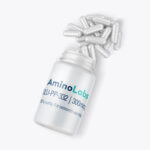
SLU-PP-332 is a synthetic small molecule, not a peptide. It is a pan-agonist of the estrogen-related receptors (ERR-alpha, -beta and -gamma), the orphan nuclear receptors that normally switch on after endurance exercise, and it is studied in mice as an exercise mimetic for endurance, fat loss and metabolic health. All published evidence is from mouse intraperitoneal studies; no human trial exists, and the compound is prohibited in sport by WADA. This educational protocol presents the 300 mcg capsule taken once daily in week 1 and twice daily (600 mcg/day) from week 2 over a 6–8 week cycle, which sits at the mcg scale used by capsule vendors.
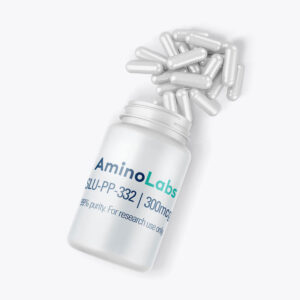
- Format: 300 mcg per capsule; no reconstitution required.
- Dose range: 1 capsule (300 mcg) once daily in week 1, then 1 capsule twice daily (600 mcg/day) from week 2 (6–8 week cycle, then 4 weeks off).
- Timing: Morning; from week 2, the second capsule 30–60 minutes before training.
- Storage: Keep capsules in the original container at room temperature or refrigerated, dry and protected from light.
Dosing Guide
Standard Protocol
| Week | Capsules | Daily amount |
|---|---|---|
| Week 1 | 1 capsule × 1 per day | 300 mcg/day |
| Week 2 onward | 1 capsule × 2 per day | 600 mcg/day |
Frequency: One capsule in the morning during week 1; from week 2, one capsule in the morning and one 30–60 minutes before training (600 mcg/day).
Cycle: 6–8 weeks on, then 4 weeks off.
Administration Steps
- Take the morning capsule at the same time each day, with a glass of water, before or with breakfast; sources specify morning timing only.
- From week 2, take the second capsule 30–60 minutes before training; on rest days take it at the same clock time.
- Swallow capsules whole; do not open, split or dissolve them, since the small molecule is poorly water-soluble and the capsule content is not formulated for liquid use.
- Record the time of each capsule, resting heart rate and sleep quality in a simple log so that tolerance can be assessed before the cycle continues.
- Stop at the end of the 6–8 week cycle and take a full 4-week break before any repeat cycle.
Important: This guide is for educational purposes only and is not medical advice. For research use only. Not for human consumption.
Supplies Needed
Plan based on a 6–8 week protocol at 2 capsules per day from week 2.
- Capsules (SLU-PP-332 Capsules, 300 mcg each):
- 6 weeks (1 per day in week 1, then 2 per day) = 77 capsules
- 8 weeks (1 per day in week 1, then 2 per day) = 105 capsules
Protocol Overview
Concise summary of the twice-daily oral regimen.
- Goal: Activate ERR-driven mitochondrial and fatty-acid-oxidation gene programs to support endurance, fat loss and metabolic health, mimicking adaptations seen after aerobic training in mouse studies.
- Schedule: Oral capsules once daily in week 1 and twice daily from week 2 for 6–8 weeks, followed by a 4-week break.
- Dose Range: 300 mcg (0.3 mg) once daily in week 1, then 600 mcg (0.6 mg) daily as two 300 mcg capsules from week 2.
- Format: Oral capsule; no reconstitution, syringes or pen settings apply.
- Evidence: Animal data only: mouse intraperitoneal studies from 2023–2024 (Billon et al., Xu et al.), with no registered human trial, no human pharmacokinetics and no human safety data. Confidence is low; oral figures across vendors diverge by roughly a hundredfold and none has a peer-reviewed source.
Dosing Protocol
Suggested daily approach based on capsule-vendor conventions; no human dose has been established.
- Week 1: 1 capsule (300 mcg) once daily in the morning to assess tolerance, particularly sleep and resting heart rate.
- Week 2 onward: 1 capsule (300 mcg) twice daily, 600 mcg/day: one in the morning and one 30–60 minutes before training.
- Frequency: One capsule in the morning during week 1; from week 2, one capsule in the morning and one 30–60 minutes before training (600 mcg/day). On rest days the second capsule is taken at the same time the training dose would fall.
- Timing: Morning for the first capsule; the second capsule before training because sources place the compound 30–60 minutes ahead of exercise. The rodent half-life is short (1.5–4 hours), which is the stated reason for splitting the day.
- Cycle: 6–8 weeks on, then 4 weeks off. Sources range from 4 to 12 weeks on and 2 to 8 weeks off; one source states that any cycle length is invented, since no human data exist.
- Titration: The only step is from one to two capsules after week 1; no further escalation is presented, and the 600 mcg/day amount matches the maintenance figure given for mcg-dosed capsule products.
- Scale note: Some vendors sell 30–50 mg tablets dosed at 25–100 mg/day, roughly a hundred times this page’s amounts. The two scales have never been reconciled; this page follows the mcg-scale capsule convention that matches the 300 mcg product and does not endorse either.
Storage Instructions
Proper storage preserves product quality and efficacy.
- Capsules: Keep in the original sealed container in a cool, dry place protected from light and moisture; refrigeration at 2–8 °C (35.6–46.4 °F) is acceptable and sources describe room temperature as suitable.
- Do not transfer capsules to pill organizers for long periods; humidity and light exposure are the main degradation risks for a small molecule in capsule form.
- Keep the container closed between doses and away from heat sources such as a car interior or a gym bag in the sun.
- No reconstitution, syringes or pen settings apply to this product.
Important Notes
Practical considerations for consistency and safety.
- SLU-PP-332 is a small molecule (C18H14N2O2, 290.3 g/mol), not a peptide. Peptide handling assumptions about digestion and absorption do not transfer, and published research notes that the compound has poor oral bioavailability, which puts the effective oral dose in doubt.
- Not approved by Health Canada or the FDA; research use only. No IND exists, no human trial is registered, and the compound is not available through compounding pharmacies.
- Prohibited in sport: WADA lists SLU-PP-332 under S4.5 metabolic modulators, so it is banned in and out of competition for tested athletes.
- Evidence caveat: every human figure is a community extrapolation from 25–50 mg/kg intraperitoneal mouse doses given twice daily, amounts that would be grams per day in a human. The widely quoted 250 mcg/day figure has no peer-reviewed source, and vendor oral doses diverge by a hundredfold.
- Cardiac caution: estrogen-related receptors are active in the heart, cardiac hypertrophy has been reported in some higher-dose rodent protocols, and cardiac substrate switching is a documented concern. Elevated resting heart rate is one of the most commonly reported community effects; record resting heart rate before and during the cycle.
- One source advises caution alongside GLP-1 agonists, diabetes medications and thyroid medications because of overlapping metabolic effects; no interaction study exists.
- Take the capsules at consistent times each day with water; if a capsule is missed, resume at the next scheduled time rather than doubling.
- Sleep disturbance is a frequently reported effect; no source describes an evening dose; where training falls late in the day, the timing of the second capsule is a trade-off against sleep.
How This Works
SLU-PP-332 is a synthetic small molecule, not a peptide, first described by the Burris laboratory at Saint Louis University in 2023–2024. It is a pan-agonist of the estrogen-related receptors ERR-alpha, ERR-beta and ERR-gamma, with the strongest activity at ERR-alpha (EC50 about 98 nM). The estrogen-related receptors are orphan nuclear receptors that normally switch on after endurance exercise. Activating them upregulates the PGC-1alpha-linked gene programs that drive mitochondrial biogenesis, fatty-acid oxidation and the formation of oxidative type IIa muscle fibers, so the compound mimics some of the metabolic adaptations of aerobic training without exercise. In mice given the compound by intraperitoneal injection, treadmill endurance increased by roughly 70 percent and obese animals lost about 12 percent of body weight over 28 days without a change in diet. No human pharmacokinetic or efficacy data exist, published work notes poor oral bioavailability, and the receptors are also active in cardiac tissue, which is the basis of the cardiac caution.
Potential Benefits & Side Effects
Observations from mouse studies; no human data exist.
Potential Benefits:
- About 70 percent longer treadmill run time, with more oxidative type IIa muscle fibers, in mouse studies.
- Enhanced mitochondrial biogenesis and fatty-acid oxidation in skeletal muscle, in mouse studies.
- About 12 percent body-weight and 25–30 percent fat-mass reduction over 28 days in obese mice without a diet change, with improved glucose tolerance and lipids.
- Marketed as an exercise mimetic for endurance, fat loss with muscle preservation and metabolic health; these are claims, not trial results.
- Community reports of energy and endurance, which cannot be separated from placebo without a controlled trial.
Potential Side Effects:
- Community reports: sleep disturbance, elevated resting heart rate, GI discomfort, a feeling of warmth, appetite change, mild headache and fatigue.
- Cardiac concern (theoretical and animal): estrogen-related receptors are active in the heart; cardiac hypertrophy has been reported in some higher-dose rodent protocols, along with cardiac substrate switching.
- Possible interactions with GLP-1 agonists, diabetes medications and thyroid medications, raised by one source without interaction data.
- No human safety data; the long-term effects of ERR activation in humans are unknown.
- Off-target activity at ERR-gamma is noted as a concern by one source.
Lifestyle Factors
Complementary strategies for an endurance and metabolic protocol.
- Keep a structured aerobic training program (150 or more minutes per week) in place; the compound is studied as a mimic of training adaptations, not as a replacement for exercise, and no human data show an effect without training.
- Include resistance training 2–3 days per week and adequate protein (1.2–1.6 g/kg body weight) to preserve lean mass during fat loss.
- Record resting heart rate and sleep quality each morning; these are the two most commonly reported effects and the simplest early warning signs.
- Avoid late-day stimulants such as caffeine after noon, since sleep disturbance is already a reported effect.
- Maintain a modest calorie deficit if fat loss is the goal; the mouse weight-loss data were obtained without a diet change, but no human data support the same effect.
- Stay well hydrated and maintain electrolytes during endurance sessions, particularly if the second capsule is timed before training.
Administration Guidance
Practical guidance for consistent oral dosing.
- Keep both capsules as early in the day as the training schedule allows; sleep disturbance is a commonly reported effect, and an evening dose is not described by any source.
- Do not exceed two capsules per day on this protocol; the mg-scale tablet figures sold by other vendors are a different, unreconciled convention and should not be mixed with this one.
- If a dose is missed, resume at the next scheduled time rather than doubling.
- Store capsules in the original container and check for discolouration or clumping before use.
- Measure resting heart rate before starting and weekly thereafter; a sustained rise is a reason to pause the protocol.
- Tested athletes should not use this product; it is WADA-prohibited under S4.5 metabolic modulators.
Recommended Source
We recommend Amino Labs for high-purity SLU-PP-332 Capsules (300 mcg capsules).
Why Amino Labs?
- Third-party tested: Each batch includes Certificate of Analysis (COA) verifying purity and composition.
- Consistent quality: ISO-aligned manufacturing and handling standards ensure reliable product integrity.
- Cold-chain integrity: Temperature-controlled shipping and storage throughout fulfillment process.
- Research-grade purity: Suitable for educational and research applications requiring high-quality research compounds.
Note: Product availability and specifications subject to change. Verify current product details on supplier website.
Important Note
This content is intended for therapeutic educational purposes only and does not constitute medical advice, diagnosis, or treatment.