Quickstart Highlights
BPC-157 is a 15-amino-acid fragment of a protective protein in human gastric juice, stable in the stomach and studied in animal models for healing of gut mucosa, tendon, muscle, bone and nerve tissue. Sources favor the oral capsule for gut-directed goals, where it acts locally, while its bioavailability for systemic goals is lower than injection. This educational protocol presents the oral convention: one 500 mcg capsule once daily for general support, or one capsule twice daily (morning and evening) for gut-focused use, taken on an empty stomach about 30 minutes before a meal, in cycles of 4–8 weeks on and 2–4 weeks off. No reconstitution, syringes or pen settings apply.
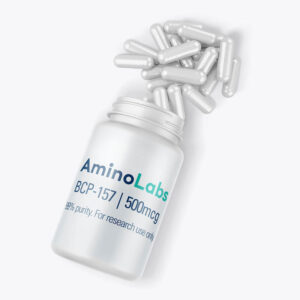
- Format: 500 mcg per capsule; no reconstitution required.
- Dose range: 1 capsule (500 mcg) once daily, or 1 capsule twice daily (1000 mcg/day) for gut-focused use.
- Timing: Empty stomach, about 30 minutes before a meal; morning and evening when twice daily.
- Storage: Keep capsules in the original container at room temperature or refrigerated, dry and protected from light.
Dosing Guide
Standard Protocol
| Use case | Capsules | Daily amount |
|---|---|---|
| General support | 1 capsule × 1 per day | 500 mcg/day |
| Gut-focused | 1 capsule × 2 per day | 1000 mcg/day |
Frequency: One capsule once daily for general support, or one capsule twice daily (morning and evening) for gut-focused use. Take on an empty stomach about 30 minutes before a meal.
Cycle: 4–8 weeks on, then 2–4 weeks off.
Administration Steps
- Take the capsule at a consistent time, about 30 minutes before breakfast (and before the evening meal when dosing twice daily).
- Swallow the capsule whole with a glass of water; do not chew, open or dissolve it.
- Wait about 30 minutes before eating so the capsule is not taken with food, which most oral sources prefer.
- Record the dose and date; for gut-focused use, keep the morning and evening capsules roughly 12 hours apart.
- Continue for 4–8 weeks, then stop for 2–4 weeks before any repeat cycle.
Important: This guide is for educational purposes only and is not medical advice. For research use only. Not for human consumption.
Supplies Needed
Plan based on a 4–8 week protocol at one capsule twice daily (gut-focused use); once-daily general support needs half as many capsules.
- Capsules (BPC-157 Capsules, 500 mcg each):
- 4 weeks at 2 capsules/day ≈ 56 capsules
- 8 weeks at 2 capsules/day ≈ 112 capsules
Protocol Overview
Concise summary of the oral regimen.
- Goal: Support gut-lining protection and general tissue repair through the oral route, which sources favor for gut-directed goals.
- Schedule: One capsule once daily, or twice daily for gut-focused use, for 4–8 weeks, followed by a 2–4 week break.
- Dose Range: 500 mcg (0.5 mg) once daily to 500 mcg (0.5 mg) twice daily, i.e. 500–1000 mcg (0.5–1 mg) per day from one or two capsules.
- Format: Oral capsule; no reconstitution, syringes or pen settings apply.
- Evidence: Animal data dominant, with one unpublished oral Phase 1 tablet study and no human RCT; the 500 mcg once- or twice-daily capsule convention is consistent across oral sources but has no human dose-finding data, so confidence is medium for the convention and low for any specific figure.
Dosing Protocol
Suggested oral approach based on preclinical data and research-community conventions.
- General support: 1 capsule (500 mcg) once daily.
- Gut-focused: 1 capsule (500 mcg) twice daily, morning and evening, for 1000 mcg/day; oral gut protocols in the sources run at the higher end because oral bioavailability is lower than injection.
- Frequency: Once daily for general support; twice daily for gut-focused use.
- Timing: Empty stomach, about 30 minutes before a meal; sources that split the dose place the two capsules about 12 hours apart.
- Cycle: 4–8 weeks on, then 2–4 weeks off. Oral sources range from 4 to 12 weeks on.
- Titration: Not described for capsules; sources begin at the working dose, and the once-daily schedule serves as the lower tier where tolerance is a concern.
Storage Instructions
Proper storage preserves product quality and efficacy.
- Capsules: Keep in the original sealed container, dry and protected from light, at room temperature or refrigerated at 2–8 °C (35.6–46.4 °F).
- Avoid heat and humidity; do not store in a bathroom or near a stove, and keep any desiccant supplied in the container.
- Do not open, split or dissolve capsules; the 500 mcg amount is fixed per capsule and the protocol is built in whole capsules.
- Observe the expiry date on the label; capsules are not subject to the 28-day limit that applies to reconstituted vials.
Important Notes
Practical considerations for consistency and safety.
- Take each capsule at the same time of day with water on an empty stomach; consistency of timing matters more than the exact clock time.
- Oral bioavailability is lower than injection for systemic goals; sources favor the capsule for gut-directed goals and the injectable for tendon, ligament or muscle injury.
- Not approved by Health Canada or the FDA; sold for research use only. BPC-157 is prohibited by WADA (S0, non-approved substances) for tested athletes.
- Evidence caveat: oral dosing figures come from preclinical data and community practice; the only human oral study (1 mg tablets up to 9 mg/day, Phase 1) is unpublished, and one evidence review declines to endorse any dose.
- Sources list active cancer and pregnancy as contraindications because of the angiogenic mechanism.
- Nausea is reported more often with the oral route than with injection; sources disagree on whether an empty stomach or a meal is better tolerated, so timing can be shifted toward a meal if nausea appears.
- Keep the capsule and any injectable BPC-157 within one plan so the total daily amount is known; stacking conventions in sources count 500 mcg daily as the standard single-compound figure.
- Log each dose and the cycle start date so the 4–8 week on-period and the 2–4 week break are tracked accurately.
How This Works
BPC-157 is a 15-amino-acid fragment of a protein found in human gastric juice, which accounts for its stability in the stomach and for the oral route’s appeal in gut-directed research. It upregulates vascular endothelial growth factor (VEGF) and related growth-factor signaling, promoting angiogenesis and fibroblast migration into damaged tissue, interacts with the nitric oxide system, and modulates inflammatory and dopaminergic pathways. In rodent models these actions accelerate healing of gut mucosa, tendon, muscle, bone and nerve tissue, and one source cites a 2022 animal study in which oral dosing gave superior local gastrointestinal protection in ulcer models. Sources describe oral bioavailability as lower than injection for systemic goals, which is why oral protocols sit at 500 mcg once or twice daily rather than lower. Human evidence is limited to three small uncontrolled pilot studies and one unpublished oral Phase 1 tablet study; no controlled trial exists, so the capsule figures are convention rather than validated dosing.
Potential Benefits & Side Effects
Observations from preclinical literature and research-community reports.
Potential Benefits:
- Gut-lining protection and ulcer or inflammatory-bowel support in animal models, with one source citing superior local gastrointestinal protection from the oral route in ulcer models.
- Tendon, ligament and muscle repair in animal models; sources note that systemic goals are better served by injection or higher oral amounts.
- Angiogenesis and collagen production, the mechanism behind the tissue-repair findings.
- Bone-fracture and nerve healing in animal models.
- Community reports of reduced pain and inflammation in weeks 1–2 and functional improvement by weeks 3–4; these timelines do not come from controlled human data.
Potential Side Effects:
- Nausea, reported more often with the oral route than with injection.
- Headache, dizziness and fatigue (less common).
- Theoretical angiogenesis concern with existing tumors; sources list active cancer and pregnancy as contraindications.
- Prohibited by WADA for tested athletes.
- No controlled human safety data; long-term effects are unknown.
Lifestyle Factors
Complementary strategies for gut and tissue recovery.
- Keep a consistent, fiber-adequate diet and note any foods that reliably aggravate gut symptoms so changes during the cycle can be attributed correctly.
- Limit alcohol and tobacco, both of which irritate the gut lining and impair wound healing.
- Prioritize protein intake (1.2–1.6 g/kg body weight) and overall energy adequacy to supply what tissue repair requires.
- Sleep 7–9 hours and manage stress; both influence gut function independently of any compound.
- Track gut symptoms, pain and function weekly over the 4–8 week cycle rather than judging day to day.
Administration Guidance
Practical guidance for consistent oral dosing.
- Keep the bottle where it will be seen at the same time each day; a missed capsule is simply taken at the next scheduled time, not doubled.
- Take the capsule with water only; most oral sources prefer an empty stomach, and a 30-minute gap before food keeps absorption conditions consistent.
- If nausea occurs, sources differ on timing, and some users move the capsule closer to a meal; treat this as a tolerability trade-off rather than a sourced rule.
- Keep capsules in the original labeled container, away from children and pets.
- Capsules are supplied for research use only and are not a Health Canada or FDA-approved product.
Recommended Source
We recommend Amino Labs for high-purity BPC-157 Capsules (500 mcg capsules).
Why Amino Labs?
- Third-party tested: Each batch includes Certificate of Analysis (COA) verifying purity and composition.
- Consistent quality: ISO-aligned manufacturing and handling standards ensure reliable product integrity.
- Cold-chain integrity: Temperature-controlled shipping and storage throughout fulfillment process.
- Research-grade purity: Suitable for educational and research applications requiring high-quality peptides.
Note: Product availability and specifications subject to change. Verify current product details on supplier website.
Important Note
This content is intended for therapeutic educational purposes only and does not constitute medical advice, diagnosis, or treatment.