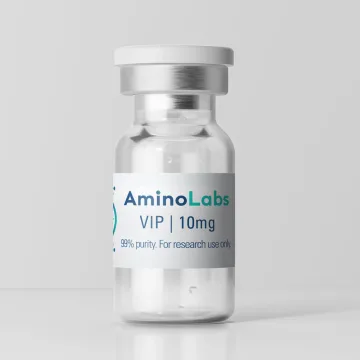
Quickstart Highlights
Vasoactive intestinal peptide (VIP) is a 28-amino-acid neuropeptide of the secretin/glucagon family that activates VPAC1 and VPAC2 receptors, relaxing vascular, bronchial and gut smooth muscle and suppressing pro-inflammatory cytokines. It is studied mainly as the final step of the Shoemaker protocol for chronic inflammatory response syndrome (CIRS), where it is given as a compounded nasal spray. This educational protocol presents the research-community subcutaneous convention of 50–200 mcg once or twice daily for 4–8 weeks, using 2.0 mL bacteriostatic water per 10 mg vial (5 mg/mL) so that 1 unit = 50 mcg on a U-100 syringe.
- Reconstitute: Add 2 mL bacteriostatic water → 5 mg/mL concentration.
- Dose range: 50–200 mcg (0.05–0.2 mg) per injection, once or twice daily (morning and evening), subcutaneously for 4–8 weeks.
- Easy measuring: At 5 mg/mL, 1 unit = 0.01 mL = 50 mcg on a U-100 insulin syringe.
- Storage: Lyophilized: freeze at −20 °C (−4 °F); after reconstitution, refrigerate at 2–8 °C (35.6–46.4 °F) and use within 28 days.
- Label: Discard the reconstituted vial at 28 days regardless of remaining volume. VIP is fragile: keep the solution cold, upright and dark, never freeze it, and discard it if it turns cloudy.
Dosing & Reconstitution Guide
Standard Protocol (subcutaneous) (2 mL = 5 mg/mL)
| Schedule | Dose | Calculated volume | U-100 scale value (1 mL capacity) | V1 nominal setting (units) |
|---|---|---|---|---|
| Low dose (once daily) | 50 mcg (0.05 mg) | 0.01 mL | 1 unit | 1 unit |
| Standard dose (once or twice daily) | 100 mcg (0.1 mg) | 0.02 mL | 2 units | 2 units |
| Upper reference | 200 mcg (0.2 mg) | 0.04 mL | 4 units | 4 units |
Calculation basis: The table uses the labelled 10 mg amount and assumes a final solution volume of 2 mL (5 mg/mL). BAC volume does not change the amount of peptide. These are nominal calculations, not validation of preparation, compatibility or treatment.
Frequency: Once or twice daily (morning and evening). The dominant convention across sources is intranasal (50 mcg per spray, 500 mcg/mL, 4 sprays/day in weeks 1–4 then 4–8/day); the subcutaneous figures here are community conventions.
Cycle: 4–8 weeks; discard the reconstituted vial at 28 days regardless of remaining volume.
Reconstitution Steps
- Allow the vial to reach room temperature before opening to minimize condensation.
- Draw 2 mL bacteriostatic water with a sterile syringe.
- Inject slowly down the vial wall to minimize foaming; avoid shaking.
- Gently swirl or roll the vial until the powder is fully dissolved.
- Label the vial with the reconstitution date and refrigerate at 2–8 °C (35.6–46.4 °F), protected from light.
- Use reconstituted solution within 28 days for maximum potency and safety.
Important: This guide is for educational purposes only and is not medical advice. For research use only. Not for human consumption.
Supplies Needed
Plan based on a 4–8 week course at the standard 100 mcg dose, counts assume twice daily (once daily halves the syringe and swab counts).
- Peptide Vials (VIP, 10 mg each):
- 4 weeks ≈ 1 vial (5.6 mg total used)
- 8 weeks ≈ 2 vials (11.2 mg total used)
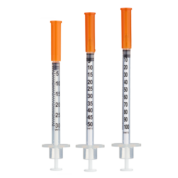
- Insulin Syringes (U-100):
- Per week: 7–14 syringes (once or twice daily; counts below assume twice daily)
- 4 weeks: 56 syringes
- 8 weeks: 112 syringes
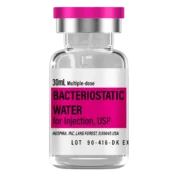
- Bacteriostatic Water (30 mL bottles): Use 2 mL per vial for reconstitution.
- 4 weeks (1 vial): 2 mL → 1 × 30 mL bottle
- 8 weeks (2 vials): 4 mL → 1 × 30 mL bottle
Note: Use bacteriostatic water within 28 days after opening; a vial reconstituted more than 28 days after the bottle was first opened needs a new bottle.
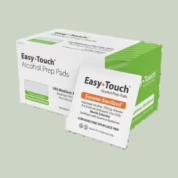
- Alcohol Swabs: One for the vial stopper + one for the injection site each injection.
- 4 weeks: 112 swabs → recommend 2 × 100-count boxes
- 8 weeks: 224 swabs → recommend 3 × 100-count boxes
Protocol Overview
Concise summary of the subcutaneous regimen.
- Goal: Support anti-inflammatory and immunomodulatory signaling through VPAC receptor activation, the mechanism invoked in CIRS, together with vasodilatory and smooth-muscle effects.
- Schedule: Subcutaneous injections once or twice daily (morning and evening) for 4–8 weeks; the reconstituted vial is discarded at 28 days.
- Dose Range: 50 mcg (0.05 mg) to 200 mcg (0.2 mg) per injection, once or twice daily; 100 mcg (0.1 mg) is the modal community figure.
- Reconstitution: 2 mL per 10 mg vial (5 mg/mL) for accurate unit measurements on standard insulin syringes.
- Storage: Lyophilized frozen at −20 °C (−4 °F); reconstituted refrigerated at 2–8 °C (35.6–46.4 °F); use within 28 days; avoid repeated freeze–thaw cycles.
- Evidence: The subcutaneous figures are a community convention with no human data (low confidence); the intranasal CIRS convention rests on one small open-label human cohort (Shoemaker 2013, n=20) plus clinic experience, with no placebo-controlled RCT (medium-low confidence).
Dosing Protocol
Suggested subcutaneous approach based on research-community conventions; the intranasal CIRS schedule is summarized for reference in Important Notes.
- Low dose: 50 mcg (0.05 mg) once daily (1 unit at 5 mg/mL), the conservative starting figure in community protocols.
- Standard dose (once or twice daily): 100 mcg (0.1 mg) per injection (2 units), once or twice daily; the modal community figure.
- Upper reference: 200 mcg (0.2 mg) per injection (4 units), once or twice daily; the top of the community range, with no trial basis.
- Frequency: Once or twice daily, morning and evening when dosed twice; VIP’s plasma half-life of roughly 1–2 minutes is why frequent dosing is used.
- Timing: Morning and evening for twice-daily use; some CIRS patients dose only before strenuous activity.
- Cycle: 4–8 weeks. One source cycles 8 weeks on and 8 weeks off, and no evidence-based cycling schedule exists for VIP.
- Titration: Community protocols begin at the 50 mcg low dose before moving to 100 mcg once or twice daily, watching for flushing, lightheadedness and a drop in blood pressure.
Storage Instructions
Proper storage preserves product quality and efficacy.
- Lyophilized (powder): Store at −20 °C (−4 °F) long term, or at 2–8 °C (35.6–46.4 °F) short term, protected from light; only the dry powder should ever be frozen.
- Reconstituted (solution): Refrigerate at 2–8 °C (35.6–46.4 °F), upright and protected from light, and discard at 28 days regardless of remaining volume. Never freeze the reconstituted solution; ice crystals damage the peptide, and warm exposure degrades potency.
- Allow vials to reach room temperature before opening to minimize condensation uptake; swirl gently to dissolve and do not shake, since VIP foams and degrades with agitation.
- Cold chain: VIP is unusually fragile. Reconstitution with sterile water instead of bacteriostatic water lasts only 24 hours, and even pharmacy-compounded nasal sprays carry only a 30–90 day beyond-use date; discard any solution that turns cloudy or shows particulates.
Important Notes
Practical considerations for consistency and safety.
- Use new sterile insulin syringes for each injection; dispose in a proper sharps container.
- Rotate injection sites systematically (abdomen, thighs, upper arms) to reduce local irritation and avoid lipohypertrophy.
- Inject slowly and steadily; wait a few seconds before withdrawing the needle to ensure complete delivery.
- Route: The subcutaneous figures on this page are a research-community convention from three sources with no trial data. The dominant convention across sources is intranasal: a compounded spray at 500 mcg/mL delivering 50 mcg per 0.1 mL spray, 4 sprays per day in weeks 1–4 (200 mcg/day) and then 4–8 sprays per day (200–400 mcg/day), used as the final step of the Shoemaker CIRS protocol over 3–18 months with lipase monitoring. A self-filled spray bottle is not calibrated to 50 mcg per actuation.
- 28-day discard rule: One 10 mg vial holds 50–100 days of subcutaneous dosing at 100–200 mcg per day, far beyond the 28-day reconstituted window, so most of the vial will be discarded at 28 days; reconstituting a partial amount, where the vial format allows, reduces waste.
- Monitoring: Shoemaker-aligned sources check serum lipase at baseline and during use and treat abdominal pain with rising lipase as a hard stop (pancreatitis risk); vendor subcutaneous protocols omit this gating. In CIRS, starting VIP before environmental remediation and MARCoNS clearance is reported to worsen symptoms.
- Interactions: VIP is a vasodilator; sources describe additive hypotension with PDE5 inhibitors and antihypertensives, and advise against use with severe hypotension, high-dose vasodilators, pregnancy or nursing, and in pediatric use.
- Regulatory status: Not approved by Health Canada or the FDA, and the FDA restricts US pharmacy compounding of VIP (it is not currently eligible for compounding by licensed US pharmacies). Aviptadil is licensed in parts of Europe only as Invicorp, an intracavernosal product for erectile dysfunction. The intranasal CIRS evidence is one small open-label cohort plus clinic experience, and the two largest IV aviptadil trials missed their primary endpoints.
How This Works
VIP is a 28-amino-acid neuropeptide of the secretin/glucagon family. It activates VPAC1 and VPAC2 G-protein-coupled receptors, raising intracellular cAMP in target cells. The result is relaxation of vascular, bronchial and gut smooth muscle, suppression of pro-inflammatory cytokines such as TNF-alpha and IL-6, and promotion of regulatory T-cell induction. In the CIRS model it is framed as replacing a deficient endogenous regulator, so that downstream inflammatory markers (C4a, MMP-9, TGF-beta-1) normalize; the supporting evidence is a small open-label cohort (Shoemaker 2013, n=20) plus clinic experience, not a controlled trial. VIP’s plasma half-life is about 1–2 minutes, which is why intranasal and frequent dosing are used and why the subcutaneous convention splits the day into morning and evening injections. Intravenous aviptadil for COVID-19 respiratory failure and inhaled VIP for pulmonary hypertension have been tested in RCTs, but the largest trials missed their primary endpoints.
Potential Benefits & Side Effects
Observations from the Shoemaker CIRS cohort, clinical trials of other routes, and community reports.
Potential Benefits:
- Reduced CIRS and mold-illness symptoms with normalization of inflammatory markers (C4a, MMP-9, TGF-beta-1, VEGF) in the Shoemaker open-label intranasal cohort (n=20, non-indexed).
- Anti-inflammatory and immunomodulatory effects: suppression of TNF-alpha and other cytokines and induction of regulatory T cells (mechanistic and preclinical data).
- Vasodilation, bronchodilation and smooth-muscle relaxation in pulmonary and systemic vessels (clinical pharmacology; inhaled pulmonary-hypertension studies were small).
- Reported neurological and cognitive improvement in a 2017 brain-imaging study at 600 mcg/day intranasal, and gut-motility support (small human study and community reports).
- A licensed intracavernosal indication for erectile dysfunction as aviptadil plus phentolamine (Invicorp; RCT response 75% versus 12% placebo), not applicable to nasal or subcutaneous use.
Potential Side Effects:
- Flushing (most common), lightheadedness, hypotension and palpitations; dose-dependent and reversible within hours.
- Headache, nasal irritation or congestion with intranasal use, fatigue and irritability.
- Diarrhea, loose stools and abdominal cramping.
- Pancreatitis risk: rising lipase with abdominal pain is a hard stop, and lipase monitoring is mandatory in the Shoemaker protocol.
- Rare allergic reactions, swelling or shortness of breath.
- Avoid with severe hypotension, high-dose vasodilators or PDE5 inhibitors (additive vasodilation), during pregnancy or nursing, and in pediatric use.
Lifestyle Factors
Complementary strategies, drawn mainly from the CIRS context in which VIP is studied.
- Address environmental exposure first: in the Shoemaker protocol VIP is the final step, after remediation (ERMI under 2 or HERTSMI-2 under 10), binders, MARCoNS eradication and VCS normalization.
- Stay well hydrated and rise slowly from sitting or lying down, since flushing and transient blood-pressure drops are the dominant side effects.
- Keep an anti-inflammatory dietary pattern with adequate protein, and limit alcohol, which adds to vasodilation.
- Prioritize 7–9 hours of sleep and active stress management; both influence the inflammatory markers VIP is used to normalize.
- Favor moderate exercise, and log activity alongside doses, since some CIRS patients time doses before strenuous activity.
- Record injection times, doses and any flushing, dizziness or abdominal pain, and track inflammatory and lipase labs with a clinician where available.
Injection Technique
General subcutaneous injection guidance from clinical best-practice resources.
- Clean the vial stopper and chosen skin site with separate alcohol swabs; allow both to dry completely before proceeding.
- Pinch a fold of skin between your fingers; insert the needle at a 45–90° angle into the subcutaneous tissue (fatty layer, not muscle).
- Do not aspirate (pull back the plunger) when giving a subcutaneous injection.
- Inject the solution slowly and steadily; wait at least 6 seconds after injection before withdrawing the needle to ensure complete delivery and minimize leakage.
- Withdraw the needle and apply light pressure with a clean swab; avoid rubbing vigorously.
- Rotate injection sites systematically (abdomen, thighs, upper arms) to prevent lipohypertrophy and maintain consistent absorption.
- Dispose of used syringes and needles immediately in a proper sharps container.
Recommended Source
We recommend Amino Labs for high-purity VIP (10 mg vials).
Why Amino Labs?
- Third-party tested: Each batch includes Certificate of Analysis (COA) verifying purity and composition.
- Consistent quality: ISO-aligned manufacturing and handling standards ensure reliable product integrity.
- Cold-chain integrity: Temperature-controlled shipping and storage throughout fulfillment process.
- Research-grade purity: Suitable for educational and research applications requiring high-quality peptides.
Note: Product availability and specifications subject to change. Verify current product details on supplier website.
Important Note
This content is intended for therapeutic educational purposes only and does not constitute medical advice, diagnosis, or treatment.