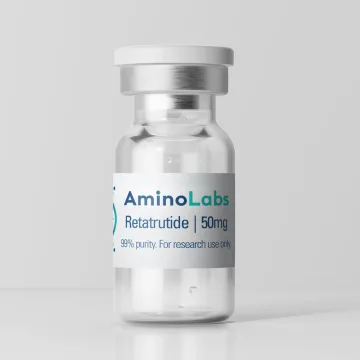
Quickstart Highlights
Retatrutide is an investigational triple agonist that activates the GLP-1, GIP and glucagon receptors from a single peptide, with a half-life of roughly 6 days that supports once-weekly dosing. It is being studied for obesity, type 2 diabetes and liver fat reduction; the 48-week Phase 2 trial reported up to 24.2% mean weight loss. This educational protocol presents the Phase 3 once-weekly subcutaneous titration: 2 mg for Weeks 1–4, stepping every 4 weeks to 8 mg by Week 13, then maintenance at 8–12 mg from Week 17 (12 mg is the ceiling, reached only if needed and tolerated), with an optional 0.5–1 mg on-ramp; the 50 mg vial is reconstituted with 3.0 mL (16.67 mg/mL), a derived figure that keeps every dose, including 12 mg, within the V1 pen’s range.
- Reconstitute: Add 3 mL bacteriostatic water → 16.67 mg/mL concentration.
- Dose range: 2–12 mg once weekly, subcutaneously (optional 0.5–1 mg on-ramp): 2 mg for Weeks 1–4, then 4 mg, 6 mg and 8 mg in 4-week steps, then 8–12 mg maintenance from Week 17; 12 mg is the ceiling, reached only if needed and tolerated.
- Easy measuring: At 16.67 mg/mL, 1 unit = 0.01 mL = 166.67 mcg on a U-100 insulin syringe.
- Storage: Lyophilized: freeze at −20 °C (−4 °F); after reconstitution, refrigerate at 2–8 °C (35.6–46.4 °F) and use within 28 days.
- Trial basis: Escalate no faster than every 4 weeks (the trial step length). The optional 0.5–1 mg on-ramp (Weeks 0–2) is a tolerability step for users sensitive to GI side effects, not a dose from the Phase 2 obesity trial (0.5 mg was a fixed arm only in the Phase 2 type 2 diabetes trial); the Phase 2 obesity arms started at 1, 2 or 4 mg and the Phase 3 ladder starts at 2 mg.
Dosing & Reconstitution Guide
Standard / Gradual Titration (3 mL = 16.67 mg/mL)
| Week | Dose | Calculated volume | U-100 scale value (1 mL capacity) | V1 nominal setting (units) |
|---|---|---|---|---|
| Optional on-ramp (Weeks 0–2) | 0.5–1 mg (500–1000 mcg) | 0.03–0.06 mL | 3–6 units | Endpoints: 3 units / 6 units; intermediate amounts require a separate check |
| Weeks 1–4 | 2 mg (2000 mcg) | 0.12 mL | 12 units | 12 units |
| Weeks 5–8 | 4 mg (4000 mcg) | 0.24 mL | 24 units | 24 units |
| Weeks 9–12 | 6 mg (6000 mcg) | 0.36 mL | 36 units | 36 units |
| Weeks 13–16 | 8 mg (8000 mcg) | 0.48 mL | 48 units | 48 units |
| Week 17+ (maintenance) | 8–12 mg (8000–12,000 mcg) | 0.48–0.72 mL | 48–72 units | Endpoints: 48 units / 72 units; intermediate amounts require a separate check |
| Ceiling (only if needed and tolerated) | 12 mg (12,000 mcg) | 0.72 mL | 72 units | 72 units |
Calculation basis: The table uses the labelled 50 mg amount and assumes a final solution volume of 3 mL (16.67 mg/mL). BAC volume does not change the amount of peptide. These are nominal calculations, not validation of preparation, compatibility or treatment.
Frequency: Once weekly, subcutaneously, on the same day each week at any time of day. Start at 2 mg (the Phase 3 starting dose) and step every 4 weeks; the optional 0.5–1 mg on-ramp (Weeks 0–2) is a tolerability step for users sensitive to GI side effects, after which the 2 mg step begins. Never step up faster than every 4 weeks.
Cycle: Continuous, once weekly on the same day; no off-cycle. Continue until the desired weight is achieved, then hold the maintenance dose or taper under clinical guidance.
Reconstitution Steps
- Allow the vial to reach room temperature before opening to minimize condensation.
- Draw 3 mL bacteriostatic water with a sterile syringe.
- Inject slowly down the vial wall to minimize foaming; avoid shaking.
- Gently swirl or roll the vial until the powder is fully dissolved.
- Label the vial with the reconstitution date and refrigerate at 2–8 °C (35.6–46.4 °F), protected from light.
- Use reconstituted solution within 28 days for maximum potency and safety.
Important: This guide is for educational purposes only and is not medical advice. For research use only. Not for human consumption.
Supplies Needed
Plan based on the 16-week Phase 3 ladder (2 mg, 4 mg, 6 mg and 8 mg in 4-week steps, 80 mg in total) followed by 8–12 mg per week in maintenance; because reconstituted solution is discarded after 28 days, each 4-week block uses its own 50 mg vial at every dose; counts include solution discarded under the 28-day rule and exclude the optional 1–2 mg on-ramp.
- Peptide Vials (Retatrutide, 50 mg each):
- 8 weeks ≈ 2 vials (24 mg of doses drawn)
- 12 weeks ≈ 3 vials (48 mg of doses drawn)
- 16 weeks ≈ 4 vials (80 mg of doses drawn)
- 24 weeks ≈ 6 vials (144–176 mg of doses drawn, depending on the 8–12 mg maintenance dose)
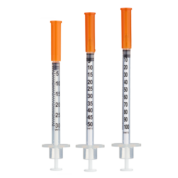
- Insulin Syringes (U-100):
- Per week: 1 syringe
- 8 weeks: 8 syringes
- 12 weeks: 12 syringes
- 16 weeks: 16 syringes
- 24 weeks: 24 syringes
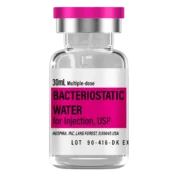
- Bacteriostatic Water (30 mL bottles): Use 3 mL per vial for reconstitution.
- 8 weeks (2 vials): 6 mL → 2 × 30 mL bottles
- 12 weeks (3 vials): 9 mL → 3 × 30 mL bottles
- 16 weeks (4 vials): 12 mL → 4 × 30 mL bottles
- 24 weeks (6 vials): 18 mL → 6 × 30 mL bottles
Note: Use bacteriostatic water within 28 days after opening; a vial reconstituted more than 28 days after the bottle was first opened needs a new bottle.
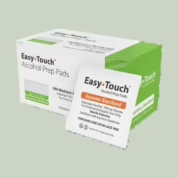
- Alcohol Swabs: One for the vial stopper + one for the injection site each injection.
- 8 weeks: 16 swabs
- 12 weeks: 24 swabs
- 16 weeks: 32 swabs
- 24 weeks: 48 swabs
Protocol Overview
Concise summary of the once-weekly regimen.
- Goal: Support weight reduction and metabolic improvement through combined GLP-1, GIP and glucagon receptor activation, reducing appetite while raising energy expenditure.
- Schedule: Weekly subcutaneous injections, continuous with no off-cycle: 2 mg for Weeks 1–4, then dose steps every 4 weeks to 8 mg by Week 13 and maintenance at 8–12 mg from Week 17 (optional 0.5–1 mg on-ramp first). Continue until the desired weight is achieved, then hold the maintenance dose or taper under clinical guidance.
- Dose Range: 2–12 mg once weekly (optional 0.5–1 mg on-ramp): 2 mg (2000 mcg) to 8 mg (8000 mcg) in 4-week steps, then 8–12 mg (8000–12,000 mcg) in maintenance; 12 mg is the ceiling, reached only if needed and tolerated.
- Reconstitution: 3 mL per 50 mg vial (16.67 mg/mL) for accurate unit measurements on standard insulin syringes.
- Storage: Lyophilized frozen at −20 °C (−4 °F); reconstituted refrigerated at 2–8 °C (35.6–46.4 °F); use within 28 days; avoid repeated freeze–thaw cycles.
- Evidence: Human RCT: the once-weekly route, 4-week step length and 4–12 mg targets come from the NEJM Phase 2 trial (n=338, 48 weeks) and Phase 3 TRIUMPH readouts, giving high confidence; the optional 0.5–1 mg on-ramp is a tolerability step for users sensitive to GI side effects, not trial dosing (the Phase 2 arms started at 1, 2 or 4 mg and stepped every 4 weeks), so confidence for those weeks is medium. No source covers a 50 mg vial, so the reconstitution figures here are derived arithmetically rather than taken from a published convention.
Dosing Protocol
Suggested weekly titration following the Phase 3 ladder, with an optional community tolerability on-ramp.
- Optional on-ramp (Weeks 0–2): 0.5–1 mg once weekly for users sensitive to GI side effects, then begin the 2 mg step; 0.5 mg was not used in the Phase 2 obesity trial and 1 mg was its lowest arm.
- Weeks 1–4: 2 mg (2000 mcg) once weekly, the starting dose used in most Phase 2 escalation arms and throughout Phase 3.
- Weeks 5–8: 4 mg (4000 mcg) once weekly; the 4 mg arm produced 17.1% mean weight loss at 48 weeks in Phase 2.
- Weeks 9–12: 6 mg (6000 mcg) once weekly as an intermediate step before maintenance.
- Weeks 13–16: 8 mg (8000 mcg) once weekly; the 8 mg arm produced 22.8% mean weight loss at 48 weeks in Phase 2.
- Week 17+ (maintenance): 8–12 mg once weekly; hold 8 mg as the working maintenance dose and increase toward 12 mg only if needed and tolerated.
- Ceiling: 12 mg once weekly is the highest dose studied and the ceiling of the maintenance range, reached only if needed and tolerated; at 16.67 mg/mL it is 72 units (0.72 mL), which fits a 1 mL syringe and the V1 pen’s 80-unit limit.
- Frequency: Once per week (subcutaneous injection), on the same day each week; never step up faster than every 4 weeks, and if gastrointestinal effects are unmanageable hold the current step for a further 4 weeks rather than stepping back.
- Timing: Any time of day; no evidence-based timing exists. Rotate injection sites to reduce local irritation.
- Cycle: Continuous, once weekly on the same day; no off-cycle. Continue until the desired weight is achieved, then hold the maintenance dose or taper under clinical guidance.
Storage Instructions
Proper storage preserves product quality and efficacy.
- Lyophilized (powder): Store at −20 °C (−4 °F) in a cool, dry place protected from light; sources report 12 months or longer at this temperature. For short-term storage (under a few months), 2–8 °C (35.6–46.4 °F) refrigeration is acceptable.
- Reconstituted (solution): Refrigerate at 2–8 °C (35.6–46.4 °F) and do not freeze. Use within 28 days for maximum potency and safety; the benzyl alcohol in bacteriostatic water inhibits bacterial growth, but sources range from 14 to 30 days and solutions should be discarded after approximately 4 weeks.
- Allow vials to reach room temperature before opening to minimize condensation uptake.
- Avoid repeated freeze–thaw cycles and keep the reconstituted vial out of direct light.
Important Notes
Practical considerations for consistency and safety.
- Use new sterile insulin syringes for each injection; dispose in a proper sharps container.
- Rotate injection sites systematically (abdomen, thighs, upper arms) to reduce local irritation and avoid lipohypertrophy.
- Administer on the same day each week for consistency; for a missed dose, sources apply the semaglutide rule of taking it within about 5 days and otherwise skipping to the next scheduled dose.
- The optional 0.5–1 mg on-ramp (Weeks 0–2) is a tolerability step for users sensitive to GI side effects, not trial dosing: the NEJM Phase 2 arms started at 1, 2 or 4 mg and stepped every 4 weeks, and the 2 mg start produced fewer gastrointestinal effects than the 4 mg start with equal weight loss.
- Escalate no faster than every 4 weeks. Compressed schedules (2-week steps or starting above 2 mg) are reported to drive gastrointestinal discontinuation; hold a step for an extra 4 weeks rather than back-titrating if nausea is unmanageable.
- Not approved by Health Canada, the FDA or the EMA; retatrutide is investigational (Phase 3 ongoing) and is sold for research use only.
- Evidence caveat: the 4–12 mg targets are trial-derived, but 8 mg as the working maintenance dose reflects the Phase 2 8 mg arm and community practice; 12 mg is the maximum studied and the ceiling of the 8–12 mg maintenance range, reached only if needed and tolerated, and a dose-dependent resting heart-rate increase was recorded at every trial dose.
- No published source gives a reconstitution for a 50 mg vial; the 3.0 mL figure is derived (50 mg ÷ 3 mL = 16.67 mg/mL, about 167 mcg per unit) so that 1 mg equals 6 units and every dose from the optional 0.5 mg on-ramp (3 units) to the 12 mg ceiling (72 units) sits inside the V1 pen’s 1–80 unit range. Vial yield under the 28-day rule: the first 16 weeks use 80 mg across 4 vials and 24 weeks use 144–176 mg across 6 vials. Reconstituted solution is discarded after 28 days, and at every dose on the table, including the 12 mg ceiling (48 mg per 4 weeks), a 50 mg vial outlasts that window, so each 4-week block opens a new vial and the Supplies counts include the discarded remainder; the 10 mg size is better matched to the optional on-ramp weeks.
How This Works
Retatrutide is a single peptide engineered to activate three incretin-family receptors at once: GLP-1, GIP and glucagon. GLP-1 and GIP agonism suppress appetite, slow gastric emptying and improve glucose-dependent insulin secretion, while glucagon-receptor agonism raises energy expenditure and hepatic fat oxidation. A fatty-acid side chain binds albumin, giving a half-life of roughly 6 days that supports once-weekly dosing. In the 48-week NEJM Phase 2 trial (n=338), mean weight change was −8.7% at 1 mg, −17.1% at 4 mg, −22.8% at 8 mg and −24.2% at 12 mg versus −2.1% with placebo, with gastrointestinal effects concentrated during escalation. Phase 3 TRIUMPH readouts report roughly 28% weight loss at 12 mg over 68–80 weeks and a 1.5-point A1C reduction in type 2 diabetes. This is trial evidence for the weekly route, the 4-week step length and the 4–12 mg targets; it does not validate sub-2 mg starting doses, which remain a community tolerability convention.
Potential Benefits & Side Effects
Observations from Phase 2 and Phase 3 clinical trials.
Potential Benefits:
- Mean weight loss of 8.7% (1 mg), 17.1% (4 mg), 22.8% (8 mg) and 24.2% (12 mg) versus 2.1% with placebo at 48 weeks in the Phase 2 trial.
- Approximately 28% weight loss at 12 mg over 68–80 weeks in the Phase 3 TRIUMPH-1 and TRIUMPH-4 trials.
- A1C reduction of about 1.5 points in type 2 diabetes in the Phase 3 TRIUMPH-2 trial.
- Liver fat reduction of roughly 80% at 8–12 mg in the Phase 2 MASH sub-study.
- Reduced appetite and food noise, with improved glucose tolerance and lipids, reported across trial and community sources.
Potential Side Effects:
- Gastrointestinal effects (most common): nausea in 26–45% of trial participants (up to 60% at 12 mg in Phase 3), vomiting 16–28%, diarrhea 18–25% and constipation 16–24%; dose-related and concentrated during escalation.
- Dose-dependent resting heart-rate increase of 5–11 bpm, peaking around week 24 and then declining.
- Dysesthesia or cutaneous hyperesthesia (skin sensitivity) in 7% of Phase 2 participants versus 1% with placebo, and about 21% at 12 mg in Phase 3.
- Injection-site reactions (6–9%) and fatigue in the early weeks.
- Discontinuation for adverse events in 6–16% of trial participants versus 0% with placebo; GLP-1 class cautions apply (pancreatitis, gallbladder disease, thyroid C-cell warning by class, not for use in pregnancy).
Lifestyle Factors
Complementary strategies for optimal outcomes with incretin-based therapy.
- Maintain a calorie-controlled diet with adequate protein intake (1.2–1.6 g/kg body weight) to preserve lean muscle mass during rapid weight loss.
- Combine resistance training (2–3 days per week) with aerobic exercise (150+ minutes per week) to protect muscle and reinforce metabolic adaptations.
- Eat smaller, slower meals and limit high-fat foods during escalation weeks, when nausea is most likely.
- Stay well hydrated (8–10 glasses of water daily), particularly if vomiting or diarrhea occurs.
- Prioritize consistent sleep (7–9 hours nightly) and effective stress management to support adherence.
- Track weight, resting heart rate and any skin sensitivity weekly, and review progress with a healthcare provider.
Injection Technique
General subcutaneous injection guidance from clinical best-practice resources.
- Clean the vial stopper and chosen skin site with separate alcohol swabs; allow both to dry completely before proceeding.
- Pinch a fold of skin between your fingers; insert the needle at a 45–90° angle into the subcutaneous tissue (fatty layer, not muscle).
- Do not aspirate (pull back the plunger) when giving a subcutaneous injection.
- Inject the solution slowly and steadily; wait at least 6 seconds after injection before withdrawing the needle to ensure complete delivery and minimize leakage.
- Withdraw the needle and apply light pressure with a clean swab; avoid rubbing vigorously.
- Rotate injection sites systematically (abdomen, thighs, upper arms) to prevent lipohypertrophy and maintain consistent absorption.
- Dispose of used syringes and needles immediately in a proper sharps container.
Recommended Source
We recommend Amino Labs for high-purity Retatrutide (50 mg vials).
Why Amino Labs?
- Third-party tested: Each batch includes Certificate of Analysis (COA) verifying purity and composition.
- Consistent quality: ISO-aligned manufacturing and handling standards ensure reliable product integrity.
- Cold-chain integrity: Temperature-controlled shipping and storage throughout fulfillment process.
- Research-grade purity: Suitable for educational and research applications requiring high-quality peptides.
Note: Product availability and specifications subject to change. Verify current product details on supplier website.
Important Note
This content is intended for therapeutic educational purposes only and does not constitute medical advice, diagnosis, or treatment.