Quickstart Highlights
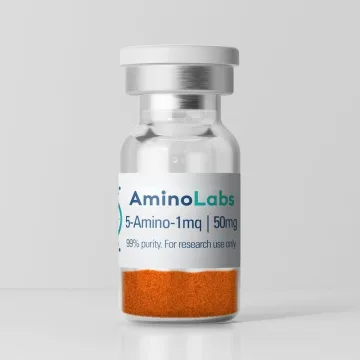
5-Amino-1MQ is a small-molecule inhibitor of nicotinamide N-methyltransferase (NNMT), an enzyme that consumes nicotinamide and S-adenosylmethionine in fat tissue. It is studied in mouse and rat models of obesity for reductions in fat mass, smaller adipocytes and improved glucose tolerance, and it is of interest for NAD+ support. No human trials have been published. This educational protocol presents the research-community injectable convention: a two-day tolerance phase at 2.5 mg, then 5 mg once daily, subcutaneously, in cycles of 8–12 weeks on and 4–6 weeks off. The 50 mg vial is reconstituted with 2.0 mL bacteriostatic water, which fits a V1 pen cartridge and gives whole-unit doses on a U-100 syringe. Most published and community use of 5-Amino-1MQ is oral at 50–150 mg per day; the injectable figures on this page are the lower-dose research route.
- Reconstitute: Add 2 mL bacteriostatic water → 25 mg/mL concentration.
- Dose range: 2.5–5 mg once daily, subcutaneously (8–12 weeks on, then 4–6 weeks off).
- Easy measuring: At 25 mg/mL, 1 unit = 0.01 mL = 250 mcg on a U-100 insulin syringe.
- Storage: Lyophilized: freeze at −20 °C (−4 °F); after reconstitution, refrigerate at 2–8 °C (35.6–46.4 °F) and use within 28 days.
- Vial yield: At 25 mg/mL the vial holds ten 5 mg doses (or twenty 2.5 mg doses), so one vial covers 10 days at the full dose and stays well within the 28-day refrigerated window.
Dosing & Reconstitution Guide
Standard Protocol (2 mL = 25 mg/mL)
| Phase | Dose | Calculated volume | U-100 scale value (1 mL capacity) | V1 nominal setting (units) |
|---|---|---|---|---|
| Days 1–2 | 2.5 mg (2500 mcg) | 0.1 mL | 10 units | 10 units |
| Day 3 onward | 5 mg (5000 mcg) | 0.2 mL | 20 units | 20 units |
Calculation basis: The table uses the labelled 50 mg amount and assumes a final solution volume of 2 mL (25 mg/mL). BAC volume does not change the amount of compound. These are nominal calculations, not validation of preparation, compatibility or treatment.
Frequency: Once daily, in the morning. The 5 mg dose may be split as 2.5 mg in the morning and 2.5 mg at midday.
Cycle: 8–12 weeks on, then 4–6 weeks off.
Reconstitution Steps
- Allow the vial to reach room temperature before opening to minimize condensation.
- Draw 2 mL bacteriostatic water with a sterile syringe.
- Inject slowly down the vial wall to minimize foaming; avoid shaking.
- Gently swirl or roll the vial until the powder is fully dissolved.
- Label the vial with the reconstitution date and refrigerate at 2–8 °C (35.6–46.4 °F), protected from light.
- Use reconstituted solution within 28 days for maximum potency and safety.
Important: This guide is for educational purposes only and is not medical advice. For research use only. Not for human consumption.
Supplies Needed
Plan based on a 4–12 week once-daily protocol at the 5 mg dose after the two-day tolerance phase.
- Vials (5-Amino-1MQ, 50 mg each):
- 4 weeks ≈ 3 vials (135 mg total used)
- 8 weeks ≈ 6 vials (275 mg total used)
- 12 weeks ≈ 9 vials (415 mg total used)
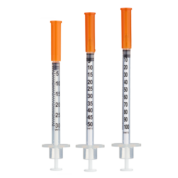
- Insulin Syringes (U-100):
- Per week: 7 syringes
- 4 weeks: 28 syringes
- 8 weeks: 56 syringes
- 12 weeks: 84 syringes
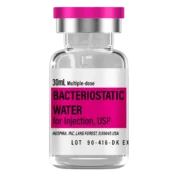
- Bacteriostatic Water (30 mL bottles): Use 2 mL per vial for reconstitution.
- 4 weeks (3 vials): 6 mL → 1 × 30 mL bottle
- 8 weeks (6 vials): 12 mL → 1 × 30 mL bottle
- 12 weeks (9 vials): 18 mL → 1 × 30 mL bottle
Note: Use bacteriostatic water within 28 days after opening; a vial reconstituted more than 28 days after the bottle was first opened needs a new bottle.
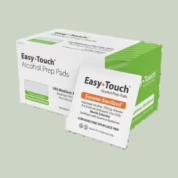
- Alcohol Swabs: One for the vial stopper + one for the injection site each injection.
- 4 weeks: 56 swabs → recommend 1 × 100-count box
- 8 weeks: 112 swabs → recommend 2 × 100-count boxes
- 12 weeks: 168 swabs → recommend 2 × 100-count boxes
Protocol Overview
Concise summary of the once-daily injectable regimen.
- Goal: Support fat-mass reduction and cellular NAD+ availability through NNMT inhibition, an approach studied only in rodent models to date.
- Schedule: Daily subcutaneous injections in the morning for 8–12 weeks, followed by a 4–6 week break.
- Dose Range: 2.5 mg (2500 mcg) once daily for days 1–2, then 5 mg (5000 mcg) once daily, optionally split as 2.5 mg in the morning and 2.5 mg at midday.
- Reconstitution: 2 mL per 50 mg vial (25 mg/mL) for accurate unit measurements on standard insulin syringes.
- Storage: Lyophilized frozen at −20 °C (−4 °F); reconstituted refrigerated at 2–8 °C (35.6–46.4 °F); use within 28 days; avoid repeated freeze–thaw cycles.
- Evidence: Animal data only (mouse and rat NNMT-inhibition studies); the 2.5–5 mg subcutaneous figures are a research-community convention with no human trial or pharmacokinetic data, so confidence is low.
- Route note: Most published and community use of 5-Amino-1MQ is oral at 50–150 mg per day; the injectable figures on this page are the lower-dose research route.
Dosing Protocol
Suggested daily approach based on preclinical data and research-community conventions.
- Days 1–2: 2.5 mg (2500 mcg) once daily as a tolerance phase; at 25 mg/mL this is 10 units (0.10 mL).
- Day 3 onward: 5 mg (5000 mcg) once daily; at 25 mg/mL this is 20 units (0.20 mL).
- Frequency: Once per day (subcutaneous injection). The 5 mg dose may be split as 2.5 mg in the morning and 2.5 mg at midday, which some sources describe as easier to tolerate.
- Timing: Morning administration; sources link evening dosing to sleep disruption. Rotate injection sites.
- Cycle: 8–12 weeks on, then 4–6 weeks off. Sources describe the off-period as allowing NNMT activity to reset.
- Titration: No escalation beyond 5 mg is described in the injectable sources. Two sites that mirror the oral 50–100 mg amounts for injection produce 10–30 mL volumes that are impractical for subcutaneous use and are not followed here.
- Vial planning: Each 50 mg vial supplies ten days at 5 mg (twenty days at 2.5 mg), so an 8-week cycle uses about 6 vials and a 12-week cycle about 9.
Storage Instructions
Proper storage preserves product quality and efficacy.
- Lyophilized (powder): Store at −20 °C (−4 °F) in a dry, dark place; for short-term storage (under a few months), 2–8 °C (35.6–46.4 °F) refrigeration is acceptable. Avoid humidity to prevent degradation.
- Reconstituted (solution): Refrigerate at 2–8 °C (35.6–46.4 °F) and do not freeze; use within 28 days. At ten days per vial on this protocol, each vial is finished well inside that limit.
- Allow vials to reach room temperature before opening to minimize condensation uptake.
- Protect the solution from light. Bacteriostatic water inhibits bacterial growth but does not extend potency beyond the 28-day window.
Important Notes
Practical considerations for consistency and safety.
- Use new sterile insulin syringes for each injection; dispose in a proper sharps container.
- Rotate injection sites systematically (abdomen, thighs, upper arms) to reduce local irritation and avoid lipohypertrophy.
- Inject slowly and steadily; wait a few seconds before withdrawing the needle to ensure complete delivery.
- Morning dosing is the consistent convention; sources report sleep disturbance, warmth and raised resting heart rate, so timing matters more than for most compounds.
- MAO-A inhibition was seen in laboratory screening; sources advise caution with SSRIs, MAOIs, stimulants and tyramine-rich foods, and one site carries a serotonin-syndrome warning.
- Not approved by Health Canada, the FDA or any regulator; sold for research use only. 5-Amino-1MQ is not a peptide but a quinolinium small molecule, mostly sold as oral capsules; the injectable vial is a minority format.
- Evidence caveat: all dosing is allometric extrapolation from a roughly 10 mg/kg mouse dose plus community practice; no human safety, efficacy or pharmacokinetic data exist, and the roughly 20:1 oral-to-injectable ratio in the sources has not been measured in humans.
- The 2.0 mL reconstitution used here is the convention that fits a 3 mL pen cartridge; three sources use 4.0 mL (12.5 mg/mL) and one uses 10 mL, so unit figures from other sites will not match this page. Confirm the concentration before measuring.
How This Works
5-Amino-1MQ is a small-molecule, membrane-permeable inhibitor of nicotinamide N-methyltransferase (NNMT). NNMT consumes nicotinamide (vitamin B3) and S-adenosylmethionine (SAM), and its activity is elevated in the fat tissue of obese animals. Blocking the enzyme preserves NAD+ precursors and SAM, raising cellular NAD+ and shifting adipocyte metabolism toward energy expenditure rather than storage. In diet-induced obese mice, treatment produced adipocytes roughly 30% smaller, reduced fat mass and body weight without a reduction in food intake, and improved glucose tolerance. Rat data show oral bioavailability of about 38% and a half-life of a few hours; the human half-life is unknown, and one site’s 13.3-hour subcutaneous figure is unsourced. All human dosing, including the 2.5–5 mg injectable convention presented here, is extrapolated from rodent studies and community practice. No human trial has tested 5-Amino-1MQ, so the mechanism is established in animals and its translation to people remains unverified.
Potential Benefits & Side Effects
Observations from preclinical literature and research-community reports.
Potential Benefits:
- Reduced fat mass and body weight on a high-fat diet, with about 30% smaller adipocytes and no reduction in food intake, in mouse studies.
- Improved glucose tolerance in obese mice treated with NNMT inhibition.
- Raised cellular NAD+ and SAM by blocking NNMT-mediated nicotinamide methylation, a mechanism shown in cell and animal work.
- Community reports describe increased thermogenesis within 1–2 weeks and body-composition changes at 6–12 weeks; these are anecdotal and unverified.
- Longevity and anti-ageing interest via NAD+ support, which remains theoretical in humans.
Potential Side Effects:
- Sleep disturbance or insomnia, warmth or flushing, and elevated resting heart rate (stimulant-like effects reported by users).
- Gastrointestinal upset, nausea, headache and appetite reduction.
- Stinging at the injection site with the subcutaneous route.
- MAO-A inhibition seen in laboratory screening: caution with SSRIs, MAOIs, stimulants and tyramine-rich foods; one source carries a serotonin-syndrome warning.
- No human safety data exist; long-term effects are unknown.
Lifestyle Factors
Complementary strategies for body-composition goals.
- Maintain a modest calorie deficit with adequate protein intake (1.2–1.6 g/kg body weight) so that any fat loss is not accompanied by lean-mass loss.
- Combine resistance training with regular aerobic activity; the community reports of body-composition change assume diet and exercise are already in place.
- Avoid tyramine-rich foods (aged cheeses, cured meats, fermented products) and review any serotonergic medication or stimulant use with a clinician, given the MAO-A signal.
- Dose in the morning and keep caffeine moderate to limit sleep disruption and resting heart-rate elevation.
- Track resting heart rate, sleep quality and body measurements weekly to judge tolerance and response over the 8–12 week cycle.
Injection Technique
General subcutaneous injection guidance from clinical best-practice resources.
- Clean the vial stopper and chosen skin site with separate alcohol swabs; allow both to dry completely before proceeding.
- Pinch a fold of skin between your fingers; insert the needle at a 45–90° angle into the subcutaneous tissue (fatty layer, not muscle).
- Do not aspirate (pull back the plunger) when giving a subcutaneous injection.
- Inject the solution slowly and steadily; wait at least 6 seconds after injection before withdrawing the needle to ensure complete delivery and minimize leakage.
- Withdraw the needle and apply light pressure with a clean swab; avoid rubbing vigorously.
- Rotate injection sites systematically (abdomen, thighs, upper arms) to prevent lipohypertrophy and maintain consistent absorption.
- Dispose of used syringes and needles immediately in a proper sharps container.
Recommended Source
We recommend Amino Labs for high-purity 5-Amino-1MQ (50 mg vials).
Why Amino Labs?
- Third-party tested: Each batch includes Certificate of Analysis (COA) verifying purity and composition.
- Consistent quality: ISO-aligned manufacturing and handling standards ensure reliable product integrity.
- Cold-chain integrity: Temperature-controlled shipping and storage throughout fulfillment process.
- Research-grade purity: Suitable for educational and research applications requiring high-quality research compounds.
Note: Product availability and specifications subject to change. Verify current product details on supplier website.
Important Note
This content is intended for therapeutic educational purposes only and does not constitute medical advice, diagnosis, or treatment.