Quickstart Highlights
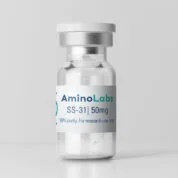
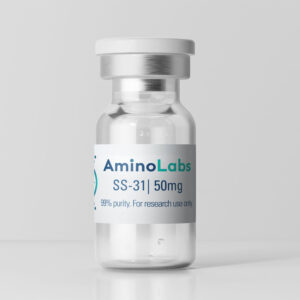
SS-31 (elamipretide) is a cell-permeable tetrapeptide that concentrates in the inner mitochondrial membrane and binds cardiolipin, stabilizing cristae structure and electron-transport efficiency. It received FDA accelerated approval in September 2025 as Forzinity for Barth syndrome at a flat 40 mg subcutaneous daily dose, and has been studied in primary mitochondrial myopathy and acute cardiac injury. This educational protocol presents the research-community convention instead: once-daily subcutaneous injections at 5 mg for 2 weeks and then 10 mg, with 15 mg and 20 mg as upper reference points, over a 4–12 week course. The 50 mg vial is reconstituted with 2.0 mL for 25 mg/mL.
- Reconstitute: Add 2 mL bacteriostatic water → 25 mg/mL concentration.
- Dose range: 5–20 mg once daily, subcutaneously (research-community convention; 4–12 week course, then 2–4 weeks off).
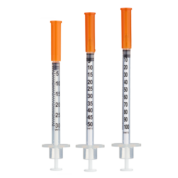
- Easy measuring: At 25 mg/mL, 1 unit = 0.01 mL = 250 mcg on a U-100 insulin syringe.
- Storage: Lyophilized: freeze at −20 °C (−4 °F); after reconstitution, refrigerate at 2–8 °C (35.6–46.4 °F) and use within 28 days.
- Label: Forzinity (elamipretide) is approved at a flat 40 mg subcutaneously once daily for Barth syndrome (20 mg with severe renal impairment); the 5–10 mg schedule on this page is research convention with no trial basis.
Dosing & Reconstitution Guide
Standard Protocol (2 mL = 25 mg/mL)
| Week | Dose | Calculated volume | U-100 scale value (1 mL capacity) | V1 nominal setting (units) |
|---|---|---|---|---|
| Weeks 1–2 | 5 mg (5000 mcg) | 0.2 mL | 20 units | 20 units |
| Week 3 onward | 10 mg | 0.4 mL | 40 units | 40 units |
| Upper research reference | 15 mg | 0.6 mL | 60 units | 60 units |
| Research ceiling | 20 mg | 0.8 mL | 80 units | 80 units |
Calculation basis: The table uses the labelled 50 mg amount and assumes a final solution volume of 2 mL (25 mg/mL). BAC volume does not change the amount of peptide. These are nominal calculations, not validation of preparation, compatibility or treatment.
Frequency: Once daily at the same time each day; morning or pre-workout is common. The FDA-approved product (Forzinity, Barth syndrome) uses a flat 40 mg once daily, which is outside this reference.
Cycle: 4–12 weeks on, then 2–4 weeks off.
Reconstitution Steps
- Allow the vial to reach room temperature before opening to minimize condensation.
- Draw 2 mL bacteriostatic water with a sterile syringe.
- Inject slowly down the vial wall to minimize foaming; avoid shaking.
- Gently swirl or roll the vial until the powder is fully dissolved.
- Label the vial with the reconstitution date and refrigerate at 2–8 °C (35.6–46.4 °F), protected from light.
- Use reconstituted solution within 28 days for maximum potency and safety.
Important: This guide is for educational purposes only and is not medical advice. For research use only. Not for human consumption.
Supplies Needed
Plan based on the first 4–8 weeks of a 4–12 week daily protocol, including the 2-week 5 mg introduction (10 mg daily thereafter); a 12-week course needs 16 vials (770 mg total used), 84 syringes, 3 × 30 mL bottles and 168 swabs (2 × 100-count boxes).
- Peptide Vials (SS-31, 50 mg each):
- 4 weeks ≈ 5 vials (210 mg total used: 70 mg in weeks 1–2, 140 mg in weeks 3–4)
- 8 weeks ≈ 10 vials (490 mg total used)
- Insulin Syringes (U-100):
- Per week: 7 syringes
- 4 weeks: 28 syringes
- 8 weeks: 56 syringes
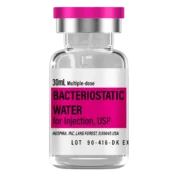
- Bacteriostatic Water (30 mL bottles): Use 2 mL per vial for reconstitution.
- 4 weeks (5 vials): 10 mL → 1 × 30 mL bottle
- 8 weeks (10 vials): 20 mL → 2 × 30 mL bottles
Note: Use bacteriostatic water within 28 days after opening; a vial reconstituted more than 28 days after the bottle was first opened needs a new bottle.
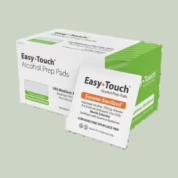
- Alcohol Swabs: One for the vial stopper + one for the injection site each injection.
- 4 weeks: 56 swabs → recommend 1 × 100-count box
- 8 weeks: 112 swabs → recommend 2 × 100-count boxes
Protocol Overview
Concise summary of the once-daily regimen.
- Goal: Support mitochondrial energy production and exercise capacity through cardiolipin stabilization in the inner mitochondrial membrane.
- Schedule: Daily subcutaneous injections for 4–12 weeks, followed by a 2–4 week break; the label product is used continuously without cycling.
- Dose Range: 5 mg (5000 mcg) daily for 2 weeks, then 10 mg (10,000 mcg) daily; 15 mg and 20 mg daily are shown as the upper research reference and research ceiling, all well below the 40 mg label dose.
- Reconstitution: 2 mL per 50 mg vial (25 mg/mL) for accurate unit measurements on standard insulin syringes.
- Storage: Lyophilized frozen at −20 °C (−4 °F); reconstituted refrigerated at 2–8 °C (35.6–46.4 °F); use within 28 days; avoid repeated freeze–thaw cycles.
- Evidence: FDA label plus multiple human RCTs (TAZPOWER, MMPOWER-3, ReCLAIM-2) support the subcutaneous route, once-daily frequency and the 40 mg clinical dose with high confidence; the 5–10 mg research-community dose presented here is convention with no trial support, at one-quarter to one-eighth of every clinical dose, so confidence for the schedule itself is low.
Dosing Protocol
Suggested daily approach based on research-community convention, with the FDA label dose shown as context.
- Weeks 1–2: 5 mg (5000 mcg) once daily as the conservative introduction used by most research sites.
- Week 3 onward: 10 mg (10,000 mcg) once daily as the working research dose for the rest of the course.
- Upper research reference: 15 mg once daily is cited by some research sites for performance-focused protocols and is not part of the standard schedule.
- Research ceiling: 20 mg once daily is the top of the community range and still half the 40 mg Forzinity label dose; it is shown for reference, not as a target.
- Frequency: Once per day (subcutaneous injection), at the same time each day; a missed dose is skipped rather than doubled.
- Timing: Morning or pre-workout is common in community sources; no meal timing applies. Rotate injection sites daily.
- Cycle: 4–12 weeks on, then 2–4 weeks off (community convention); the label is continuous, and effects are exposure-dependent with no carry-over once dosing stops.
Storage Instructions
Proper storage preserves product quality and efficacy.
- Lyophilized (powder): Store at −20 °C (−4 °F) protected from light; 2–8 °C (35.6–46.4 °F) refrigeration is acceptable for several months.
- Reconstituted (solution): Refrigerate at 2–8 °C (35.6–46.4 °F) and do not freeze. Research sources allow 28 days; the ready-to-use label product is discarded 8 days after first opening, so a shorter window is the conservative choice.
- SS-31 is light-sensitive: keep the reconstituted vial in an amber or dark container and out of direct light. The solution should be clear and colorless.
- Allow vials to reach room temperature before opening to minimize condensation uptake.
Important Notes
Practical considerations for consistency and safety.
- Use new sterile insulin syringes for each injection; dispose in a proper sharps container.
- Rotate injection sites systematically (abdomen, outer thighs, upper arms) with every daily injection; in the placebo-controlled trial, injection-site erythema occurred in 100% of treated participants, with pain in 75% and induration and pruritus in 67%.
- The 5–10 mg daily schedule is a research-community convention with no trial basis. Every clinical trial (TAZPOWER, MMPOWER-3, ReCLAIM-2) and the Forzinity label used 40 mg subcutaneously once daily, so the community dose is one-quarter to one-eighth of every clinical dose and its effect size is unknown.
- Regulatory status: FDA-approved (Forzinity, Stealth BioTherapeutics, accelerated approval 19 September 2025) for Barth syndrome only; not approved by Health Canada; research-grade SS-31 is an unapproved product sold for research use only.
- Stop and seek medical attention for throat tightness, wheezing, facial, lip or tongue swelling, or widespread hives; the label contraindicates use after any prior serious hypersensitivity reaction.
- Blood eosinophil counts rose in trial participants, peaking around 90 days; the label also reduces the dose to 20 mg daily with severe renal impairment (eGFR under 30 mL/min).
- At 25 mg/mL the four reference doses are 20, 40, 60 and 80 units, all within a 1 mL syringe and the V1 pen’s 80-unit setting; 20 mg (80 units) is the pen’s maximum, and a larger dose would need two injections.
- At 10 mg daily a 50 mg vial lasts 5 days, well inside the 28-day reconstituted window, and a 4-week block at a steady 10 mg uses about 6 vials (5 in the first 4 weeks, which include the 5 mg introduction). Benefits are exposure-dependent and stop when dosing stops; trial endpoints were measured at 24 weeks and beyond, while community reports describe subjective changes after 2–4 weeks.
How This Works
SS-31 is a four-amino-acid, cell-permeable tetrapeptide that concentrates more than 1000-fold in the inner mitochondrial membrane, where it binds cardiolipin, the phospholipid that anchors the electron-transport chain. Stabilizing cardiolipin preserves cristae architecture and supercomplex organization, improving ATP output and reducing electron leak and reactive oxygen species. The FDA label describes it simply as a mitochondrial cardiolipin binder that improves mitochondrial morphology and function. Although plasma half-life is only 2–4 hours, mitochondrial residence time is far longer, which is why once-daily dosing is used in every trial. Human evidence sits entirely at 40 mg daily: in Barth syndrome, accelerated approval rested on improved knee extensor strength at 24 weeks, with open-label gains in six-minute walk distance, while the larger MMPOWER-3 trial in primary mitochondrial myopathy (n=218) missed its co-primary walking and fatigue endpoints. Intravenous infusions have been tested for acute cardiac injury. The 5–10 mg daily research dose has no trial data of its own.
Potential Benefits & Side Effects
Observations from the FDA label, clinical trials and research-community reports.
Potential Benefits:
- Improved knee extensor muscle strength in Barth syndrome, the label endpoint, with a median gain of 68 N at week 24 in the open-label extension.
- Six-minute walk distance improvement of about 96 m in the Barth syndrome open-label extension; the larger MMPOWER-3 mitochondrial myopathy trial did not meet its walking or fatigue endpoints.
- Restoration of mitochondrial bioenergetics and ATP production with reduced reactive oxygen species in mechanistic and preclinical studies.
- Cardioprotection in acute injury models using intravenous infusion (investigational).
- Community-reported reductions in fatigue and improvements in exercise endurance and recovery after 2–4 weeks (anecdotal, at doses below any trial dose).
Potential Side Effects:
- Injection-site reactions dominate the trial data: erythema in 100% of treated participants versus 25% with placebo, pain 75%, induration 67%, pruritus 67%, with bruising and hives also reported.
- Headache, dizziness and mild nausea.
- Blood eosinophil increase, peaking around 90 days of treatment.
- Hypersensitivity reactions including throat tightness, wheezing, facial, lip or tongue swelling and anaphylaxis; contraindicated after any prior serious hypersensitivity.
- Effects are exposure-dependent and cease when dosing stops; one research site’s claim of no significant side effects contradicts the label’s injection-site data.
Lifestyle Factors
Complementary strategies for mitochondrial and exercise-capacity goals.
- Pair the course with regular aerobic and resistance training, since the measurable trial endpoints were muscle strength and walking distance.
- Keep injection timing consistent from day to day and log injection sites, since reactions at the site are the most common adverse effect.
- Prioritize 7–9 hours of sleep and adequate recovery between training sessions to support energy metabolism.
- Maintain a balanced diet with sufficient protein and micronutrients to support muscle and mitochondrial function.
- Track resting fatigue, exercise tolerance and recovery weekly so that any change over a 4–12 week course can be assessed against baseline.
- Review any planned use with a healthcare provider, particularly where kidney function is reduced or there is a history of allergic reactions.
Injection Technique
General subcutaneous injection guidance from clinical best-practice resources.
- Clean the vial stopper and chosen skin site with separate alcohol swabs; allow both to dry completely before proceeding.
- Pinch a fold of skin between your fingers; insert the needle at a 45–90° angle into the subcutaneous tissue (fatty layer, not muscle).
- Do not aspirate (pull back the plunger) when giving a subcutaneous injection.
- Inject the solution slowly and steadily; wait at least 6 seconds after injection before withdrawing the needle to ensure complete delivery and minimize leakage.
- Withdraw the needle and apply light pressure with a clean swab; avoid rubbing vigorously.
- Rotate injection sites systematically (abdomen, thighs, upper arms) to prevent lipohypertrophy and maintain consistent absorption.
- Dispose of used syringes and needles immediately in a proper sharps container.
Recommended Source
We recommend Amino Labs for high-purity SS-31 (50 mg vials).
Why Amino Labs?
- Third-party tested: Each batch includes Certificate of Analysis (COA) verifying purity and composition.
- Consistent quality: ISO-aligned manufacturing and handling standards ensure reliable product integrity.
- Cold-chain integrity: Temperature-controlled shipping and storage throughout fulfillment process.
- Research-grade purity: Suitable for educational and research applications requiring high-quality peptides.
Note: Product availability and specifications subject to change. Verify current product details on supplier website.
Important Note
This content is intended for therapeutic educational purposes only and does not constitute medical advice, diagnosis, or treatment.