Quickstart Highlights
MOTS-c is a 16–amino-acid mitochondrial-derived peptide (MDP) that acts as a metabolic regulator, primarily through AMPK activation. Preclinical studies show it enhances insulin sensitivity, promotes fat oxidation, improves exercise capacity, and counters age-related metabolic decline. No clinical trials have been completed in humans to date. This educational protocol presents a three-times-weekly subcutaneous approach with a two-week ramp.
- Reconstitute: Add 2.0 mL bacteriostatic water → 20 mg/mL concentration.
- Typical range: 5–10 mg per injection, three times weekly on non-consecutive days (for example Mon/Wed/Fri).
- Easy measuring: At 20 mg/mL, 1 unit = 0.01 mL = 200 mcg; 5 mg = 25 units, 10 mg = 50 units on a U‑100 insulin syringe.
- Storage: Lyophilized: freeze at −20 °C (−4 °F) or below; after reconstitution, refrigerate at 2–8 °C (35.6–46.4 °F) and use within 7 days for best potency.
Dosing & Reconstitution Guide
Standard Approach (2 mL = 20 mg/mL)
| Week | Dose per injection (3x/week) | Units (per injection) (mL) | V1 nominal setting (units) |
|---|---|---|---|
| Weeks 1–2 | 5 mg (5,000 mcg) | 25 units (0.25 mL) | 25 units |
| Weeks 3–8 | 10 mg (10,000 mcg) | 50 units (0.50 mL) | 50 units |
Frequency: Inject three times weekly subcutaneously on non-consecutive days. Hold 5 mg for the first two weeks before stepping to 10 mg, and monitor for any adverse reactions. Daily microgram dosing is not supported by the available guides; the 5–10 mg two-to-three-times-weekly model is the consensus schedule.
At 25 and 50 units per injection a standard 1 mL U-100 syringe reads cleanly; no low-volume syringe is needed.
Reconstitution Steps
- Draw 2.0 mL bacteriostatic water with a sterile syringe.
- Inject slowly down the vial wall; avoid foaming.
- Gently swirl/roll until dissolved (do not shake vigorously).
- Label with reconstitution date and refrigerate at 2–8 °C (35.6–46.4 °F), protected from light.
- Use within 7 days for optimal potency.
Important: This guide is for educational purposes only and is not medical advice. For research use only. Not for human consumption.
Supplies Needed
Plan based on a 6–8 week cycle of three injections per week, followed by at least 4 weeks off.
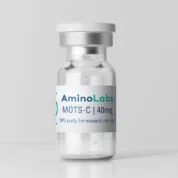
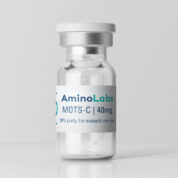
- Peptide Vials (MOTS-C, 40 mg each): By mass, 4 weeks uses 90 mg, 6 weeks 150 mg and 8 weeks 210 mg. Because reconstituted MOTS-c is used within 7 days, reconstitute one vial per week unless single-use aliquots are frozen.
- 4 weeks ≈ 4 vials (3 if aliquoted and frozen)
- 6 weeks ≈ 6 vials (4 if aliquoted and frozen)
- 8 weeks ≈ 8 vials (6 if aliquoted and frozen)
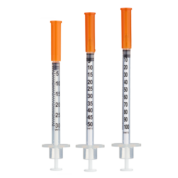
- Insulin Syringes (U‑100):
- Per week: 3 syringes
- 4 weeks: 12 syringes
- 6 weeks: 18 syringes
- 8 weeks: 24 syringes
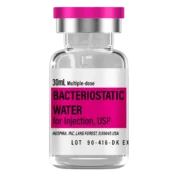
- Bacteriostatic Water (30 mL bottles): Use 2.0 mL per vial for reconstitution; discard an opened bottle after 28 days.
- 4 weeks: 8 mL → 1 × 30 mL bottle
- 6 weeks: 12 mL → 2 × 30 mL bottles (28-day limit)
- 8 weeks: 16 mL → 2 × 30 mL bottles (28-day limit)
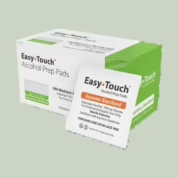
- Alcohol Swabs: One for the vial stopper + one for the injection site each injection.
- Per week: 6 swabs
- 4 weeks: 24 swabs
- 6 weeks: 36 swabs
- 8 weeks: 48 swabs → 1 × 100‑count box
Protocol Overview
Concise summary of the three-times-weekly regimen.
- Goal: Support metabolic homeostasis, insulin sensitivity, and age-related physical performance based on preclinical evidence.
- Schedule: Subcutaneous injections three times weekly for 6–8 weeks, followed by at least 4 weeks off.
- Dose Range: 5–10 mg per injection (15–30 mg per week).
- Reconstitution: 2.0 mL per 40 mg vial (20 mg/mL) for clean 25- and 50-unit readings.
- Storage: Lyophilized frozen at −20 °C (−4 °F); reconstituted refrigerated at 2–8 °C (35.6–46.4 °F); avoid repeated freeze–thaw.
Dosing Protocol
Suggested three-times-weekly approach based on the consensus of published dosing guides; no human trial defines a dose.
- Start: 5 mg three times weekly for 2 weeks.
- Step: 10 mg three times weekly from Week 3 if well tolerated.
- Target: 10 mg three times weekly (30 mg per week) through Week 6–8.
- Frequency: Three times per week (subcutaneous), on non-consecutive days.
- Cycle Length: 6–8 weeks on, then at least 4 weeks off. Longer continuous use is not supported by the available guides.
- Timing: Any consistent time; rotate injection sites.
Storage Instructions
Proper storage preserves peptide quality and potency.
- Lyophilized: Store at −20 °C (−4 °F) or below in dry, dark conditions; include desiccant if available to minimize moisture exposure.
- Reconstituted: Refrigerate at 2–8 °C (35.6–46.4 °F); peptide degrades rapidly at room temperature (~25% activity loss after 24 hours at 4 °C). Use within 7 days for best potency.
- Aliquoting: Prepare single-use aliquots and freeze at −20 °C (−4 °F) if needed; avoid freeze–thaw cycles.
- Allow vials to reach room temperature before opening to reduce condensation uptake.
Important Notes
Practical considerations for consistency and safety.
- Use new sterile insulin syringes for each injection; dispose in a sharps container.
- Rotate injection sites (abdomen, thighs, upper arms) to reduce local irritation and prevent lipohypertrophy.
- Inject slowly; wait a few seconds before withdrawing the needle.
- Document daily dose, injection site, and any observations to maintain consistency.
- Discontinue use and consult a medical professional if any concerning symptoms arise.
How This Works
MOTS-c functions as a metabolic “stress signal” that helps optimize energy usage during nutrient stress or exercise. Its primary mechanism is AMPK activation through inhibition of the folate cycle, causing accumulation of AICAR (an AMP analog). Activated AMPK shifts cells into an energy-efficient mode – enhancing glucose uptake, fatty-acid oxidation, and mitochondrial respiration while downregulating fat storage and gluconeogenesis.
MOTS-c can also translocate to the cell nucleus under stress conditions and upregulate antioxidant and stress-response genes. This retrograde signaling from mitochondria to nucleus increases expression of cytoprotective enzymes, helping cells cope with oxidative stress. Research indicates MOTS-c may also modulate mTOR and inflammatory pathways, contributing to lifespan and healthspan effects. Its actions resemble those of exercise and metformin at a cellular level, making it of great interest for metabolic disorders, obesity, and aging research.
Potential Benefits & Side Effects
Observations from preclinical literature (no human clinical trials completed to date):
- Metabolic Health: Improves insulin sensitivity and glucose metabolism in mouse models; prevents diet-induced insulin resistance.
- Weight & Fat Reduction: Prevents obesity and reduces visceral fat in obese mice through increased energy expenditure and fat oxidation.
- Post-Menopausal Metabolism: Mitigates metabolic decline in ovariectomized mice; prevents menopause-related fat gain and insulin resistance.
- Physical Performance: Enhances exercise capacity and counters age-related frailty; old mice ran 2× longer on treadmill tests.
- Organ Protection: Reduces liver fat accumulation, improves cardiac function, and may support cognitive function in preliminary studies.
- Bone & Immunity: Promotes osteoblast activity, inhibits osteoclast formation; modulates immune aging and protects pancreatic islet cells in autoimmune diabetes models.
- Safety: No adverse effects reported in preclinical studies; human tolerability unknown. A modified analog (CB4211) showed good tolerability in a Phase 1 trial.
Note: These benefits have been demonstrated only in controlled research settings (mice or cells). Translation to humans requires clinical studies.
Lifestyle Factors
Complementary strategies for best outcomes based on MOTS-c’s metabolic mechanisms.
- Pair with a balanced, protein-forward diet tailored to energy needs.
- Combine resistance training and aerobic activity to reinforce metabolic adaptations and AMPK signaling.
- Prioritize sleep (7–9 hours) and stress management to support mitochondrial health and recovery.
- Consider intermittent fasting or caloric restriction, which may synergize with MOTS-c’s AMPK-mediated effects.
Injection Technique
General subcutaneous guidance from clinical best‑practice resources:
- Clean the vial stopper and skin with alcohol; allow to dry completely.
- Pinch a skinfold; insert the needle at 90° (45° if very lean) into subcutaneous tissue.
- Do not aspirate for subcutaneous injections; inject slowly and steadily over a few seconds.
- Withdraw needle at the same angle; apply gentle pressure if bleeding occurs (do not rub).
- Rotate sites systematically (abdomen at least 2 inches from navel, outer thighs, back of upper arms) to avoid irritation and lipohypertrophy.
- Dispose of used syringes immediately in a proper sharps container (never reuse needles).
Recommended Source
Why Amino Labs?
- Third-party tested: Each batch includes Certificate of Analysis (COA) verifying purity and composition.
- Consistent quality: ISO-aligned manufacturing and handling standards ensure reliable product integrity.
- Cold-chain integrity: Temperature-controlled shipping and storage throughout fulfillment process.
- Research-grade purity: Suitable for educational and research applications requiring high-quality peptides.
Note: Product availability and specifications subject to change. Verify current product details on supplier website.
Important Note
This content is intended for therapeutic educational purposes only and does not constitute medical advice, diagnosis, or treatment.