Quickstart Highlights
CJC-1295 NO DAC dosage protocols leverage this synthetic 29‑amino‑acid GHRH analog (also known as Modified GRF 1–29 or Mod GRF) to stimulate natural, pulsatile growth hormone secretion from the pituitary gland. Unlike exogenous GH administration, CJC-1295 NO DAC preserves the body’s physiologic feedback loop, supporting enhanced GH and IGF‑1 levels while maintaining natural hormonal rhythms. Research suggests benefits may include improved body composition, enhanced recovery, better sleep quality, and support for lean muscle mass and metabolic function. This educational protocol presents a practical subcutaneous approach, dosed 1–3 times daily on an empty stomach (start once nightly at bedtime), with nominal volume calculations that require verification against the actual device.
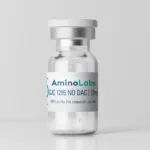
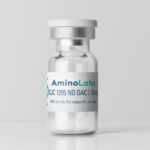
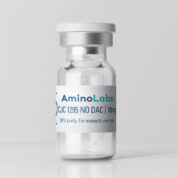
- Reconstitute: Add 1.0 mL BAC water per labelled 10 mg vial; calculations assume a final volume of 1.0 mL and nominal concentration of 10 mg/mL.
- Typical daily range: 100–300 mcg per injection, 1–3 times daily on an empty stomach (gradual titration); start with once nightly at bedtime and add a fasted morning or pre-training dose only if desired. Cycle 8–12 weeks on, then 4–6 weeks off.
- Scale conversion: At 10 mg/mL, 1 U-100 unit = 0.01 mL = 100 mcg. Confirm actual device markings; this arithmetic does not establish measurement accuracy.
- Storage: Lyophilized: refrigerate at 2–8 °C (35.6–46.4 °F); after reconstitution, refrigerate and use within 1–2 weeks; for longer storage, freeze at ≤−20 °C (≤−4 °F).
Dosing & Reconstitution Guide
Standard / Gradual Approach (1 mL = 10 mg/mL)
| Week | Daily Dose (mcg) | Calculated volume | U-100 scale value (1 mL capacity) | V1 nominal setting (units) |
|---|---|---|---|---|
| Weeks 1–2 | 100 mcg | 0.01 mL | 1 units | 1 unit |
| Weeks 3–4 | 150 mcg | 0.015 mL | 1.5 units (requires matching fractional-unit markings) | Not representable in whole units |
| Weeks 5–6 | 200 mcg | 0.02 mL | 2 units | 2 units |
| Weeks 7–12 | 250–300 mcg | 0.025–0.03 mL | 2.5–3 units (range; verify each amount and markings) | Endpoints: Not representable in whole units / 3 units; intermediate amounts require a separate check |
Calculation basis: The table uses the labelled 10 mg amount and assumes a final solution volume of 1.0 mL (10 mg/mL). BAC volume does not change the amount of peptide. These are nominal calculations, not validation of preparation, compatibility or treatment.
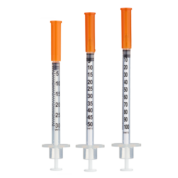
Frequency: Inject 1–3 times daily subcutaneously on an empty stomach. Start with once nightly at bedtime to align with natural nocturnal GH pulsatility, and add a fasted morning or pre-training dose only if desired. Run 8–12 weeks on, then 4–6 weeks off. For ≤10‑unit (≤0.10 mL) administrations (Weeks 1–4), consider 30‑ or 50‑unit insulin syringes for improved readability.
Reconstitution Steps
- Draw 1.0 mL bacteriostatic water with a sterile syringe.
- Inject slowly down the vial wall; avoid foaming.
- Gently swirl/roll until dissolved (do not shake).
- Label and refrigerate at 2–8 °C (35.6–46.4 °F), protected from light.
Important: This guide is for educational purposes only and is not medical advice. For research use only. Not for human consumption.
Supplies Needed
Plan based on an 8–12 week protocol with gradual titration, calculated at one injection per day. Each additional daily dose (fasted morning or pre-training) multiplies the syringe and swab counts and uses vials faster, so scale these totals accordingly.
- Peptide Vials (CJC-1295 NO DAC, 10 mg each):
- 8 weeks ≈ 1 vial
- 12 weeks ≈ 2 vials
- Insulin Syringes (U‑100):
- Per week: 7 syringes (1/day)
- 8 weeks: 56 syringes
- 12 weeks: 84 syringes
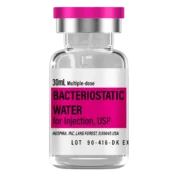
- Bacteriostatic Water (30 mL bottles): Use 1.0 mL per vial. These volume-only totals use the listed vial counts; wastage and opened-bottle discard limits may require more.
- 8 weeks (1 vials): 1 mL → 1 × 30 mL bottle(s), minimum by volume
- 12 weeks (2 vials): 2 mL → 1 × 30 mL bottle(s), minimum by volume
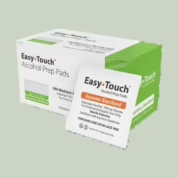
- Alcohol Swabs: One for the vial stopper + one for the injection site each day.
- Per week: 14 swabs (2/day)
- 8 weeks: 112 swabs → recommend 2 × 100‑count boxes
- 12 weeks: 168 swabs → recommend 2 × 100‑count boxes
Protocol Overview
Concise summary of the regimen.
- Goal: Stimulate pulsatile GH release and elevate IGF‑1 levels to support body composition, recovery, and overall metabolic health.
- Schedule: Subcutaneous injections 1–3 times daily on an empty stomach for 8–12 weeks, then 4–6 weeks off; start with once nightly at bedtime and add a fasted morning or pre-training dose only if desired.
- Dose Range: 100–300 mcg per injection with gradual titration.
- Reconstitution: 1.0 mL BAC per labelled 10 mg vial; nominal 10 mg/mL under the stated final-volume assumption.
- Storage: Lyophilized refrigerated or frozen; reconstituted refrigerated; avoid repeated freeze–thaw.
Dosing Protocol
Suggested daily titration approach.
- Start: 100–150 mcg daily; increase by ~50 mcg every 1–2 weeks as tolerated.
- Target: 200–300 mcg daily by Weeks 5–12.
- Frequency: 1–3 times daily (subcutaneous) on an empty stomach; start with once nightly at bedtime and add a fasted morning or pre-training dose only if desired.
- Cycle Length: 8–12 weeks on, then 4–6 weeks off.
- Timing: Administer at bedtime to align with natural nocturnal GH pulses; rotate injection sites.
Storage Instructions
Proper storage preserves peptide quality.
- Lyophilized: Store at 2–8 °C (35.6–46.4 °F); for extended storage, freeze at ≤−20 °C (≤−4 °F); minimize moisture exposure.
- Reconstituted: Refrigerate at 2–8 °C (35.6–46.4 °F); use within 1–2 weeks; avoid freeze–thaw cycles.
- Allow vials to reach room temperature before opening to reduce condensation uptake.
Important Notes
Practical considerations for consistency and safety.
- Use new sterile insulin syringes; dispose in a sharps container.
- Rotate injection sites (abdomen, thighs, upper arms) to reduce local irritation.
- Inject slowly; wait a few seconds before withdrawing the needle.
- Document daily dose and site rotation to maintain consistency.
- Administer on an empty stomach (fasted for ≥2 hours) to optimize GH response.
How This Works
CJC-1295 NO DAC (Modified GRF 1–29) is a truncated GHRH analog with four amino acid substitutions (D‑Ala, Gln, Ala, Leu) that enhance stability against enzymatic degradation. It binds to GHRH receptors on pituitary somatotrophs, stimulating the synthesis and pulsatile release of endogenous growth hormone. Unlike exogenous GH administration, GHRH analogs preserve the physiologic feedback loop, resulting in more natural GH pulsatility without the risks associated with supraphysiological GH levels. The short half‑life (~30 minutes) produces discrete GH pulses that mimic the body’s natural secretion pattern.
Potential Benefits & Side Effects
Observations from preclinical and clinical literature on GHRH analogs.
- Stimulates pulsatile GH release and elevates IGF‑1 levels with chronic administration.
- May support improvements in body composition, including increased lean mass and reduced fat mass.
- May enhance recovery, sleep quality, and overall energy levels.
- Generally well tolerated; occasional mild side effects may include injection‑site reactions (redness, swelling), transient flushing, or headache.
Lifestyle Factors
Complementary strategies for best outcomes.
- Pair with a balanced, protein‑forward diet tailored to energy needs.
- Combine resistance training and aerobic activity to reinforce metabolic adaptations and GH response.
- Prioritize sleep and stress management to support natural GH pulsatility and recovery.
- Administer peptide in a fasted state to maximize GH release.
Injection Technique
General subcutaneous guidance from clinical best‑practice resources.
- Clean the vial stopper and skin with alcohol; allow to dry.
- Pinch a skinfold; insert the needle at 45–90° into subcutaneous tissue.
- Do not aspirate for subcutaneous injections; inject slowly and steadily.
- Rotate sites systematically (abdomen, thighs, upper arms) to avoid lipohypertrophy.
Recommended Source
Why Amino Labs?
- Third-party tested: Each batch includes Certificate of Analysis (COA) verifying purity and composition.
- Consistent quality: ISO-aligned manufacturing and handling standards ensure reliable product integrity.
- Cold-chain integrity: Temperature-controlled shipping and storage throughout fulfillment process.
- Research-grade purity: Suitable for educational and research applications requiring high-quality peptides.
Note: Product availability and specifications subject to change. Verify current product details on supplier website.
Shop at Amino Labs
Important Note
This content is intended for therapeutic educational purposes only and does not constitute medical advice, diagnosis, or treatment.